
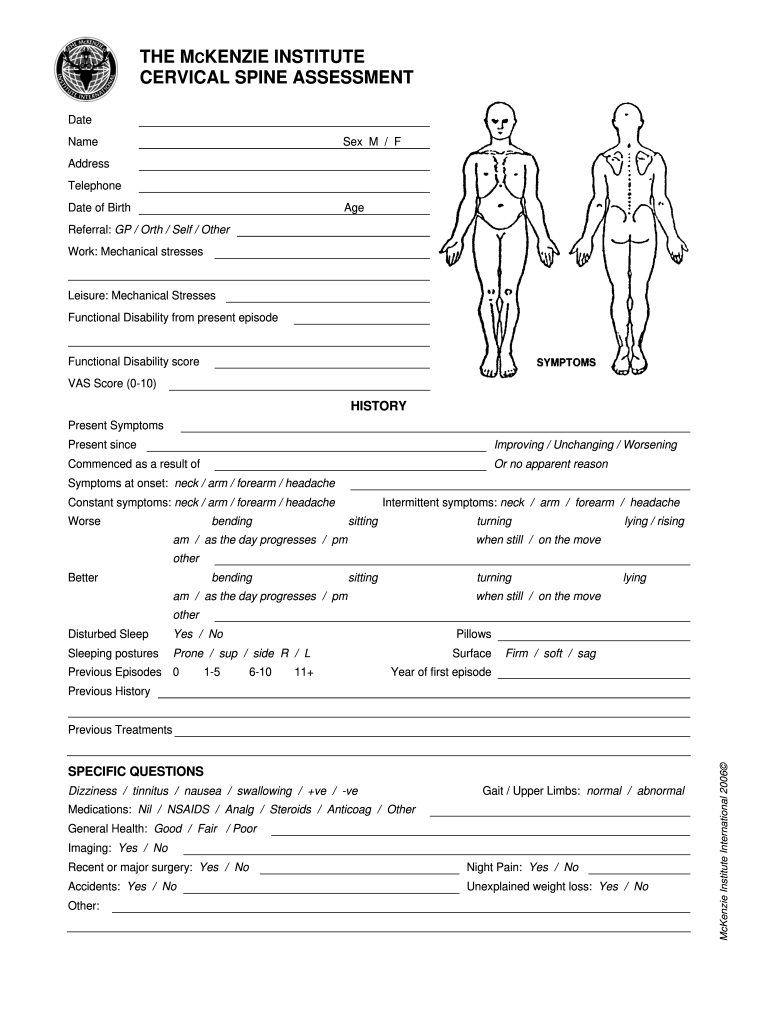







Definition and Purpose of Cervical Spine Assessment
A cervical spine assessment is a comprehensive evaluation aimed at understanding a patient's neck and upper extremity conditions. It focuses on assessing the anatomical and functional aspects of the cervical spine, which comprises the first seven vertebrae in the neck. This assessment is essential for diagnosing issues such as neck pain, stiffness, radiating arm pain, and other neurological symptoms. It plays a critical role in physiotherapy and rehabilitation by providing detailed insights into the patient's symptoms, history, and examination results, leading to informed treatment decisions.
Key components of the cervical spine assessment include:
-
Patient History: This section documents the patient's past medical history, including prior injuries, surgeries, and existing health conditions. It explores symptom onset, duration, and frequency to help identify patterns or triggers contributing to the condition.
-
Physical Examination: The examiner evaluates posture, range of motion, and neurological function. Observing movements may reveal restrictions or pain patterns, which are vital for diagnosing specific cervical spine conditions.
-
Special Tests: These tests, such as the Spurling’s test and the shoulder abduction test, are utilized to assess nerve root involvement and cervical radiculopathy. This helps differentiate between various types of cervical spine pathologies.
-
Functional Assessment: Evaluating how the condition impacts daily activities and quality of life is crucial. Understanding functional limitations allows physiotherapists to customize treatment plans effectively.
Overall, the cervical spine assessment forms the backbone of subsequent treatment strategies, guiding physical therapy interventions, chiropractic adjustments, or surgical referrals when necessary.
Steps to Complete the Cervical Spine Assessment
Completing a cervical spine assessment involves a systematic approach to gather critical patient information and determine the underlying causes of symptoms. The process typically follows these steps:
-
Gather Patient Information:
- Collect personal details such as name, age, and contact information.
- Document relevant medical history, focusing on previous neck or spine injuries, surgeries, and chronic conditions.
-
Conduct a Symptom Review:
- Ask the patient to describe their symptoms in detail, including pain location, intensity, quality, and duration.
- Determine any factors that alleviate or exacerbate symptoms.
-
Perform Physical Examination:
- Assess the patient’s posture and alignment in standing and sitting positions.
- Evaluate cervical range of motion using goniometric measurements, noting restrictions.
- Conduct neurological examination, including reflex testing and sensory function assessment.
-
Implement Special Tests:
- Apply specific orthopedic tests designed to identify nerve root involvement or significant pathologies related to the cervical spine.
- Document responses to these tests to provide further insight into the patient’s condition.
-
Complete Functional Evaluation:
- Ascertain how cervical spine issues affect the patient’s daily activities, work, and overall quality of life.
- Assess their level of physical activity and any restrictions in mobility or function.
-
Document Findings:
- Summarize all findings in a comprehensive report, highlighting key insights about posture, range of motion, and special test outcomes.
- Use this documentation to inform treatment plans and communicate with other healthcare professionals involved in the patient's care.
By following these steps meticulously, healthcare providers can ensure a thorough assessment of cervical spine conditions, ultimately leading to more effective treatment strategies.
Who Uses the Cervical Spine Assessment?
The cervical spine assessment is utilized by various healthcare professionals involved in diagnosing and treating neck-related conditions. Key users include:
-
Physiotherapists: They frequently use cervical spine assessments to develop rehabilitation plans for patients suffering from neck pain, stiffness, or other cervical spine disorders. Their expertise allows for targeted treatment, incorporating exercises and manual therapy.
-
Chiropractors: Chiropractors rely on cervical assessments to identify misalignments or mechanical issues within the cervical spine. This information is vital to guide adjustments and other interventions aimed at restoring spinal function.
-
Orthopedic Surgeons: In cases where surgical intervention is on the table, orthopedic surgeons utilize cervical assessments to provide a detailed overview of a patient's condition, helping determine the necessity for surgical corrections or other invasive procedures.
-
Primary Care Physicians: These practitioners may conduct initial cervical spine assessments to evaluate neck pain complaints. They can then refer patients to specialists for further treatment based on these findings.
-
Occupational Therapists: They may use cervical assessments to understand how neck conditions affect patients' ability to perform daily tasks at home or work, allowing for tailored adaptive strategies.
The collaborative use of the cervical spine assessment by various healthcare professionals enhances patient outcomes by ensuring a comprehensive approach to diagnosis and treatment.
Key Elements of the Cervical Spine Assessment
Understanding the crucial elements of a cervical spine assessment is essential for accurate evaluations and effective treatment planning. Key elements include:
-
Patient History:
- Collect information on previous injuries and treatments received.
- Explore any history of systemic diseases or health conditions affecting the neck.
-
Symptom Analysis:
- Document the nature of the symptoms, including pain characteristics (sharp, dull, radiating), and patterns associated with activities or positions.
- Assess emotional and psychological impacts related to chronic symptoms.
-
Physical Examination Techniques:
- Assess cervical range of motion quantitatively and qualitatively.
- Perform palpation of cervical structures to identify tenderness, swelling, or muscle spasms.
-
Neurological Assessment:
- Examine cranial nerves and assess reflexes relevant to cervical spine function.
- Investigate sensory deficits or motor weakness in the upper extremities.
-
Utilization of Special Tests:
- Implement tests designed to identify specific pathologies, such as the Lhermitte's sign for spinal cord irritation or the neck distraction test for radiculopathy.
-
Functional Assessments:
- Measure the direct impact of cervical issues on work and leisure activities.
- Consider the patient's ability to perform essential tasks without pain or discomfort.
Incorporating these key elements into the cervical spine assessment ensures comprehensive data is gathered, leading to informed decision-making for effective patient treatment strategies.
Examples of Using the Cervical Spine Assessment in Clinical Practice
Applying a cervical spine assessment in clinical practice can significantly enhance patient care and treatment outcomes. Below are examples illustrating its usage:
-
Case of a Patient with Radiating Arm Pain: A patient reports persistent neck pain radiating into the right arm. After completing the cervical spine assessment, including special tests like the Spurling’s test, physiotherapists determine there is nerve root involvement. The findings guide the implementation of specific physical therapy modalities, such as traction and targeted therapeutic exercises to alleviate symptoms.
-
Evaluating Postural Issues in Office Workers: An office worker complains of neck stiffness likely due to prolonged computer use. A comprehensive cervical spine assessment reveals strain patterns connected to poor postural habits. Based on the findings, tailored ergonomic recommendations and a custom exercise regime are introduced, resulting in improved neck mobility and reduced discomfort.
-
Pre-Surgical Assessment: A patient requiring cervical spine surgery undergoes an extensive assessment as part of the pre-operative evaluation. Special tests reveal significant nerve compression. Detailed documentation of the assessment helps the orthopedic surgeon strategize the procedure while also addressing rehabilitation approaches tailored to the patient’s unique needs post-operatively.
These examples underscore the value of the cervical spine assessment in guiding clinical decisions, fostering effective treatment methodologies, and improving patient quality of life in various healthcare settings.




