
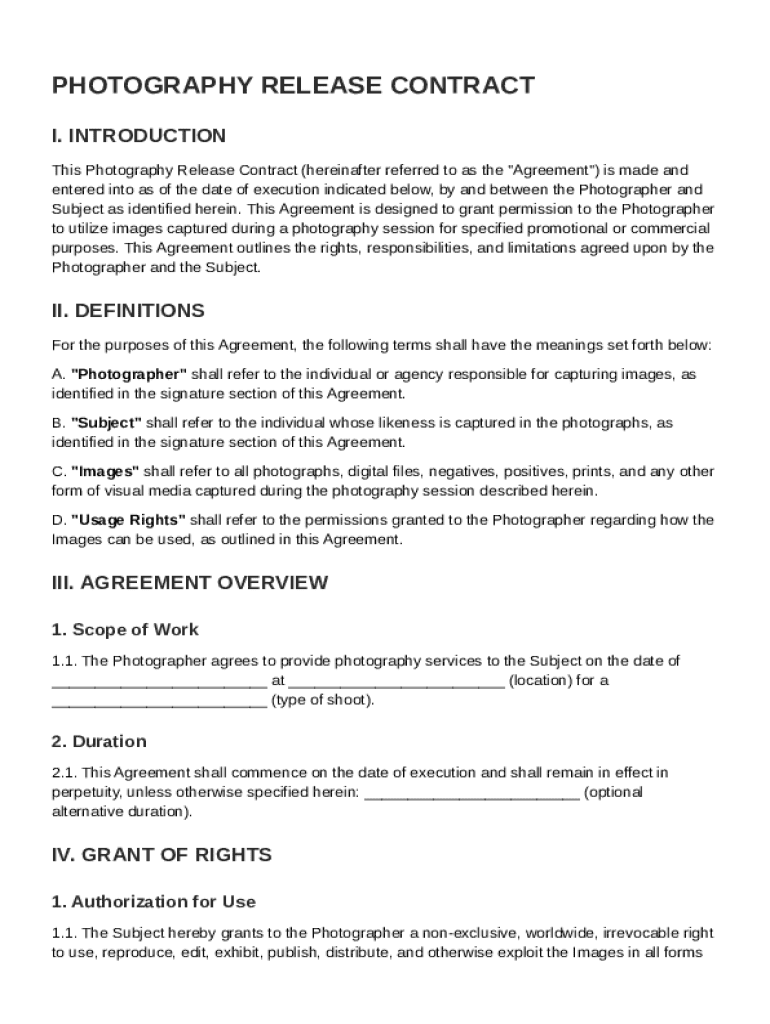







Definition & Meaning
A Photography Release Contract Template is a structured document used to formalize the permissions granted by a subject to a photographer. It legally authorizes the photographer to use images captured during a photography session for specified purposes, such as promotional or commercial use. This contract delineates the rights and responsibilities of both parties, ensuring clarity and mutual understanding. For example, it often stipulates how the images may be used, the duration of rights granted, and any compensation terms involved. Utilizing this template helps protect both the photographer's creative rights and the subject's privacy and expectations.
Key Purposes of the Contract
- Define Usage Rights: Specifies the scope of how and where images can be used.
- Clarify Compensation: Outlines any payments or benefits the subject receives.
- Establish Limitations: Sets boundaries on the modification or distribution of images.
- Ensure Mutual Agreement: Both parties understand and consent to the terms.
Key Elements of the Photography Release Contract Template
A Photography Release Contract Template is composed of several critical components that ensure its effectiveness and legal standing. These elements include distinct sections that detail every aspect relevant to the photography session and subsequent image use.
Essential Sections
- Parties Involved: Identifies the photographer and the subject.
- Grant of Rights: Details the specific rights being transferred to the photographer.
- Usage Limitations: Any restrictions on the types of publications and platforms for image usage.
- Compensation Clause: Looks into monetary or other benefits that either party will receive.
Additional Clauses
- Liability Release: Protects the photographer from future claims related to the photos.
- Duration of Rights: Specifies the time frame for which rights are granted.
- Governing Law: Indicates which state's laws govern the contract.
How to Use the Photography Release Contract Template
The Photography Release Contract Template provides a structured approach for creating a binding agreement between photographers and subjects. It offers guidance on how to effectively customize and implement the template to fit specific needs.
Steps to Utilize
- Review Template Content: Understand the included sections and clauses.
- Customize for Both Parties: Tailor language and terms specific to the session.
- Clarify Usage Rights: Specify scope and limitations according to your needs.
- Discuss with the Subject: Ensure mutual understanding and agreement on terms.
- Finalize and Sign: Both parties should sign to acknowledge their consent.
Important Considerations
- Ensure clarity in defining the purpose and limitations of image use to avoid disputes.
- Schedule adequate time for review and discussion to accommodate any needed changes.
Steps to Complete the Photography Release Contract Template
Completing the Photography Release Contract Template involves several methodical steps that ensure the document is thorough and legally binding.
Detailed Instructions
- Enter Personal Details: Include names and contact information of all parties involved.
- Define Scope of Work: Describe what images are being referenced and the nature of the shooting session.
- Detail Usage Rights: Elaborate on permissions granted and any royalties or fees.
- Add Specific Clauses: Include any additional agreements, such as exclusivity or confidentiality clauses.
- Review and Adjust: Revisit the contract with all parties to ensure accuracy and agreement.
- Secure Signatures: Have both parties sign the finalized document to solidify the contract.
Sample Scenarios
- Adjusting compensation clauses based on different tiers of image usage.
- Including a specialized confidentiality agreement for high-profile subjects.
Who Typically Uses the Photography Release Contract Template
The Photography Release Contract Template is widely used by various parties involved in professional photography, ensuring legally sound agreements.


Common Users
- Professional Photographers: Protect creative and commercial interests.
- Models and Subjects: Secure rights and clarifications on image usage.
- Event Coordinators: Cover participants during organized sessions like weddings or corporate events.

Specialized Situations
- Commercial photographers working for advertising agencies often require complex permissions due to wide-ranging image distribution.
- Freelance photographers depend on such templates to standardize agreements across diverse client portfolios.
Legal Use of the Photography Release Contract Template
The legal use of the Photography Release Contract Template is key for maintaining compliance and protecting the rights of both parties involved.
Compliance Considerations
- Adherence to ESIGN Act: Ensures electronic signatures are legally valid.
- State-Specific Laws: Adjust according to local laws regarding photography consent and image rights.
- Child Photography Rules: Special provisions when dealing with minors, often requiring guardian consent.
Potential Legal Disputes
- Ensure the template covers all form-specific language to cover possible legal adversities.
- Include arbitration or mediation clauses to efficiently handle disputes outside court.
Versions or Alternatives to the Photography Release Contract Template
While the Photography Release Contract Template is a versatile document, different scenarios may require specialized versions or alternatives.
Alternative Templates
- Model Release Form: Focuses on image rights across fashion or portrait photography.
- Property Release Form: Used when photographing private property with distinct consent requirements.
Updated Variations
- Some photographers may create tiered contracts for specific client categories, reflecting various usage rights and compensations based on the scale of the work.
- Enhanced contracts may include digital addenda, particularly focusing on prevalent social media usage rights.
Important Terms Related to Photography Release Contract Template
Understanding the terminology within the Photography Release Contract Template is crucial for both the photographer and the subject to ensure all parties are aware of their rights and obligations.
Key Terms
- License of Rights: The specific permissions granted for image usage.
- Indemnity Clause: Protects against future legal claims.
- Exclusivity: A specification on whether the photographer holds exclusive rights to image usage.
- Revocation Clause: Conditions under which consent can be withdrawn, if applicable.
Contextual Examples
- An indemnity clause might detail the responsibilities of the subject if a third party disputes the image's publication.
- A revocation clause could be particularly relevant for long-term documental photography projects where subject circumstances may change.




