




01. Edit your form online
Type text, add images, blackout confidential details, add comments, highlights and more.

Type text, add images, blackout confidential details, add comments, highlights and more.

Draw your signature, type it, upload its image, or use your mobile device as a signature pad.

Send it via email, link, or fax. You can also download it, export it or print it out.
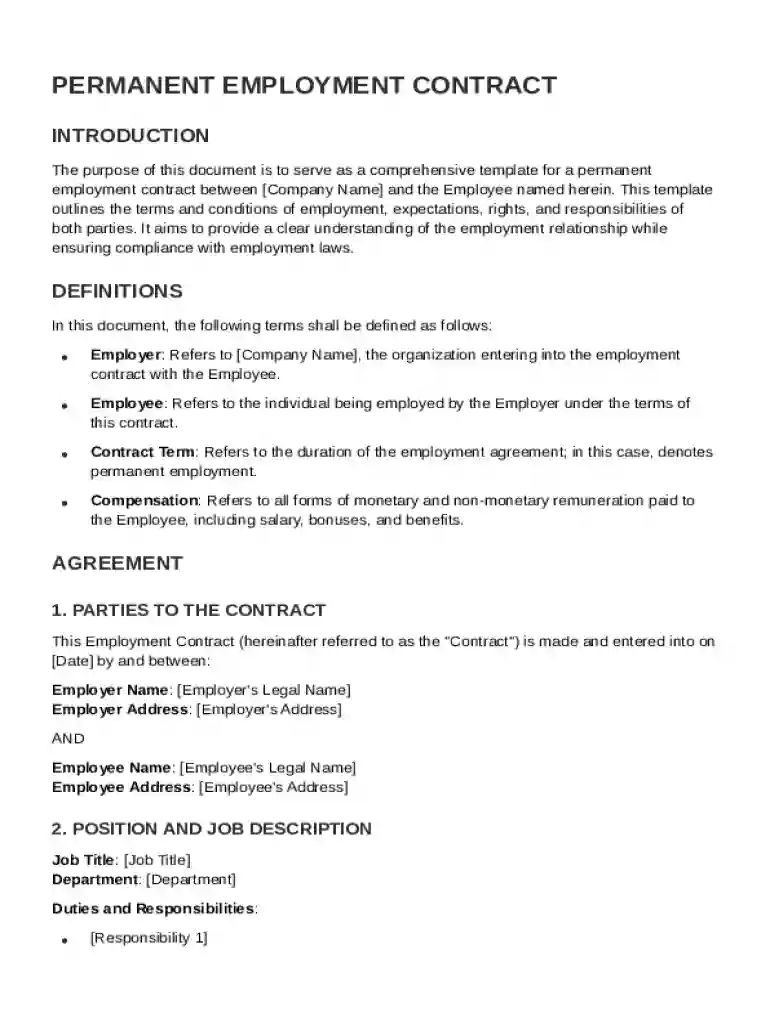
A permanent contract template is a standardized document that outlines the agreement between an employer and an employee for an indefinite period. It defines the roles and responsibilities of both parties, detailing terms of employment such as job title, duties, and expected work hours. Essential components include salary, benefits, confidentiality obligations, and pathways for dispute resolution. This template serves as a legal foundation, ensuring clarity and compliance with employment laws.
Using the permanent contract template effectively requires understanding its structure and relevance to the employment process. Begin by customizing the sections to fit specific roles and employee requirements. Ensure all legal obligations, including compliance with state and federal laws, are covered.
The template encompasses various integral sections crucial for a binding employee agreement. Each component ensures both employer and employee expectations are clearly defined.
Completing the template involves following a structured approach to ensure all required information is accurately captured. This process aids in preventing legal discrepancies and future disputes.
The legal validity of the permanent contract template is contingent upon its alignment with employment laws and regulations. Compliance ensures enforceability and reduces legal risks.
This template is a critical tool for various parties who require standardization and clarity in employment relationships.


Different states have unique regulations concerning employment contracts, and these must be considered when completing the template.
Understanding practical applications helps illustrate the versatility and necessity of the permanent contract template in real-world scenarios.
Incorporating digital tools and software compatibility can streamline the contract creation process and integrate with existing technology.
Ensure all sections comply with respective jurisdictions' laws and maintain a balance between reliability and flexibility.
At DocHub, your data security is our priority. We follow HIPAA, SOC2, GDPR, and other standards, so you can work on your documents with confidence.


Standard contract templates are contract templates that have been drafted by a contract processing office and pre-approved as to legal form and validity.
Contractor will submit billing for the services rendered. Payments will be made based on actual services rendered in accordance with the terms of the Scope
Examples of contract templates include Temporary Labour Contract, Permanent Labour Contract, Commercial Contracts, Terms Conditions or SLAs with customers


