






Definition & Meaning
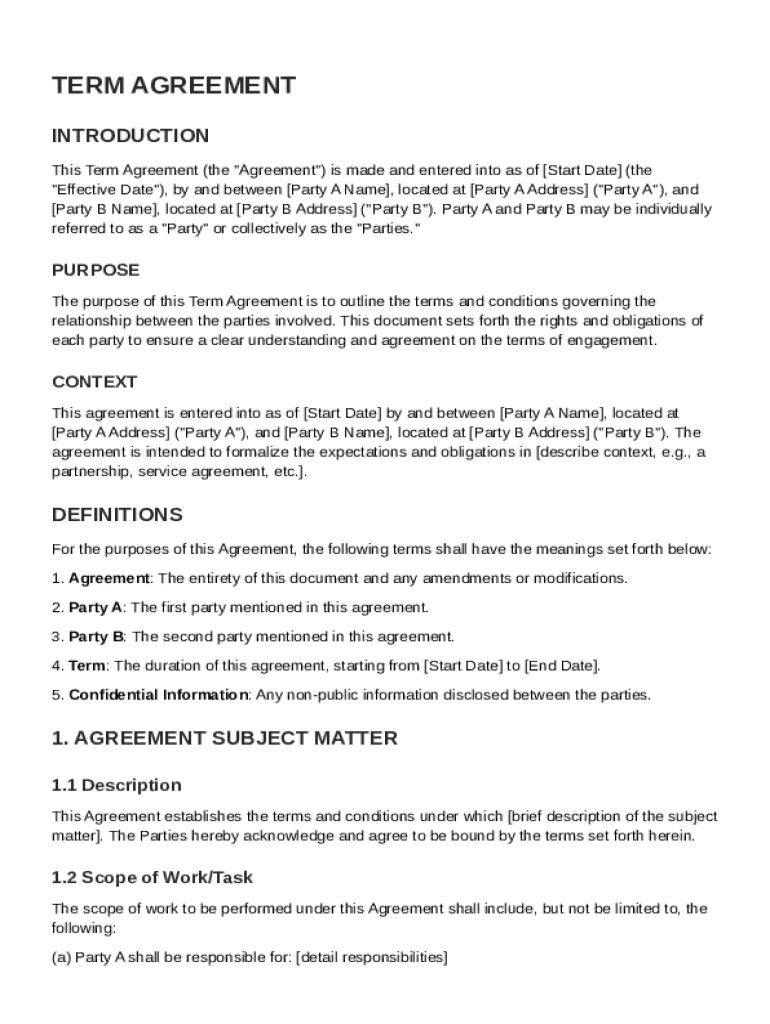
A Term Agreement Template is a pre-structured document that outlines the terms and conditions between two or more parties entering into an agreement. Its primary function is to formalize the rights and obligations of involved parties, ensuring mutual understanding and clear expectations. This template is versatile and can be customized to suit various contractual scenarios, including service agreements, partnership terms, and project-based collaborations. By providing a standardized framework, it simplifies the drafting process while ensuring important legal elements are included.
Key Elements of the Term Agreement Template
Key components within a Term Agreement Template typically include the following:
- Scope of Work: Defines the specific services or tasks expected to be performed by each party. This section sets clear boundaries and responsibilities to avoid future disputes.
- Duration: Establishes the start and end dates of the agreement, along with any renewal options or terms for early termination.
- Compensation: Outlines the financial arrangements, including payment schedules, invoicing terms, and any contingencies that might affect payments.
- Confidentiality: Specifies the information regarded as confidential and the obligations of parties to protect this information.
- Termination Clauses: Details the conditions under which the agreement can be terminated by either party, including notice periods and consequences for breach of contract.
- Dispute Resolution: Provides mechanisms for resolving disputes, such as mediation or arbitration, to minimize litigation.
- General Provisions: Includes miscellaneous terms like amendments, waivers, governing law, and the entire agreement clause that highlights the finality of the document.
Steps to Complete the Term Agreement Template
Completing a Term Agreement Template involves several structured steps to ensure accuracy and compliance:
- Identify the Parties: Clearly state the names and contact details of all parties involved in the agreement. This should include full legal names and addresses.
- Define Terms and Conditions: Customize sections such as the scope of work, compensation, and confidentiality to fit the specific needs of the agreement.
- Review Legal Language: Ensure that the language used throughout the template complies with relevant laws and regulations, and adjust any default phrases to align with the specific context of the agreement.
- Seek Legal Advice: It is advisable for parties to consult with legal professionals to review the agreement for enforceability and legality.
- Add Signatures: Once all parties have reviewed the template, each must sign and date the agreement to formalize the binding contract. Digital signatures can be used for convenience.
Examples of Using the Term Agreement Template
The Term Agreement Template is applicable in various industries and scenarios. Examples include:
- Freelance Agreements: Used by freelancers to outline project terms with their clients, ensuring clarity on deliverables and payment structures.
- Business Partnerships: Helps establish clear partnership terms between businesses, detailing profit-sharing, roles, and investment responsibilities.
- Vendor Contracts: Utilized by companies outsourcing services to vendors, specifying service levels, pricing, and confidentiality.
- Employee Agreements: Forms the basis for employment contracts that specify job roles, salary, and other employment conditions.
Legal Use of the Term Agreement Template
The legal use of a Term Agreement Template is pivotal in making sure contracts are enforceable:
- Compliance: Ensuring that the agreement adheres to relevant state and federal laws, which can vary widely based on jurisdiction.
- Legally Binding: All parties must have the capacity to enter into a contract, and the terms must be lawful and attainable, for the template to be legally binding.
- ESIGN Act Compliance: For electronic agreements, compliance with the ESIGN Act ensures legality by granting electronic signatures the same weight as handwritten ones.
Software Compatibility for Term Agreement Template
DocHub, a comprehensive document management platform, is fully compatible with various file formats, making it an excellent choice for handling Term Agreement Templates:
- File Formats Supported: Includes DOC, PDF, TXT, and more, ensuring seamless interaction with documents initially created in different formats.
- Integration with Google Workspace: Directly import from and export to Google Drive, allowing for efficient collaboration and storage without leaving the digital workspace.
- Cross-Platform Access: Work on the templates on both desktops and mobile browsers, streamlining document management irrespective of the device in use.
Who Typically Uses the Term Agreement Template
The versatility of a Term Agreement Template makes it suitable for a broad audience:
- Small and Medium Enterprises (SMEs): Often use these templates to formalize business dealings with partners, vendors, and employees.
- Freelancers and Contractors: Utilize the template to clarify job expectations with clients across various sectors.
- Law Professionals: Lawyers and legal advisors may depend on these templates to provide clients with a preliminary draft of legal agreements.
- Non-Profit Organizations: Organizations use them to enter agreements with sponsors or volunteers, clarifying responsibilities and deliverables from both parties.

State-Specific Rules for Term Agreement Template
While the essential structure of a Term Agreement Template is consistent, modifications may be necessary to comply with local laws:
- Governing Laws: Each state may have unique laws regarding enforceability and terms, impacting clauses like choice of law, jurisdiction, and limitations on liability.
- State-specific Additions: Some states may require additional disclosures or specific phrasing related to labor or trade regulations that must be incorporated into the agreement.
Digital vs. Paper Version
A digital Term Agreement Template offers several advantages over traditional paper versions:
- Convenience and Speed: Digital versions allow for quick edits and immediate distribution. Electronic signing capabilities make finalizing agreements efficient.
- Environmentally Friendly: Reduces paper use and physical storage needs.
- Security: Enhanced security features such as encryption and access controls improve document confidentiality and integrity, reducing the risk of unauthorized alterations.