Definition and Meaning
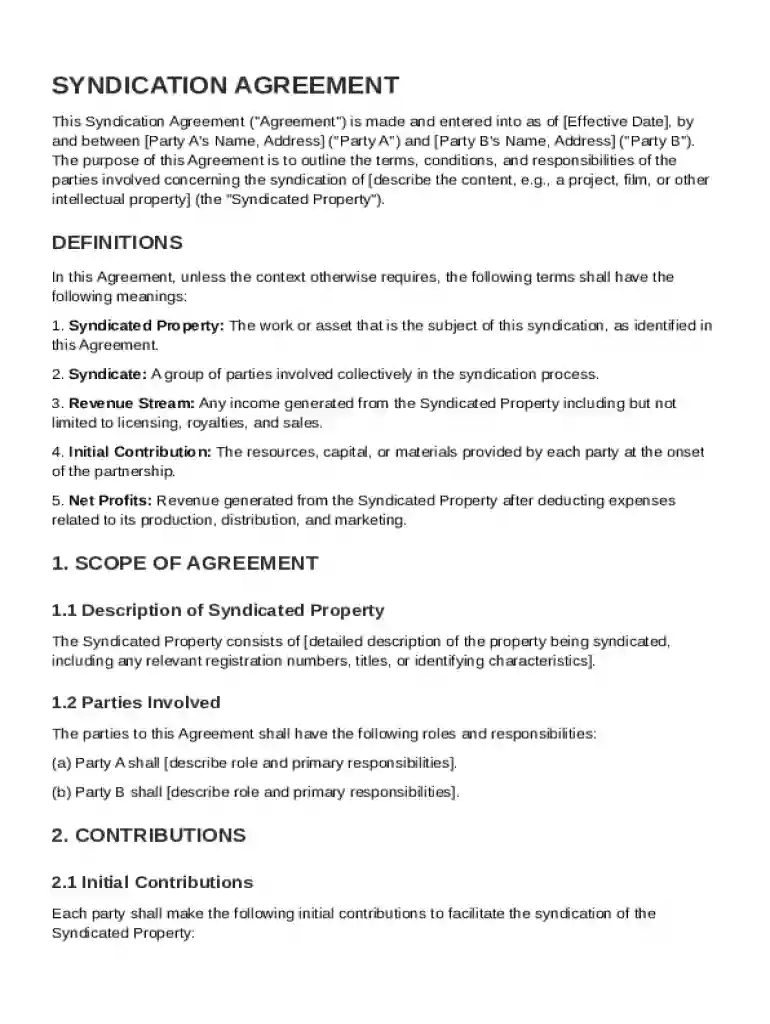
A Syndication Agreement Template serves as a structured framework defining the rights, responsibilities, and obligations between parties entering into a syndication relationship. Commonly used in the context of syndicating intellectual properties or media content, this template details how two or more parties—referred to as Party A and Party B—will collaboratively manage, distribute, and benefit from a shared piece of content or property. The agreement specifies critical elements such as revenue sharing, contribution commitments, and intellectual property rights to ensure both parties are aligned in their operational and financial objectives.
Key Elements of the Syndication Agreement Template
The Syndication Agreement Template is comprised of several crucial components that form the backbone of a successful collaboration. These include:
- Definitions: Clarifies key terms and roles to eliminate ambiguities in the responsibilities and expectations of each party.
- Contributions and Responsibilities: Outlines what each party will provide, whether financial, intellectual, or material, ensuring a balanced partnership.
- Revenue Sharing Arrangements: Details how any income generated will be distributed among the parties involved, fostering transparency in financial dealings.
- Intellectual Property Rights: Specifies ownership and usage rights, safeguarding each party's contributions and stakes in the syndicated property.
- Confidentiality Obligations: Sets out measures for protecting sensitive information shared during the syndication process.
- Dispute Resolution Processes: Provides a plan for addressing disagreements through structured mediation or arbitration routes.
- Termination Conditions: Defines the circumstances under which the agreement may be concluded and the post-termination obligations of each party.
How to Use the Syndication Agreement Template
Utilizing a Syndication Agreement Template effectively involves a step-by-step approach to tailor it to the specific partnership:
- Customize Basic Information: Insert the names, specializations, and contact information of each participating party.
- Detail Contributions: Specify what tangible or intangible assets each party is contributing, ensuring clarity in resource allocation.
- Define Revenue Parameters: Clearly outline how profits will be segmented and distributed to preempt potential financial disputes.
- Establish Intellectual Property Rights: Clearly state who retains ownership of existing and developed IP to prevent future conflicts.
- Set Confidentiality Clauses: Draft terms that protect proprietary information, especially when dealing with unique content or innovations.
- Outline Dispute Mechanisms: Ensure both parties agree to a conflict resolution method, such as mediation, to manage possible disagreements.
Important Terms Related to the Syndication Agreement Template
Several specific terms are integral to understanding and effectively using a Syndication Agreement Template:
- Syndicated Property: Refers to the intellectual property that is jointly utilized or marketed by all parties involved.
- Joint Venture: A legal construction in which two or more entities collaborate, often relevant to syndication agreements involving substantial shared undertakings.
- Licensing: The granting of permission to use the intellectual property by one entity to another within framework terms.
- Exclusive Distribution: A setup where one party retains the sole right to distribute the content in specified markets or formats.
- Royalty: A payment structure that compensates the original creator or owner of components within the syndicated content.
Legal Use of the Syndication Agreement Template
The legal enforceability of a Syndication Agreement Template is central to its application, ensuring all parties adhere to the stipulated terms.
- Compliance with Regulations: All syndication agreements must comply with jurisdictional laws, such as the U.S. copyright and intellectual property laws.
- Binding Nature: Once signed, the agreements are legally binding, obligating parties to perform duties or face potential legal challenges.
- Documentation for Evidence: The Syndication Agreement acts as a crucial document in legal proceedings, verifying the obligations and rights initially agreed upon by the parties involved.
- Protection against Infringement: Partly through indemnification clauses, these agreements help protect parties against unauthorized use or litigation related to syndicated content.
Steps to Complete the Syndication Agreement Template
Filling out a Syndication Agreement Template efficiently can be organized into guided steps:
- Review and Understand the Template: Thoroughly read all sections and clauses within the template to ensure complete comprehension.
- Identify Parties Involved: Clearly list all entities engaging in the syndication to prevent identification ambiguities.
- Provide a Scope of Agreement: Define the objectives and scope to provide context and direction for the syndication.
- Negotiate Terms: Engage in discussions to tailor terms such as contributions, revenue sharing ratios, and IP ownership to mutual satisfaction.
- Detail Termination Clauses: Agree on justifiable grounds for ending the agreement, ensuring clear terms for dissolution.
- Finalize and Sign: After mutual review and agreement, both parties should sign the document, formalizing their syndication relationship.
State-Specific Rules for the Syndication Agreement Template
Different U.S. states may impose unique requirements affecting the terms or enforcement of Syndication Agreements.
- Varied Contractual Laws: While overarching federal laws apply, distinct state laws regarding contract execution and enforcement may require certain clauses to be adjusted.
- Specific Licensing Requirements: Some states impose special licensing for certain types of syndicated content, particularly in entertainment and media.
- Jurisdiction Designation: Parties must agree on the governing state law and jurisdiction for legal proceedings involving the agreement.
- Consumer Protection Variations: States have differing rules on consumer rights that may impact how agreements are constructed, especially when public content distribution is involved.