
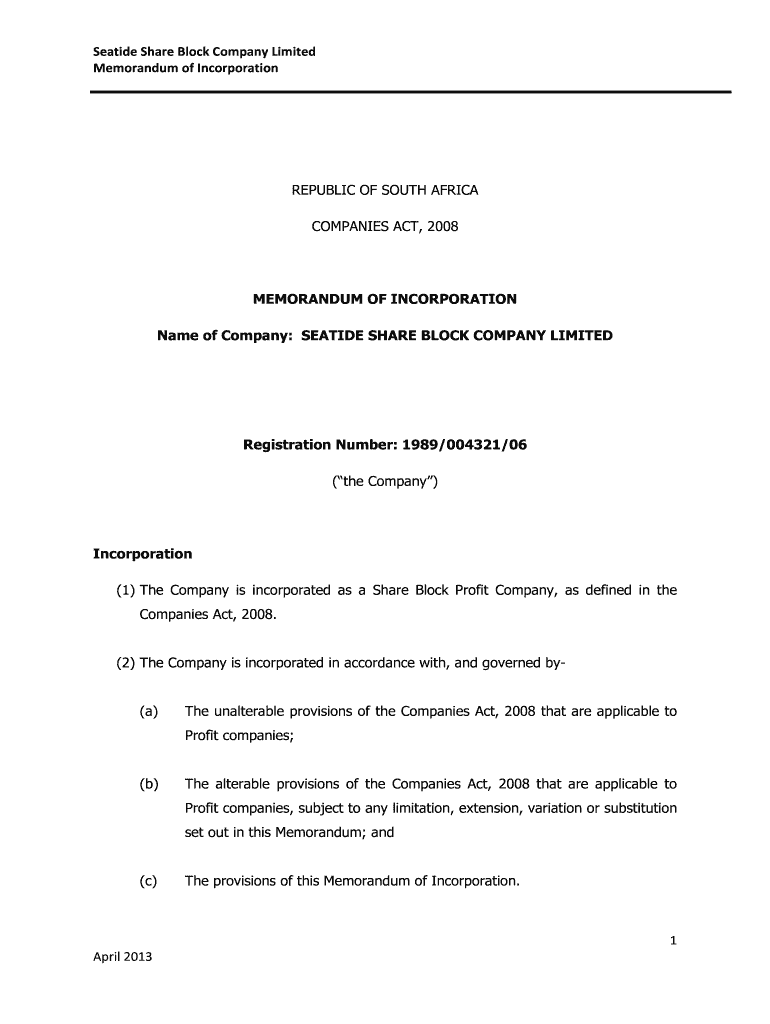







Definition and Importance of the Memorandum of Incorporation
The memorandum of incorporation is a pivotal document that outlines the legal framework for a corporation's formation and operation. It serves as the foundation for the company's existence, detailing crucial aspects such as the company's objective, governance structure, share capital, and the rights and responsibilities of its members. A comprehensive memorandum of incorporation ensures a clear understanding of the company’s mission and regulatory compliance.
- Structure and Governance: This document specifies the internal governance mechanisms, including the roles of directors and officers, decision-making procedures, and member rights. Such transparency fosters accountability and guides corporate conduct.
- Operational Framework: The memorandum lays out rules governing general meetings, voting procedures, and financial obligations. It delineates how profits are distributed among shareholders and what obligations members have towards the company.
Understanding these elements is vital for anyone involved in corporate governance, including founders, investors, and legal professionals.
Steps for Completing the Memorandum of Incorporation
Creating a memorandum of incorporation requires careful planning and adherence to specific steps to ensure completeness and legal compliance.
-
Identify the Purpose: Clearly define the company's objectives. This may include descriptions of the industries it will operate in and the activities it will undertake.
-
Draft Key Sections: Common sections include the company's name, registered office address, share capital structure, and member rights. Each of these components should reflect the intended operational model of the business.
-
Consult Legal Requirements: Different states have varying regulations regarding incorporation. Familiarize yourself with local legal requirements to ensure compliance.
-
Review and Revise: Once the draft is prepared, it should be thoroughly reviewed for any discrepancies or omissions. It may be beneficial to have it evaluated by legal professionals.
-
Submit for Registration: Submit the finalized memorandum to the appropriate state authority for registration. This process may vary by jurisdiction and can often be completed online, by mail, or in person.
-
Obtain Confirmation: After submission, ensure that you receive confirmation of the registration, as this will be an essential document for the legal standing of the corporation.
Following these steps meticulously is essential for establishing a solid corporate foundation and avoiding potential legal pitfalls.
Common Users of the Memorandum of Incorporation
Various entities and professionals utilize the memorandum of incorporation for differing purposes. Understanding these users can provide context on who is most likely to engage with this document.
-
Startups and Entrepreneurs: Typically, aspiring business owners create a memorandum to formally establish their corporations. It is one of the first steps in forming a legal business entity.
-
Investors: Potential investors will review the memorandum of incorporation to understand the structure and governance of a company before committing their capital.
-
Legal Advisors and Accountants: Professionals in the legal and financial sectors frequently assist in the drafting, reviewing, and advising based on the contents of the memorandum.
-
Corporate Executives: Management teams utilize the memorandum to understand their obligations and rights within the company, ensuring compliance with internal governance standards.
Recognizing the stakeholders involved reinforces the importance of crafting a precise and effective memorandum.


Key Elements of the Memorandum of Incorporation
A well-structured memorandum of incorporation comprises several essential components that create a comprehensive overview of the corporation's purpose and operations.
-
Company Name and Address: The official name under which the corporation will operate and its registered office address must be included.
-
Objectives of the Company: Clearly articulated objectives or purposes for which the company is incorporated are fundamental to define its operations legally.
-
Share Capital: Details regarding the amount of share capital, types of shares, and classes of shareholders are necessary for elucidating shareholder rights and profit distribution.
-
Appointment of Directors: The memorandum should specify the number of directors, their appointment procedures, and any specific powers they may have.
-
Member Rights and Responsibilities: It should govern the rights of the members, including voting rights and obligations towards the company.
Each of these elements plays a critical role in establishing a clear operational framework and governance structure for the business.
How to Obtain the Memorandum of Incorporation
Accessing a memorandum of incorporation involves a systematic approach to ensure you have the correct documentation.
-
Visit Regulatory Authority Websites: Most states have a Secretary of State or equivalent authority where you can find templates and guidelines for drafting a memorandum of incorporation.
-
Utilize Templates: Numerous online resources provide templates, including free and paid versions. Consider using a standardized template to align with legal expectations.
-
Consult Legal Professionals: For tailored advice, consulting with corporate lawyers or legal advisors can be beneficial to ensure your memorandum meets all legal requirements specific to your jurisdiction.
-
Review Samples: Examine examples of completed memorandums of incorporation to gain insight into the format and structure typically employed.
-
Request from Existing Corporations: If you are part of an existing company, you can request a copy of its memorandum of incorporation from the corporate secretary.
This methodical approach ensures that the memorandum is correctly obtained and conforms to all necessary regulations.
Compliance and Legal Use of the Memorandum of Incorporation
Compliance with the regulations governing the memorandum of incorporation is imperative for the legal operation of any corporation.
-
Legal Documentation: The memorandum serves as a key legal document, frequently required during legal proceedings, corporate evaluations, and inspections by regulatory authorities.
-
Safeguarding Rights: It aids in protecting the rights of shareholders and members, ensuring that everyone involved understands their legal standing within the corporation.
-
Maintaining Compliance: Companies must routinely review their memorandum against current laws and regulations to ensure ongoing compliance. Failure to do so may result in penalties or complications related to corporate governance.
Legal advisors recommend that corporations conduct periodic reviews of their memorandum as part of their compliance protocols to avoid potential legal challenges or administrative issues.




