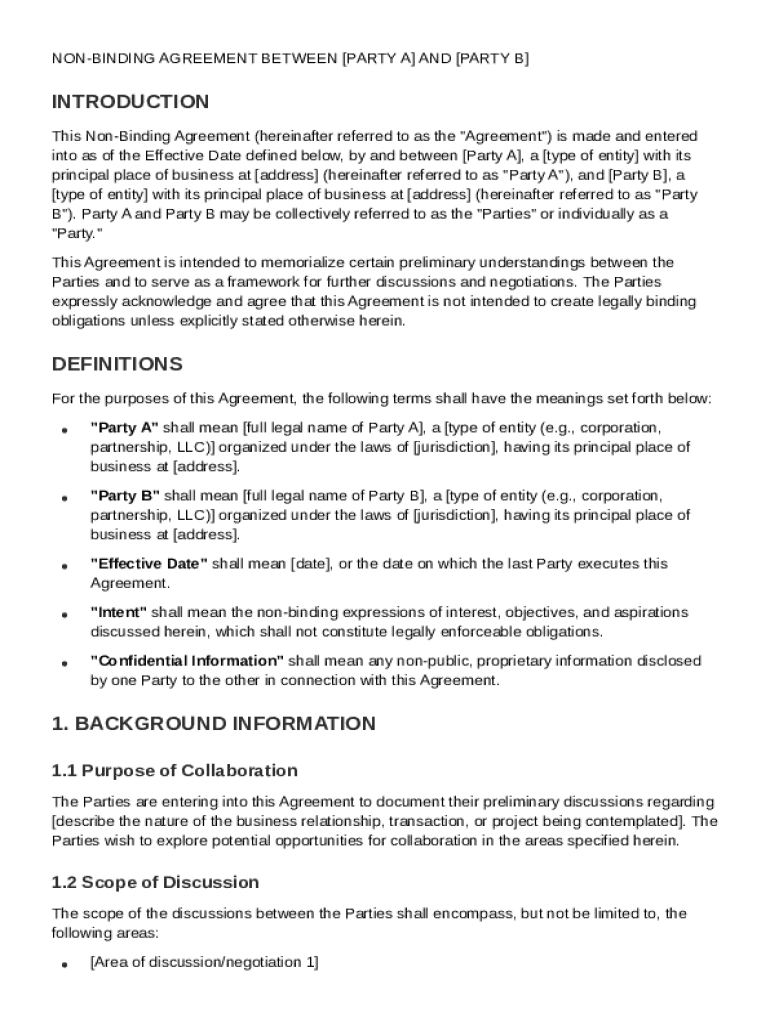







Definition and Meaning
A "Non Bind Contract Template" is a structured framework used to outline the preliminary terms and intentions between two or more parties considering a potential collaboration. Essential to note, this type of contract explicitly states that it is not legally binding, except for sections typically related to confidentiality. It serves as a guideline to facilitate open discussions between parties without creating formal obligations. This document is crucial in clarifying initial intentions and expectations while allowing room for flexibility as negotiations progress.
How to Use the Non Bind Contract Template
Using a non-bind contract template effectively requires understanding its purpose and tailoring its content to the specific needs of the involved parties. Start with identifying all parties involved in the discussion. Clearly outline the main objectives and intended purpose of the proposed collaboration. Include sections that designate which parts, such as confidentiality clauses, are binding. Make sure to review and agree upon the defined terms and conditions with all stakeholders to ensure a clear, mutual understanding before signing.
Steps to Complete the Non Bind Contract Template
- Identify Parties Involved: Clearly mention all entities or individuals participating in the discussions.
- Define the Purpose: Summarize why the parties are considering a potential agreement and what they aim to achieve.
- Outline Discussion Scope: Specify the topics and areas the discussions will cover, including potential opportunities for collaboration.
- Detail Confidentiality Obligations: Highlight sections that are legally binding, focusing on the confidentiality of shared information.
- Establish Governing Law: Define the laws that will govern any disputes arising from the agreement.
- Acknowledge Non-Binding Nature: Clearly state that, aside from designated terms, the document and discussions are non-binding.
- Draft Termination Clause: Include a section on how the non-binding agreement can be terminated or concluded.
Key Elements of the Non Bind Contract Template
- Participant Identification: List names and roles of the parties involved.
- Objective Statement: A concise declaration of the intent behind the discussion.
- Scope of Work: Description of what will be discussed or explored.
- Confidentiality Clause: Definition of which information must remain confidential.
- Legal Jurisdictions: Identification of legal boundaries governing the document.
- Term and Duration: Outline the agreement's duration and review period.
Legal Use of the Non Bind Contract Template
Despite being non-binding, these contracts play a vital role in ensuring clarity in business dealings and setting a clear foundation for future formal agreements. They help to prevent misunderstandings by detailing intentions without the commitment of enforceable obligations. Nevertheless, their legal weight comes into play with confidentiality and non-disclosure clauses that must be adhered to by all parties. Make sure that these sections are crafted with legal expertise to ensure compliance with applicable laws.
Who Typically Uses the Non Bind Contract Template
- Startups and Entrepreneurs: For exploring opportunities without immediate financial or legal commitments.
- Large Corporations: Often used in initial talks for mergers, acquisitions, or partnerships where terms are yet undecided.
- Legal Professionals: Draft these as an initial conversational tool for clients seeking guidance.
- Consultants: For projecting potential collaborations with clients or partners without formal obligations.


Examples of Using the Non Bind Contract Template
- Business Partnerships: Two companies interested in a joint venture may use a non-binding agreement to discuss mutual goals and resources.
- Mergers & Acquisitions: Initial discussions in potential M&A scenarios often employ non-binding contracts.
- Research Collaborations: Universities or research institutions exploring collaborative projects may outline intentions initially with non-binding terms.
- Technology Vendors: In engaging with potential clients about integrating new technologies, non-binding documents help establish initial expectations.
State-Specific Rules for the Non Bind Contract Template
Although non-binding agreements generally have uniform standards, state-specific regulations could impact how certain clauses are interpreted, particularly those dealing with confidentiality and non-disclosure. For example:
- California: Has strict procedures concerning data privacy which can influence confidentiality clauses.
- Texas: Certain business transactions may require specific disclosures under state law; understanding local nuances is essential.
Before drafting or signing, reviewing the non-binding agreement with legal counsel familiar with local laws ensures compliance and maximizes the agreement's effectiveness.