




01. Edit your printable care plan template online
Type text, add images, blackout confidential details, add comments, highlights and more.

Type text, add images, blackout confidential details, add comments, highlights and more.

Draw your signature, type it, upload its image, or use your mobile device as a signature pad.

Send plan of care template via email, link, or fax. You can also download it, export it or print it out.
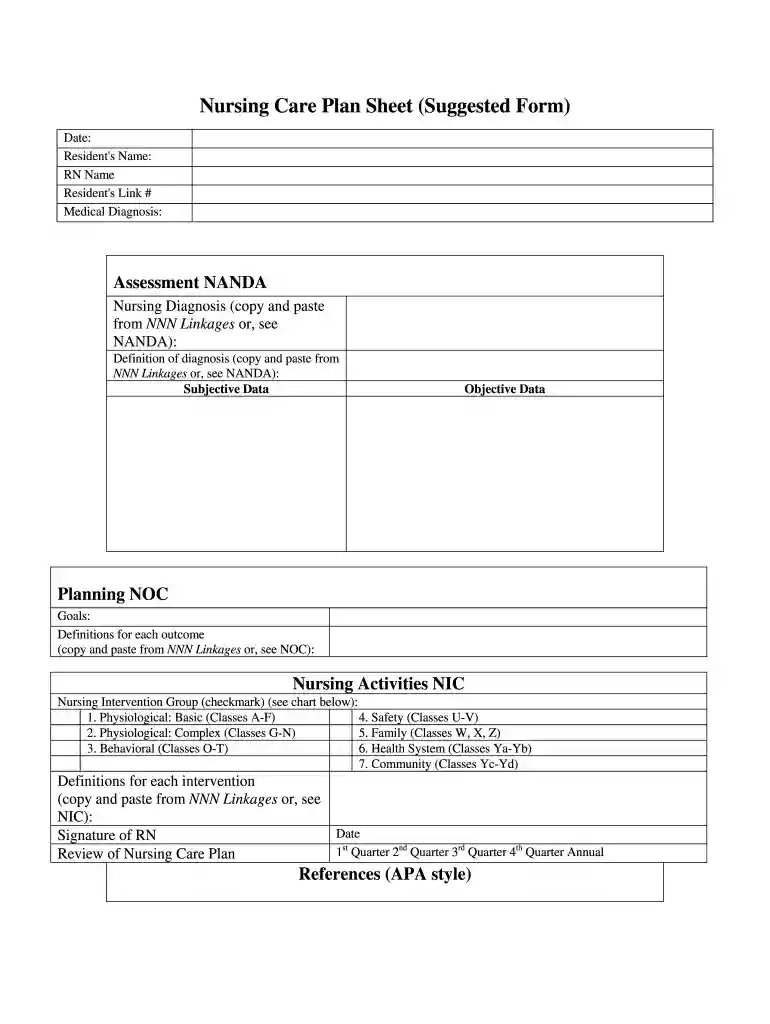
Blank plan of care forms are essential documents used in healthcare settings to outline a patient's healthcare needs, preferences, and goals. These forms serve as a structured template for healthcare providers—such as nurses, social workers, and physicians—to create individualized care plans tailored to each patient's unique situation. They facilitate comprehensive assessment and intervention planning, ensuring that all aspects of a patient's care are considered and documented. The core components typically included are patient identification information, medical background, nursing assessments, desired health outcomes, and specific interventions to achieve these goals.
The purpose of using a blank plan of care form is twofold. First, it standardizes the assessment and planning process, allowing for continuity of care across multiple healthcare providers. Second, it provides a clear framework for tracking patient progress over time, enabling healthcare teams to adjust interventions as necessary based on ongoing evaluation. The use of standardized terminology, backed by evidence-based practices, enhances communication among care team members and contributes to improved patient outcomes.
Using a blank plan of care form involves several key steps, ensuring thorough completion and effective implementation. The initial step is to gather relevant patient information, including demographic details, medical history, current medications, and healthcare goals. This foundational data sets the stage for a comprehensive assessment.
Complete Patient Information: Fill in details such as the patient’s name, date of birth, and contact information. This helps ensure clarity about who the plan pertains to.
Conduct Assessments: Utilize standardized nursing assessment tools to evaluate the patient’s needs. This may include physical exams, psychological evaluations, and assessments of daily living skills.
Identify Goals: Collaborate with the patient and, when appropriate, family members to establish clear, measurable goals. These should reflect the patient's personal health aspirations and be realistic given their medical condition.
Select Interventions: Based on the assessments and identified goals, outline specific nursing interventions. Each intervention should be categorized based on its nursing outcome, often referenced through NANDA (North American Nursing Diagnosis Association) terminology and NIC (Nursing Interventions Classification).
Review and Adjust: Regularly revisit the care plan to evaluate the patient's progress towards the established goals. Adjust interventions as necessary to address any changes in the patient’s condition or circumstances.
Effective use of blank plan of care forms fosters a more organized approach to patient care and promotes enhanced communication among the healthcare team.
Completing a blank plan of care form requires a systematic approach to ensure that all relevant details are included. The following steps guide healthcare professionals through the process:
Gather Preliminary Information: Start by collecting all necessary documents related to the patient's history and current health status. This includes previous care plans, lab results, and any assessments conducted prior to creating the new plan.
Conduct Initial Patient Evaluation: Perform a thorough examination or assessments based on the patient's needs. Document findings in the designated areas of the form, including subjective data (such as patient-reported symptoms) and objective data (such as measurable vitals).
Document Nursing Diagnoses: Based on the assessment data, determine nursing diagnoses using the NANDA framework. This will help in developing targeted goals and interventions.
Set SMART Goals: Write specific, measurable, achievable, relevant, and time-bound (SMART) goals. For instance, a goal might be for the patient to improve mobility to a defined level within two weeks.
Outline Specific Interventions: List relevant nursing interventions for each goal. Specify who will perform each intervention and when it should be completed.
Incorporate Evaluation Criteria: Determine how progress toward each goal will be measured. Include notes on follow-up assessments that will be required to evaluate effectiveness.
Finalize and Save the Document: Before sharing, ensure that the completed form is saved securely. If using a digital platform like DocHub, ensure all data is backed up within the cloud storage.
Review with the Healthcare Team: Share the plan with relevant team members for feedback and ensure alignment with collaborative care objectives.
Following these steps ensures comprehensive documentation, improving patient outcomes through effective healthcare planning.
Understanding the key elements of blank plan of care forms is vital for success in creating effective care plans. Typically, these elements encompass:
Patient Identification: Basic demographics, contact information, and emergency contacts provide essential background on the patient.
Medical History: Document significant past illnesses, surgeries, or ongoing health issues that need to be considered when planning care.
Nursing Assessments: Detailed evaluations that may cover physical, emotional, social, and environmental aspects of the patient’s health.
Goals of Care: Clearly defined objectives tailored to the patient's preferences and medical needs. These goals guide the interventions chosen.
Interventions: Specific actions that healthcare providers commit to in order to meet the established goals. Each intervention should have an associated rationale.
Evaluation Criteria: Established metrics for assessing the success of interventions and determining if goals are being met.
Care plans must be continuously updated to reflect changes in the patient’s condition, ensuring dynamic and responsive healthcare delivery.
Real-world applications of blank plan of care forms allow healthcare providers to tailor interventions to meet the specific needs of their patients. Below are illustrative scenarios:
Chronic Disease Management: For a patient with diabetes, a blank plan of care form might include goals such as stabilizing blood glucose levels and increasing the patient’s knowledge of dietary management. Interventions can range from patient education regarding carbohydrate counting to regular monitoring of blood sugar levels.
Post-Surgical Recovery: For a patient recovering from hip replacement surgery, a care plan could focus on pain management and mobility goals. Interventions may include administering prescribed medications, scheduling physical therapy sessions, and teaching the patient safe mobility techniques.
Mental Health Support: In cases involving mental health, the form is crucial for defining therapeutic goals, such as reducing anxiety or improving coping mechanisms. Interventions can include regular counseling sessions and mindfulness practice recommendations.
By tailoring the use of blank plan of care forms to the specific context of a patient’s health needs, healthcare providers can significantly enhance the quality of care delivered. These examples highlight the flexibility and adaptability of the forms in addressing various patient scenarios across the healthcare spectrum.
At DocHub, your data security is our priority. We follow HIPAA, SOC2, GDPR, and other standards, so you can work on your documents with confidence.
Physicians Name and Address. 26. I DocHub/reDocHub that this patient is confined to his/her home and needs intermittent skilled nursing care,Read more
Dec 12, 2025 In this section you will find resources, research and educational, and policy information including ACP care planning document templates and guidance.Read more
The Parsons Corporation (Parsons) prepared this Principles and Practices document under contract to the Air Force Center for Environmental Excellence (AFCEERead more


