




Definition and Meaning
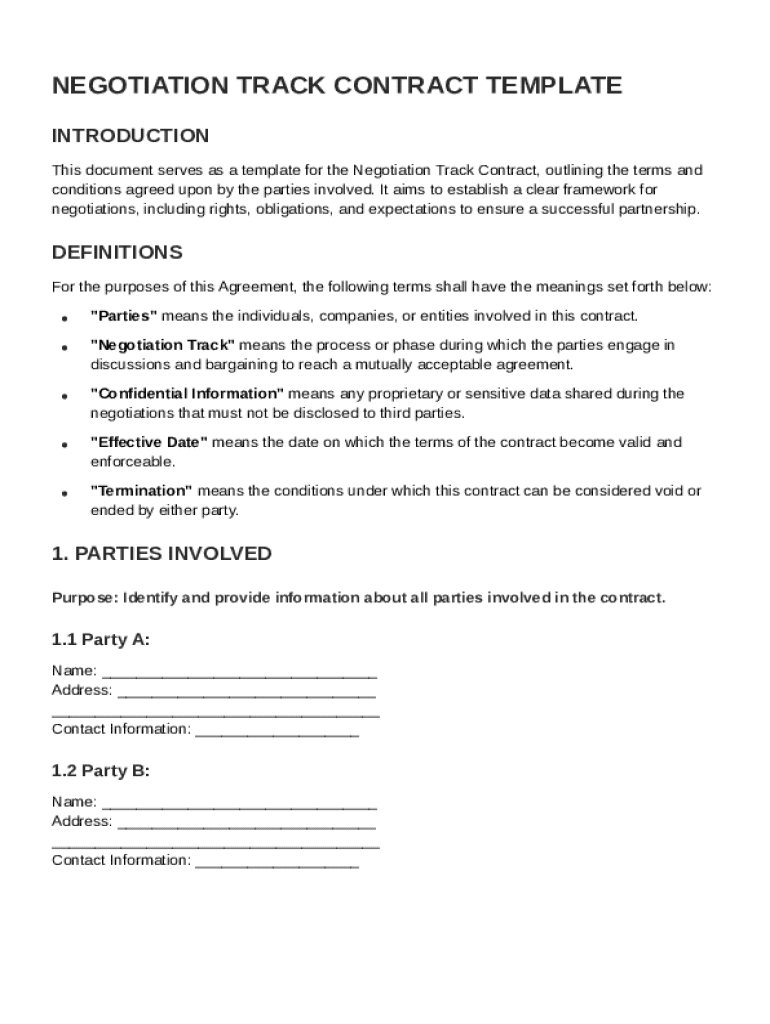
A Negotiation Track Contract Template is a structured document designed to outline the terms and conditions governing negotiations between two or more parties. It serves as a comprehensive guide that defines the key terms, identifies the parties involved, and establishes the scope of negotiation, encompassing objectives and boundaries. This template is pivotal in fostering transparent communication, facilitating smooth negotiations, and ensuring a successful partnership. By detailing responsibilities such as payment terms and confidentiality obligations, it lays a solid foundation for any negotiation-related activities. The template also supports dispute resolution mechanisms and amendment processes, adding layers of clarity and security to the negotiation framework.
Key Elements of the Negotiation Track Contract Template
The Negotiation Track Contract Template includes essential components that ensure clear, organized negotiations. These elements are carefully structured to address various aspects of a negotiation process:
- Parties Involved: Clearly identifies all participating entities, specifying their roles and responsibilities.
- Scope of Negotiation: Outlines the objectives, limitations, and general terms of the negotiation.
- Responsibilities: Details the duties and obligations of each party to ensure accountability.
- Payment Terms: Specifies how and when payments will be made during the negotiation.
- Confidentiality Obligations: Protects sensitive information shared during the negotiation from unauthorized access or disclosure.
- Dispute Resolution Mechanisms: Provides methods for resolving any conflicts that may arise during negotiations.
- Amendment Processes: Describes the procedures for modifying the agreement, ensuring flexibility and adaptability.
- Termination Conditions: Establishes the conditions under which the negotiation can be terminated.
How to Use the Negotiation Track Contract Template
Using the Negotiation Track Contract Template involves several steps to ensure that all parties' needs are comprehensively covered. Here’s a guided approach on how to effectively utilize the template:
- Fill in Party Information: Begin by entering the details of all parties involved, ensuring accurate representation.
- Define Scope and Objectives: Clearly outline the scope of the negotiation, including objectives and expectations.
- Outline Responsibilities: Assign tasks and responsibilities to each party, promoting transparency and accountability.
- Set Payment Terms: Agree on payment conditions to prevent future disputes over financial matters.
- Establish Confidentiality: Safeguard sensitive information with robust confidentiality sections.
- Detail Dispute Resolution: Agree on mechanisms to manage and resolve potential disputes.
- Include Amendment and Termination Clauses: Allow for modifications and outline termination conditions to maintain adaptability.
Legal Use of the Negotiation Track Contract Template
The Negotiation Track Contract Template must be used within the legal frameworks applicable in the United States to ensure its enforceability. Here's how to maintain its legal validity:
- Compliance with Laws: Ensure the template complies with relevant federal and state laws.
- Legally Binding Signatures: Include provisions for legally binding electronic signatures, adhering to the ESIGN Act.
- Governing Law: Specify the jurisdiction's governing law that will apply in case of disputes.
- Consult Legal Experts: Engage with legal professionals to review the template, enhancing its legal integrity.
Who Typically Uses the Negotiation Track Contract Template
The Negotiation Track Contract Template is predominantly used by organizations and individuals engaged in professional negotiations, such as:
- Businesses and Corporations: For managing partnerships, mergers, acquisitions, and other business dealings.
- Legal Teams and Consultants: To facilitate structured negotiation processes and manage client engagements.
- Government Agencies and NGOs: When engaging with private sector entities or forming public-private partnerships.
- Entrepreneurs and Start-ups: For negotiating investments, partnerships, and supplier agreements.

Examples of Using the Negotiation Track Contract Template
Practical applications of the Negotiation Track Contract Template include various scenarios:
- Corporate Mergers: Used to outline terms when two companies are negotiating a merger, ensuring alignment on strategic goals.
- Supplier Agreements: Helps in detailing the terms of supply, delivery expectations, and payment schedules.
- Real Estate Transactions: Utilized for negotiating terms between a buyer and seller, covering contingencies and inspection reports.
- Joint Ventures: Outlines responsibilities and investment conditions in collaborative business ventures.
Important Terms Related to Negotiation Track Contract Template
Understanding specific terms related to the Negotiation Track Contract Template is crucial for effective use:
- Confidentiality: The obligation to keep shared information private.
- Consideration: Anything of value exchanged between parties involved in the contract.
- Default: Failure to fulfill contractual obligations.
- Force Majeure: Unforeseeable circumstances preventing contractual fulfillment.
- Mitigation: Efforts made to limit damages during a dispute.
State-Specific Rules for the Negotiation Track Contract Template
Each state in the U.S. may have specific rules influencing the implementation of the Negotiation Track Contract Template:
- Governing Law Provisions: A clear designation of which state's laws will govern the contract.
- Dispute Resolution Requirements: Some states may have mandatory mediation or arbitration requirements.
- Electronic Signature Acceptance: States may have varying laws regarding the acceptance and recognition of electronic signatures.
Understanding these nuances can significantly impact the template's use and outcomes across different jurisdictions.