






Definition & Meaning
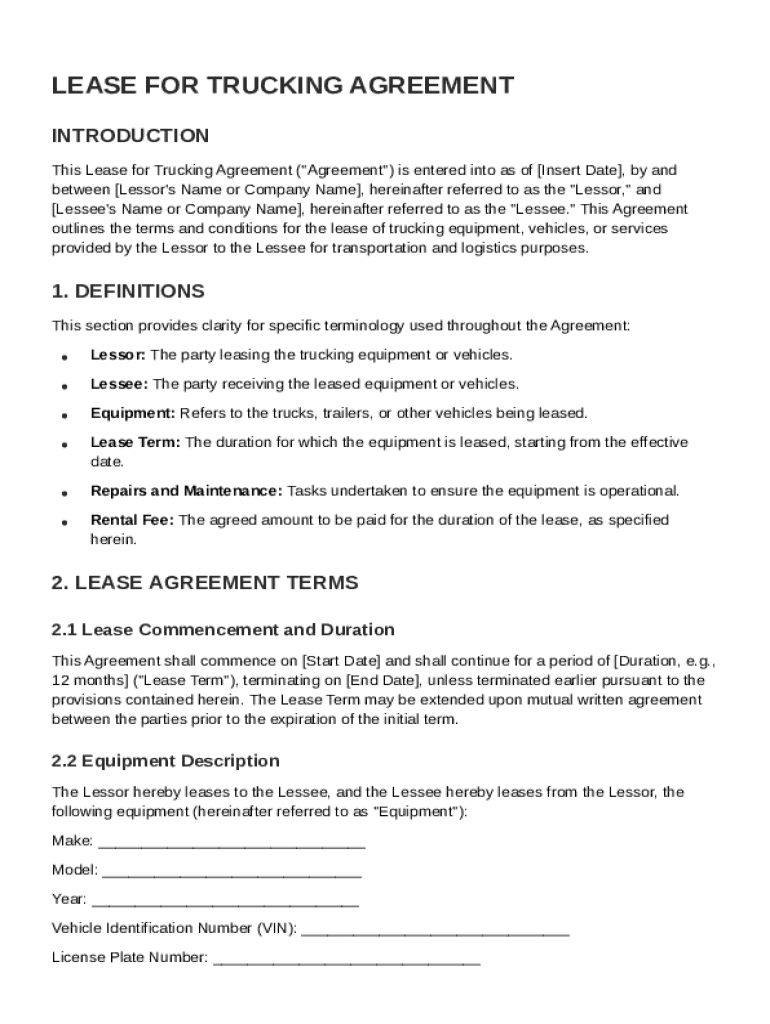
The "Lease for Trucking Agreement Template" is a legal document outlining the terms and conditions for leasing trucking equipment from one party, known as the Lessor, to another party, referred to as the Lessee. This agreement provides a structured framework for defining the responsibilities, financial commitments, and operational obligations of both parties involved in the leasing transaction. As a legally binding document, it ensures clarity in expectations and helps mitigate potential disputes by establishing clear guidelines for maintenance, insurance, liability, and termination conditions related to the lease.
Key Elements of the Lease for Trucking Agreement Template
Lease Terms and Conditions
- Lease Duration: Specifies the start and end dates of the lease, including any options for extension.
- Payment Schedule: Outlines rental fee amounts, payment frequency, and methods. Includes penalties for late payments.
- Usage Limitations: Details any restrictions on mileage or hours of operation, ensuring the lessee does not exceed agreed limits.
Maintenance and Responsibilities
- Maintenance Obligations: Clarifies which party is responsible for regular maintenance and any associated costs.
- Repair Responsibilities: Defines the process for addressing breakdowns or repairs and assigns responsibilities.
- Return Condition: Details the condition in which the equipment must be returned at the lease's end.
Insurance and Liability
- Insurance Requirements: Lists necessary insurance policies, coverage limits, and proof of coverage that the lessee must maintain.
- Liability Clauses: Outlines each party's liability in case of damage or loss of equipment.
- Indemnification Clauses: States that the lessee may be required to indemnify the lessor against various claims.
How to Use the Lease for Trucking Agreement Template
Utilizing the "Lease for Trucking Agreement Template" involves a systematic approach to ensure that the agreement meets both parties' requirements and legal obligations.
- Review the Template: Carefully examine each section to understand its implications. Ensure the terms align with your specific needs and circumstances.
- Customize the Details: Enter specific information such as the parties' names, detailed descriptions of the equipment, rental fees, and lease duration.
- Consult Legal Advice: It is often beneficial to seek legal advice to tailor the template according to particular state laws or individual business requirements.
- Final Review and Sign: Both parties should review the completed document before signing to ensure mutual understanding and agreement on all terms.
Practical Example
A logistics company looking to expand its fleet might use this template to lease additional trucks, detailing payment terms, maintenance responsibilities, and insurance needs specific to their operational model.
Steps to Complete the Lease for Trucking Agreement Template
- Identify the Parties: Clearly state the full names and contact information for both the lessor and lessee.
- Describe the Equipment: Include detailed descriptions of the trucking equipment being leased, such as make, model, and any unique identifiers.
- Define Lease Terms: Establish clear terms for lease duration, payment amounts, and specific obligations each party holds.
- Outline Insurance Requirements: Specify the necessary coverage and liability protections required during the lease term.
- Regularly Review Clauses: Ensure clauses regarding maintenance, indemnity, and penalties are reflective of both parties' expectations and legal standards.
- Secure Signatures: Both parties should sign and date the agreement, ensuring copies are retained for legal records.
Legal Use of the Lease for Trucking Agreement Template
The application of the "Lease for Trucking Agreement Template" must comply with relevant legal standards to protect both the lessor's and lessee's rights. It is crucial for:
- Ensuring Compliance with Local Laws: Verify that all provided terms adhere to state and federal regulations governing leasing agreements.
- Protecting Liability: Both parties need to ensure that necessary indemnity and liability clauses are included to safeguard against potential disputes or claims.
- Record Keeping: Maintain an executed copy as a formal record to reference in case of any disagreements regarding the lease terms.
Important Terms Related to Lease for Trucking Agreement Template
- Lessor: The party owning the trucking equipment and providing it for lease.
- Lessee: The party leasing the trucking equipment for a specified duration.
- Sublease: If allowed, the agreement may include terms regarding the lessee's ability to lease equipment to another party.
- Depreciation: Outlines how wear and tear might be valued or countered within the lease.
- Amendment Clause: Specifies the process for making any future changes to the agreement.
State-Specific Rules for the Lease for Trucking Agreement Template
Different states may have varying regulations that can affect the leasing of trucking equipment. Key considerations include:
- State-Required Disclosures: Certain disclosures may be mandated regarding the condition or history of the equipment.
- Tax Implications: Lease agreements might be subject to state-specific tax rules, affecting cost calculations.
- Insurance Regulations: State laws could dictate minimum insurance coverage types and limits the lessee must maintain.
Who Typically Uses the Lease for Trucking Agreement Template
This template is primarily utilized by businesses and individuals in the logistics, transportation, and freight industries:
- Trucking Companies: Expanding fleets without the need for capital outlay.
- Logistics Providers: Increasing capacity for short-term contracts or seasonal demand.
- Individual Owner-Operators: Leasing additional equipment for specific contracts or routes.
- Freight Businesses: Meeting operational needs in line with business growth or specific customer demands.
Each user can benefit from the comprehensive guidance and structured nature of the template, ensuring that all critical aspects of the lease are addressed.