
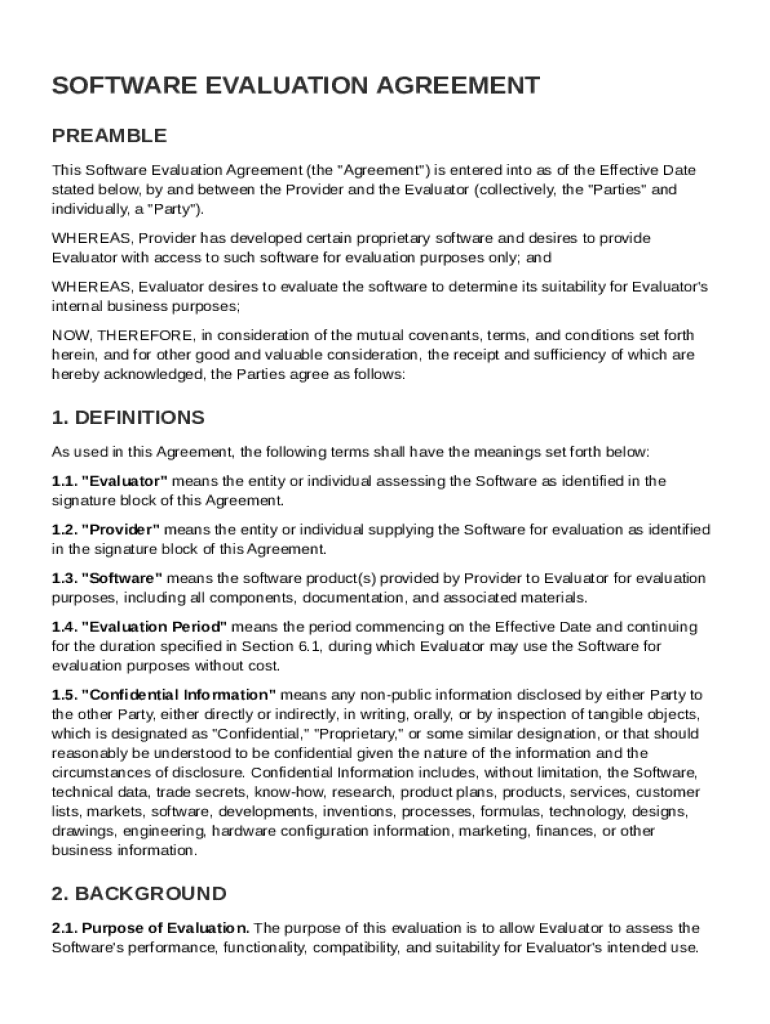







Definition and Purpose of the Software Evaluation Agreement
The Software Evaluation Agreement Template establishes the terms under which a software provider allows an evaluator to access their proprietary software for assessment purposes. Typically used to assess software performance, features, and applicability, this agreement defines the boundaries within which the evaluation can occur. It clarifies the roles of both parties, detailing the rights of the provider as well as the responsibilities and limitations of the evaluator.
Key Aspects of the Agreement
- Scope and Purpose: Outlines what is included in the evaluation and why.
- Parties Involved: Defines the provider and evaluator roles.
- Duration: Specifies how long the evaluation will last.
By clearly articulating these components, both parties can align their expectations and responsibilities, ensuring a productive evaluation period without misunderstandings. The agreement is fundamentally protective, preserving the proprietary rights of the software provider while granting the evaluator the necessary access for their analysis.
How to Use the Software Evaluation Agreement Template
Utilizing a Software Evaluation Agreement Template appropriately involves several systematic steps. First, both the provider and evaluator must carefully review the template to confirm it covers all necessary legal and procedural aspects specific to their arrangement. It is essential to customize sections to accurately reflect the particular software in question and the specific objectives of the evaluation.
Key Steps for Using the Template
- Review Content: Ensure all sections are relevant and complete.
- Customize Details: Add specific software information and evaluation objectives.
- Legal Review: Have legal professionals verify the terms for compliance.
Using the template ensures that all necessary legal language is included, thereby formally structuring the evaluation process and protecting both parties from potential disputes.
Important Terms Related to the Software Evaluation Agreement
Familiarity with the terms within the Software Evaluation Agreement is crucial for effective communication and understanding. Key definitions included in the agreement provide clarity on the relationship, expectations, and legal nuances.
Commonly Used Terms
- Confidentiality: Obligations to keep the software details secure.
- Licensing Restrictions: Limits on software usage and distribution.
- Liability Limitations: Defines the scope of responsibility in case of issues.
These terms are foundational, ensuring both parties fully understand what is expected and what legal boundaries are set within the agreement.
Key Elements of the Software Evaluation Agreement Template
A comprehensive Software Evaluation Agreement should include certain fundamental components that protect both parties and clarify their roles, responsibilities, and limits.
Essential Components
- Purpose and Scope: Clearly defines the evaluation's goals and limitations.
- Confidentiality Clauses: Protect proprietary information.
- Termination Conditions: When and how the agreement can be ended.
- Dispute Resolution: Mechanisms for resolving conflicts.
Inclusion of these elements in the agreement fortifies its legal standing and provides a clear framework for the evaluation, ensuring all aspects of the arrangement are covered.
Legal Use of the Software Evaluation Agreement Template
Legal adherence is a paramount aspect when utilizing the Software Evaluation Agreement Template. This agreement must align with applicable laws to maintain its validity.
Legal Considerations
- Compliance with Local Laws: Ensure agreement terms comply with relevant jurisdictions.
- Electronic Signatures: Confirm acceptance of digital signatures under the ESIGN Act.
- Ownership Rights: Clearly convey software ownership retains with the provider.
By adhering to legal standards, the agreement not only protects proprietary rights but also reassures both parties of the binding nature of their commitments.
How to Obtain the Software Evaluation Agreement Template
Securing a Software Evaluation Agreement Template involves accessing platforms that provide legal forms and templates, such as DocHub.
Sources for Templates
- Online Platforms: Legal document websites offer downloadable templates.
- Legal Advisors: Attorneys can provide customized templates.
- Business Consultants: May supply templates aligned with industry standards.
Accessing these resources ensures that both parties have a robust, legally-backed document tailored to their specific needs.
Examples of Using the Software Evaluation Agreement Template
Practical instances demonstrate the importance of correctly using the Software Evaluation Agreement Template. Companies testing new software in real-world conditions typically rely on these agreements for clarity and protection.
Real-World Scenarios
- Software Demos: Companies evaluating new software use the template to formalize the trial.
- Partnerships: Tech firms assessing third-party integrations apply the template to manage expectations.
These examples underline the value of a structured agreement, ensuring all parties are protected and aligned about the evaluation's objectives and constraints.
State-Specific Rules for the Software Evaluation Agreement Template
The applicability and legality of a Software Evaluation Agreement can vary across different states, and awareness of these differences ensures compliance with local regulations.
Factors Influencing State-Specific Terms
- Regulatory Requirements: Some states may have unique tech privacy laws.
- Contractual Clauses: Variations in enforceability of certain terms.
- Data Security Regulations: State laws might differ on data protection measures.
Awareness of these variables is vital to tailoring the agreement to meet state-specific legal requirements, ensuring it holds firm under scrutiny.




