Definition & Meaning
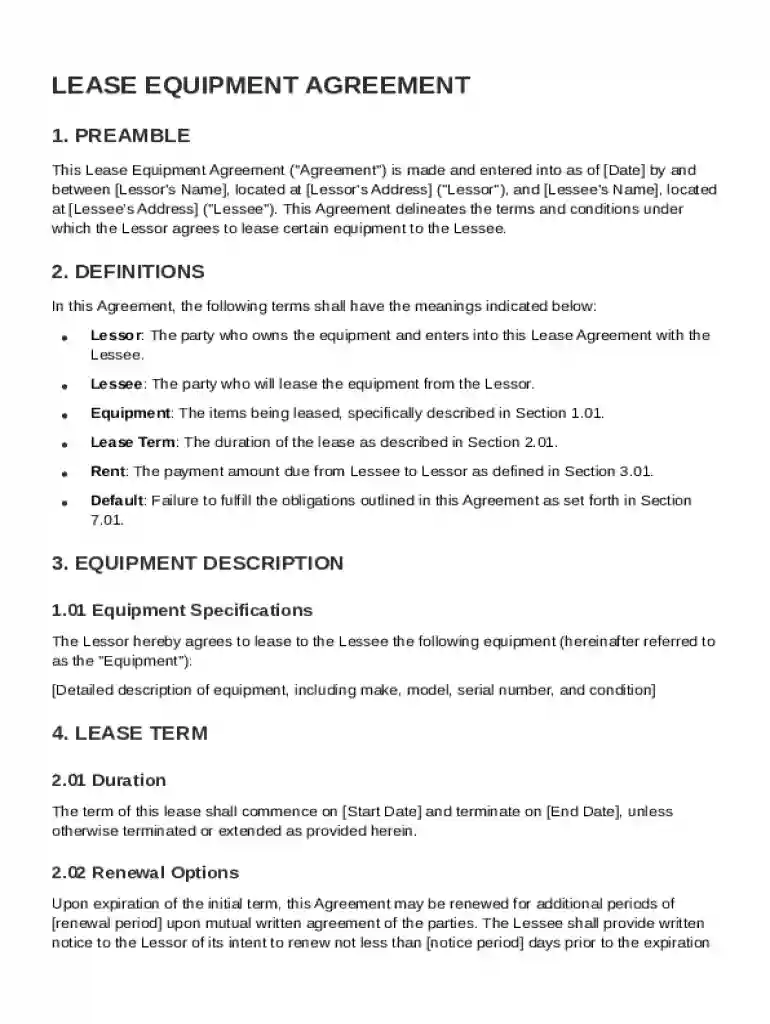
The "Lease Equipment Agreement Template" is a legally binding document used to outline the terms and conditions under which a lessor (the owner of the equipment) leases equipment to a lessee (the party renting the equipment). This template is designed to be comprehensive and includes necessary clauses that specify the rights, responsibilities, and obligations of both parties involved. Key aspects of the agreement cover details about the leased equipment, including descriptions and functional conditions. The document also delineates financial terms, such as lease duration, payment schedules, and any applicable fees. Additionally, it serves as a guide for resolving disputes, providing clauses on default and remedies, indemnification, and governing laws.
Key Elements of the Lease Equipment Agreement Template
The Lease Equipment Agreement Template contains several critical components that ensure both parties clearly understand their commitments and rights. It sets the framework for:
- Equipment Details: A description of the leased equipment, including serial numbers, make, model, and condition.
- Lease Duration: Specific start and end dates of the lease period, with any renewal options.
- Payment Terms: Detailed explanation of payment amounts, due dates, and accepted methods of payment.
- Insurance Requirements: Obligations for each party regarding the insurance coverage needed to protect the equipment.
- Ownership and Title: Confirmation that the lessor retains ownership of the equipment throughout the lease term.
- Maintenance Responsibilities: Clear assignment of maintenance duties, ensuring the equipment remains operational.
- Default and Remedies: Procedures for addressing defaults and associated penalties or remedies.
How to Use the Lease Equipment Agreement Template
Using the Lease Equipment Agreement Template involves several steps to ensure that the document is properly completed and legally binding:
- Review All Sections: Thoroughly read each section of the template to understand the terms and conditions.
- Fill in Required Details: Enter specific information such as parties' names, equipment details, and term dates.
- Adjust Template as Needed: Modify any sections to better fit the specific needs of the agreement, while ensuring compliance with relevant laws.
- Consult with Legal Counsel: Seek advice from a legal professional to confirm the document’s completeness and legality.
- Finalize and Sign: Once all parties agree to the terms, both should sign the document to make it official.
Legal Use of the Lease Equipment Agreement Template
The Lease Equipment Agreement Template must comply with U.S. legal standards to ensure enforceability. Legal use implies:
- Adhering to State Laws: Each state may have specific requirements or restrictions, so adapting the template to align with state regulations is crucial.
- Securing Valid Consent: All parties must knowingly consent and have the legal capacity to enter into the agreement.
- Ensuring Document Authenticity: Use electronic signatures for efficiency, with secure methods such as those compliant with the ESIGN Act.
- Maintaining Clear Records: Keep copies of the signed agreement and any amendments for future reference and potential legal verification.
Steps to Complete the Lease Equipment Agreement Template
Completing the Lease Equipment Agreement Template involves several practical steps that ensure all essential components are accurately and comprehensively addressed:
- Initiate the Agreement: Enter the full names and contact information of the lessor and lessee.
- Describe the Equipment: Clearly list the equipment, including any identifying details, conditions, and required maintenance schedules.
- Specify Lease Terms: Outline the lease duration, payment cycle, methods, and any penalties for late payments.
- Detail Maintenance Obligations: Define who will cover routine maintenance and repairs, including any associated costs.
- Discuss Insurance Obligations: Detail any insurance requirements specifying party responsibilities and coverage.
- Outline Default Conditions: Clearly state what constitutes breach of contract and available remedies.
- Finalize and Execute: Collect signatures from all involved parties after a thorough review.
State-Specific Rules for the Lease Equipment Agreement Template
Certain states may have regulations that influence the terms and execution of lease agreements. Understanding state-specific rules is crucial:
- California: May require disclosures about hazardous materials and specific notice terms for termination.
- New York: Mandates include specific warranty and rent stabilization clauses depending on equipment use.
- Texas: Focuses on clear communication about insurance responsibilities and penalties for failing to meet them.
This awareness ensures the agreement satisfies local legal requirements, avoiding potential disputes or invalidations.
Who Typically Uses the Lease Equipment Agreement Template
The Lease Equipment Agreement Template is commonly used by various parties:
- Small Business Owners: Lease equipment without a heavy upfront investment.
- Corporations: Manage inventory across locations while conserving capital.
- Service Providers: Like construction or IT firms, leasing specialized tools temporarily instead of purchasing outright.
- Individual Contractors: Secure equipment needed for finite projects.
These users benefit from the flexibility and cost-effectiveness of leasing equipment tailored to rotational or project-specific needs.

Software Compatibility and Digital Versions
DocHub's platform ensures the Lease Equipment Agreement Template is compatible with numerous digital formats:
- Import and Export Options: Seamlessly import agreements from Google Drive, Dropbox, or locally stored files in formats like PDF, DOC, or TXT.
- Editing Capabilities: Use real-time editing, insertion of text, images, and annotations to customize agreements.
- Electronic Signatures: Utilize legally compliant e-signature solutions, reducing paper use and expediting the signature process.
- Cloud Integration: Directly save finalized agreements to cloud storage solutions for accessible record keeping and modifications.
This compatibility provides efficiency and flexibility in maintaining equipment lease agreements across digital platforms.