




Definition & Meaning
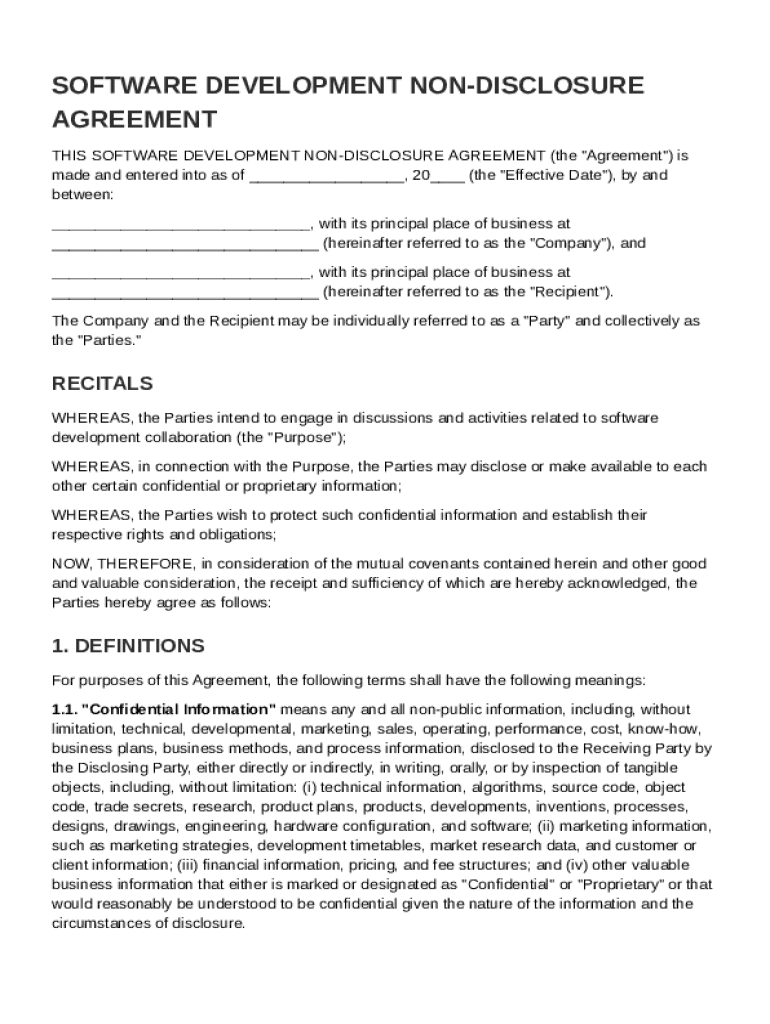
The Software Development Non-Disclosure Agreement (NDA) is a legally binding document that establishes a framework for protecting confidential information exchanged during software development collaborations. This agreement prevents unauthorized disclosure and maintains the privacy of sensitive information shared between parties. It outlines the roles of both the disclosing party (often the Company) and the receiving party (the Recipient), ensuring that proprietary data remains secure.
Key Elements of the Software Development NDA Agreement Template
The agreement template includes several critical components designed to safeguard intellectual property. Key elements often encompass:
- Confidential Information Definition: Specifies what constitutes confidential information, including technical data, software codes, and design documents.
- Obligations of Recipients: Elaborates on the Recipient's duty to protect and not misuse the disclosed information.
- Exclusions: Lists information not subject to confidentiality, such as data already in the public domain.
- Ownership Rights: Details who retains ownership of the shared content and any derivatives.
- Return and Destruction: Procedures for returning or destroying materials upon termination of the agreement.
How to Use the Software Development NDA Agreement Template
Using the NDA template involves a series of steps:
- Download the Template: Obtain the template from a trusted legal resource or document management platform like DocHub.
- Identify Parties: Clearly define the parties involved by including names and contact information.
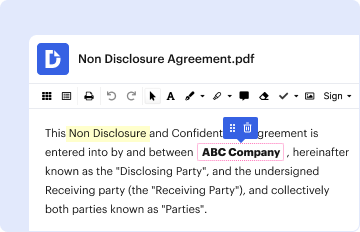
- Customize Terms: Tailor the sections related to confidential information and obligations to fit your specific situation.
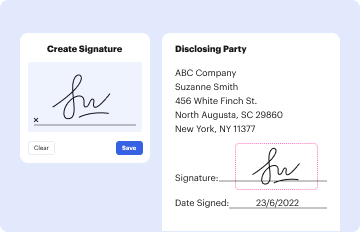
- Signatures: Secure legally binding electronic signatures from all parties through a platform compliant with the ESIGN Act.
Steps to Complete the Software Development NDA Agreement Template
Completing the NDA template can be broken down into detailed steps:
- Review the Template: Understand each section thoroughly, especially terms regarding confidentiality and obligations.
- Gather Information: Collect necessary details such as party identities, effective date, and term duration.
- Tailor Specific Clauses: Adjust clauses to include specifics of the software development project and scope of information covered.
- Review Legal Implications: Consult with a legal professional to ensure alignment with your business needs and compliance with relevant laws.
- Sign the Agreement: Execute the document using electronic signature capabilities for legal enforceability.
Important Terms Related to Software Development NDA Agreement Template
The template includes several important legal and technical terms:
- Non-Disclosure: A legal promise by the Recipient not to share confidential information.
- Perpetual Obligations: Continued responsibilities to protect information even after the agreement ends.
- Mutual NDA vs. Unilateral NDA: Specifies if both parties or only one is disclosing sensitive information.
- Remedies for Breach: Legal consequences and corrective measures in case of unauthorized disclosure.
Legal Use of the Software Development NDA Agreement Template
The legal enforceability of NDAs is critical for protecting intellectual property:
- Compliance with Laws: Ensure the NDA adheres to state and federal regulations to avoid nullification.
- Amendments and Severability: Provision to modify terms or remove unenforceable sections without voiding the entire document.
- Applicable Governing Law: Clearly state which jurisdiction's laws will apply in case of disputes.
Who Typically Uses the Software Development NDA Agreement Template
The NDA is commonly employed by:
- Tech Companies: Protecting innovations during collaboration with developers and partners.
- Freelance Developers: Ensuring client information remains confidential.
- Startups: Safeguarding business plans and strategies when discussing with investors or consultants.

Examples of Using the Software Development NDA Agreement Template
Practical use cases highlight its importance:
- Development Consultation: Companies discussing project specifications with external consultants utilize NDAs to shield proprietary methods.
- Joint Ventures: Two tech firms collaborating on a new software product sign an NDA to ensure both parties' data remains protected.
- Investor Meetings: Startups presenting business plans to potential investors use NDAs to ensure ideas are not misappropriated.
Digital vs. Paper Version
Digital versions of NDAs offer advantages:
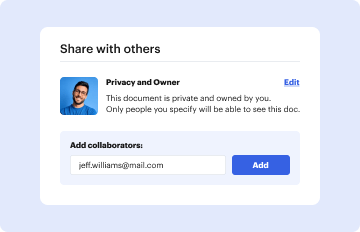
- Convenience: Easily signed and stored using platforms like DocHub, accessible from anywhere.
- Efficiency: Reduces paper usage and streamlines sharing and filing processes.
- Security: Enhanced protection against unauthorized access compared to physical documents.
State-Specific Rules for the Software Development NDA Agreement Template
Different states may have specific rules impacting NDAs:
- California: Limits NDAs to protect employee mobility and ensure agreements are not overly restrictive.
- Massachusetts: Requires explicit employee understanding and reasonable scope to uphold NDAs.
This comprehensive guide serves as an all-encompassing resource for effectively utilizing the Software Development NDA Agreement Template in your software development endeavors.