







Definition & Meaning
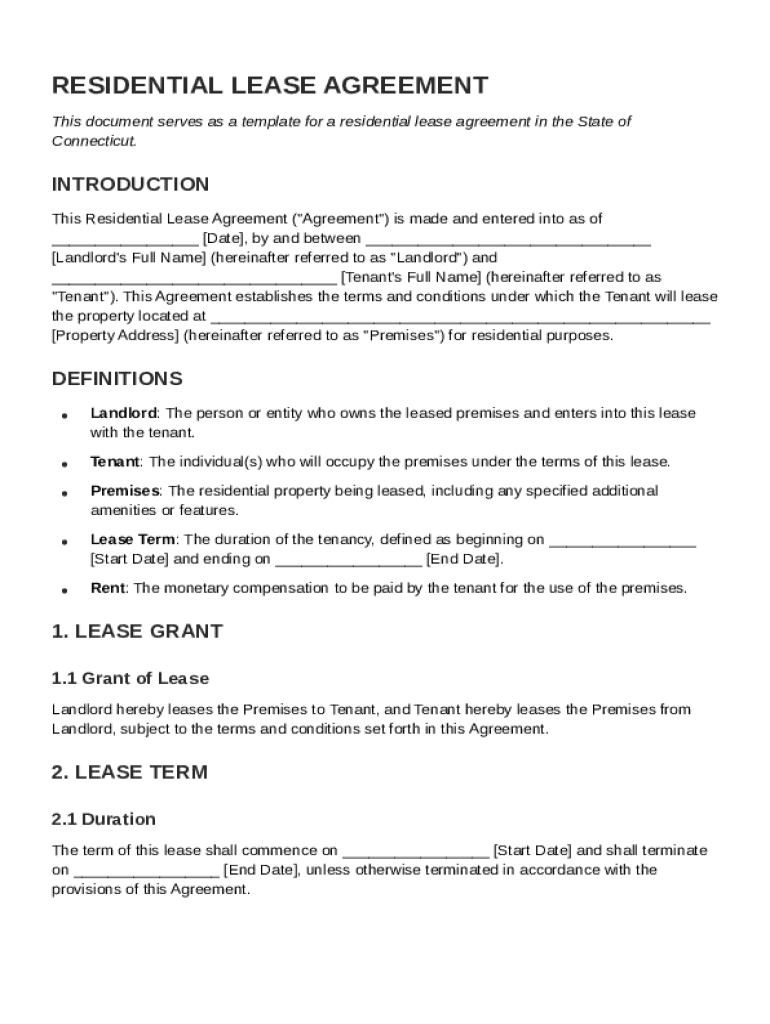
A Connecticut Lease Agreement Template is a legally binding document that establishes the terms and conditions under which a property owner, known as the landlord, leases real estate to a tenant. This template serves as a standardized format that can be customized to fit the specific needs of both parties involved in the lease agreement. It outlines key elements such as the lease duration, rent amount, payment schedule, and specific responsibilities of each party. By using this template, landlords and tenants can ensure that their lease agreements adhere to Connecticut's legal requirements while providing a clear understanding of expectations and obligations.
Key Elements of the Connecticut Lease Agreement Template
The Connecticut Lease Agreement Template includes essential elements to ensure a comprehensive understanding of the contract:
-
Lease Duration: Specifies the start and end dates of the lease, including options for renewal or early termination.
-
Rent Payments: Details the amount of rent due, the payment schedule, acceptable payment methods, and any penalties for late payments.
-
Security Deposit: Outlines the amount required for a security deposit, conditions for its return, and situations where deductions may occur.
-
Use of Premises: Describes permissible uses of the property, promoting proper tenant conduct and preventing illegal activities.
-
Maintenance Responsibilities: Identifies which party is responsible for maintaining different aspects of the property.
-
Utilities: Specifies who will pay for utilities such as water, electricity, and internet.
-
Governing Law: Confirms the lease is governed by Connecticut laws, ensuring compliance with state-specific regulations.
State-Specific Rules for the Connecticut Lease Agreement Template
Connecticut has unique regulations that landlords and tenants must follow to ensure the lease agreement is legally valid:
-
Security Deposit Regulations: Connecticut law caps security deposits at a maximum of two months' rent for tenants under 62 and one month's rent for those 62 and older.
-
Disclosure Requirements: Landlords must disclose information about lead-based paint in buildings constructed before 1978.
-
Notice Period for Termination: Standard notice periods differ based on the lease type – month-to-month arrangements typically require a thirty-day notice, while fixed-term leases mandate compliance with the end-date terms unless otherwise agreed upon.
Compliance with state laws helps protect the rights and interests of both parties involved in the lease.
Steps to Complete the Connecticut Lease Agreement Template
To correctly fill out the Connecticut Lease Agreement Template, follow these steps:
-
Review Property Details: Confirm the legal address and description of the rental property.
-
Identify Parties: Include full legal names and contact information for both the landlord and the tenant.
-
Specify Lease Terms: Clearly state the lease duration, amount of rent, and payment details.
-
Define Responsibilities: Detail maintenance duties and utility payment responsibilities.
-
Include Legal Clauses: Incorporate necessary legal provisions, including governing law and security deposit terms.
-
Signatures: Ensure both parties sign the document, reflecting mutual agreement and comprehension of the terms.
By precisely completing these steps, you can create a robust legal document that supports harmonious landlord-tenant relations.
Important Terms Related to Connecticut Lease Agreement Template
Understanding specific terminology related to the lease agreement template ensures clarity in the contract:
-
Lessee: The tenant who rents and occupies the property.
-
Lessor: The property owner or landlord who leases the property.
-
Premises: Refers to the rented property covered by the lease agreement.
-
Default: Failure by either party to comply with the lease terms, potentially leading to penalties or termination.
-
Holdover Tenant: A tenant who remains on the property after the lease term without landlord consent.
A comprehensive grasp of these terms assists in navigating lease agreements effectively.
Legal Use of the Connecticut Lease Agreement Template
The Connecticut Lease Agreement Template must adhere to legal standards to ensure its enforceability:
-
Written Agreement: While oral agreements are permissible for shorter leases, written agreements offer greater legal protection and clarity.
-
Compliance with Landlord-Tenant Laws: Both parties should familiarize themselves with Connecticut's landlord-tenant laws, protecting their interests and adhering to regulations.
Utilizing a legally compliant template safeguards the parties and facilitates conflict resolution should disputes arise.
Who Typically Uses the Connecticut Lease Agreement Template
Different parties benefit from the use of the Connecticut Lease Agreement Template:
-
Landlords: Protect their property interests and ensure tenant adherence to rental terms.
-
Tenants: Understand expectations, safeguarding against unfair practices and negotiating favorable lease terms.
-
Real Estate Professionals: Utilize the template to streamline the contract process, reducing legal risks and ensuring standardization across leases.
These parties rely on the template to facilitate smooth transactions and maintain professional relationships.


Examples of Using the Connecticut Lease Agreement Template
Utilizations of the Connecticut Lease Agreement Template reveal practical applications:
-
Residential Leases: Commonly used for apartments and houses, ensuring clarity in living arrangements and financial obligations.
-
Commercial Leases: Applied to lease office or retail spaces, catering to specific business needs and distinguishing contractual differences from residential leases.
-
Short-term Rentals: Adapts to accommodate vacation or sublease agreements, maintaining flexibility while upholding legal standards.
Through diverse applications, the template responds to varied leasing scenarios, enhancing its utility.
Software Compatibility and Integration
Seamless integration with software tools elevates document efficiency:
-
DocHub: Offers features like annotation, signature collection, and real-time collaboration, facilitating dynamic contract management.
-
Cloud Storage Services: Connects with Google Drive, Dropbox, and others, enabling easy import and export of documents.
Such software compatibility streamlines lease management, improving productivity and supporting electronic document handling.




