
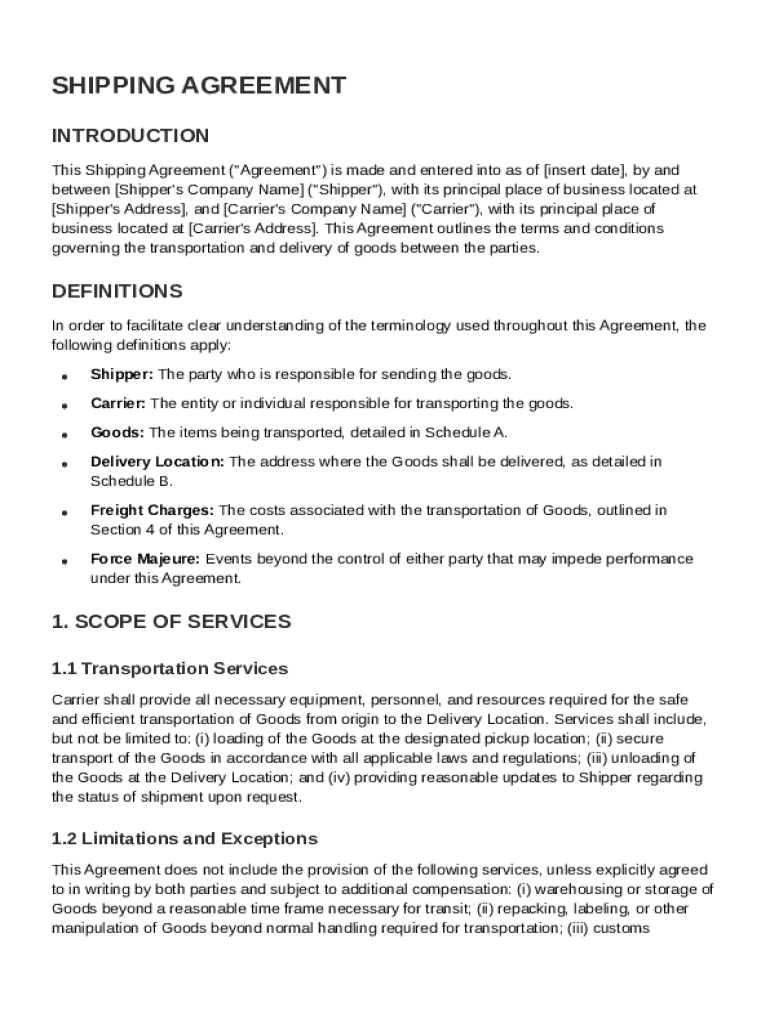







Definition and Meaning
The Shipping Agreement Template is a legal document that outlines the terms and conditions for the transportation and delivery of goods between a shipper and a carrier. This agreement establishes essential roles and responsibilities, ensuring both parties clearly understand their obligations concerning packaging, delivery schedules, documentation, and handling of goods. It serves as a reference point for resolving disputes, specifying insurance requirements and liability allotment in the event of loss, damage, or delay during shipment.
Components of the Agreement
- Roles and Responsibilities: Clearly defines the obligations of the shipper (who sends goods) and the carrier (responsible for delivery).
- Packaging and Handling: Specifies how goods should be packaged to ensure safe handling and transport.
- Liability and Insurance: Outlines what happens in case of loss or damage, including insurance coverage requirements.
How to Use the Shipping Agreement Template
When using the Shipping Agreement Template, it is crucial to customize the document to reflect the specific needs of the transaction and the involved parties. By following a standard process, businesses can ensure the template meets their requirements while protecting their interests.
- Customize the Template: Modify sections to align with unique business practices and specific terms agreed upon between shipper and carrier.
- Review Legal Terms: Ensure all parties understand legal terminologies to avoid misunderstandings.
- Finalize with Signatures: All parties should review, sign, and retain copies of the finalized document for future reference.
Key Elements of the Shipping Agreement Template
The Shipping Agreement Template incorporates several critical components that establish a comprehensive framework for exchange. Understanding these elements helps ensure the agreement is thorough and legally sound.
Main Sections
- Terms of Shipment: Includes delivery timelines, routes, and conditions.
- Cost and Payment Terms: Details the financial aspects, including payment schedules and methods.
- Dispute Resolution: Provides mechanisms for resolving disagreements, such as mediation or arbitration clauses.
Steps to Complete the Shipping Agreement Template
Completing the Shipping Agreement Template requires a methodical approach to ensure accuracy and completeness. The following steps outline the process:
- Gather Information: Collect necessary data, such as the identities of the shipper and carrier, and details about the goods.
- Fill Out Sections: Complete each section with precise information, ensuring clarity in terms and conditions.
- Verify Details: Double-check all entries to confirm the accuracy of information provided.
- Seek Legal Advice: Consult a legal expert if there are uncertainties regarding terms or compliance with regulations.
- Get Signatures: Once all parties agree on the terms, obtain signatures to validate the agreement.
Legal Use of the Shipping Agreement Template
The Shipping Agreement Template must adhere to applicable legal standards to ensure enforceability. Understanding the legal context ensures that the document serves its purpose effectively.
Compliance with Laws
- ESIGN Act Compliance: Ensures electronic signatures are legally binding and adhere to U.S. standards.
- Insurance Requirements: Confirms parties are bound to comply with industry-specific insurance laws.
- Confidentiality Clauses: Legally protects sensitive business information included in the transportation process.
State-Specific Rules for the Shipping Agreement Template
Shipping agreements may be subject to state-specific regulations that influence their drafting and execution. Awareness of these differences is vital for compliance.
Considerations for Differing State Laws
- Insurance and Liability: Variations in state law regarding the carrier's liability and required insurance coverage.
- Confidentiality Agreements: States may have different provisions concerning the confidentiality of transported goods.
Important Terms Related to Shipping Agreement Template
Understanding the terminology used in a Shipping Agreement Template ensures all parties are on the same page. Here are some key terms frequently used:
- Carrier: The entity responsible for the transport and delivery of goods.
- Consignor: Another term for the shipper, the party sending the goods.
- Bill of Lading: A legal document issued by the carrier that outlines the shipment's details.
Examples of Using the Shipping Agreement Template
Practical examples can illustrate how the Shipping Agreement Template is effectively utilized in various industries and scenarios.
Real-World Applications
- Retail Sector: A retail chain uses the agreement to formalize terms with trucking companies delivering products to stores.
- Manufacturing Industry: A manufacturer employs the template to standardize agreements with multiple carriers responsible for distributing goods to vendors nationwide.
Versions or Alternatives to the Shipping Agreement Template
Several versions and alternatives to the standard Shipping Agreement Template may fit different business contexts.
Alternatives to Consider
- Brokerage Agreement: For situations involving third-party logistics providers that coordinate between shipper and carrier.
- Consignment Agreement: Utilized when goods are held and sold by a third-party until transferred to the final buyer.
This template provides a structured framework that businesses can adapt according to their operational needs while ensuring compliance with legal norms.




