




Definition & Meaning
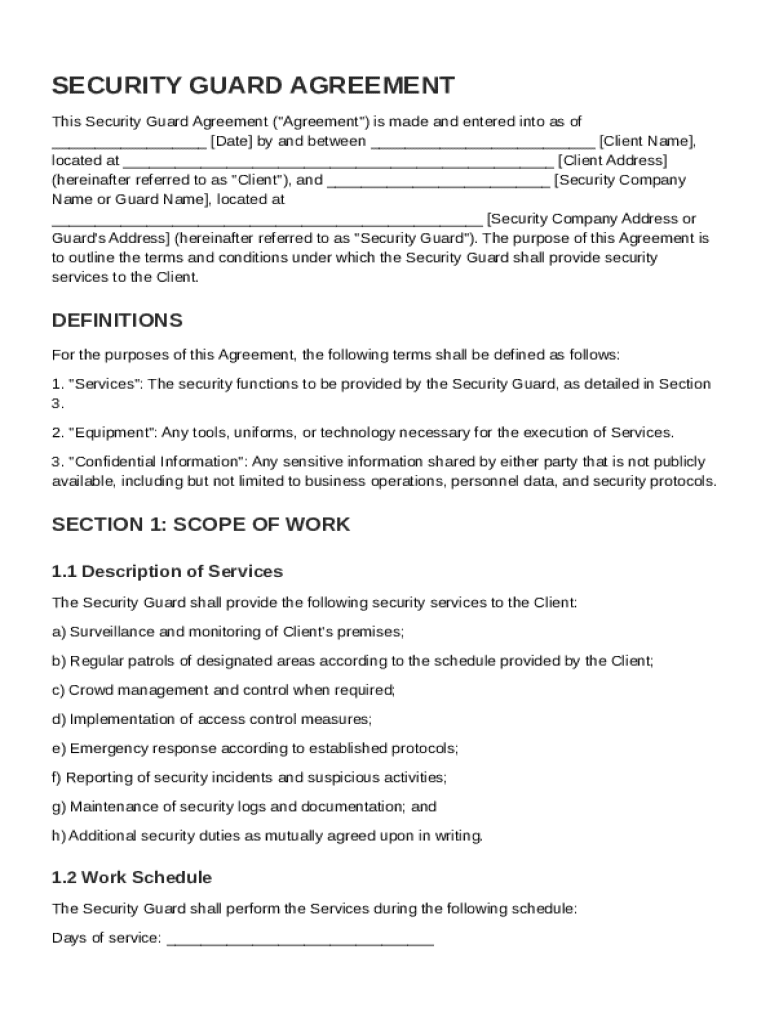
The Security Guard Agreement Template serves as a legal document outlining the terms and conditions under which a security guard provides services to a client. It plays a crucial role in formalizing the relationship, ensuring both parties clearly understand their rights and obligations. By specifying definitions of key terms, the template helps eliminate ambiguity, ensuring that terms like "Client," "Security Guard," and "Services" are understood consistently by all parties involved.
- Client: Typically, an individual or organization that contracts the security services.
- Security Guard: The individual or entity responsible for providing security services.
- Services: Specifies the nature and scope of the security services to be provided, such as patrols, monitoring, or access control.
Having these definitions in place helps facilitate a mutual understanding and lays the foundation for the rest of the agreement.
Key Elements of the Security Guard Agreement Template
The Security Guard Agreement Template comprises several integral sections designed to cover all facets of the contractual relationship. These key elements ensure a comprehensive framework is in place:
- Scope of Work: Clearly defines the specific duties and responsibilities expected of the security guard.
- Compensation Structure: Details the payment terms, including rate, frequency, and method of payment, ensuring transparency in financial dealings.
- Confidentiality Obligations: Outlines duties regarding the protection of sensitive client information.
- Liability and Indemnification: Sets forth the extent of liability for both parties and includes indemnification clauses to protect against specific legal responsibilities.
- Termination Conditions: Provides conditions under which the agreement can be terminated, including notice requirements and potential penalties.
These elements work together to create a robust framework that safeguards the interests of both the client and the security guard.
Steps to Complete the Security Guard Agreement Template
Completing the Security Guard Agreement Template involves a series of methodical steps to ensure all necessary components are correctly included and understood:
- Review the Template: Read through the entire template to familiarize yourself with its structure and content.
- Fill in Basic Information: Include the names and contact details of the client and security guard.
- Define the Scope of Work: Specify the exact services to be provided, the schedule, and any specific requirements.
- Confirm Compensation Details: Ensure clarity on the payment terms, including hourly rates or salary.
- Set Confidentiality Parameters: Establish terms regarding the handling of confidential information.
- Outline Termination Clauses: Determine mutually agreeable terms for ending the agreement.
- Review and Sign: Once all terms are filled in, both parties should review the document thoroughly before signing.
Following these steps helps protect both parties and aims for a fair contractual environment.
Legal Use of the Security Guard Agreement Template
The Security Guard Agreement Template is designed to meet legal standards and provide enforceable solutions in case of disputes. For lawful use:
- Comply with Federal Laws: Ensure compliance with federal regulations, particularly those relating to labor and employment.
- State-Specific Laws: Different states may have unique requirements or restrictions that need to be incorporated. For example, some states may require specific licensing details for security guards.
- Signature Requirements: All parties, including witnesses if necessary, must sign the document for it to be legally binding.
- Record-Keeping: Maintain copies of the signed agreement for future reference, as they may be needed for legal verification.
By adhering to these legal guidelines, the template can effectively serve its purpose in formal contractual commitments.
Important Terms Related to Security Guard Agreement Template
Understanding the legal jargon within a Security Guard Agreement is vital for both parties. Some of the critical terms include:
- Indemnify: A guarantee to cover any losses or damages one party may incur resulting from specific actions or events.
- Termination Clause: The section that outlines the conditions under which the agreement can be concluded by either party.
- Governing Law: Specifies which jurisdiction’s laws will be applied in resolving any disputes.
- Force Majeure: Defines extraordinary events (e.g., natural disasters) that may relieve parties from fulfilling obligations.
These terms are crucial in defining the boundaries and liabilities within the agreement, ensuring that both parties have a clear understanding of their obligations and rights.
Who Typically Uses the Security Guard Agreement Template
A wide range of individuals and organizations may find the Security Guard Agreement Template indispensable:
- Small and Medium Enterprises (SMEs): Often employ security guards to protect physical assets and ensure the safety of their premises.
- Corporations: Large corporations may need a formal agreement for hiring security services consistently across multiple locations.
- Event Organizers: Contracts with security personnel for specific events to ensure orderly conduct and safety.
- Private Individuals: Those who may hire a security guard for personal protection or safety.
Each user type benefits from a standardized contract to clearly define and protect their interests.

How to Use the Security Guard Agreement Template
Utilizing a Security Guard Agreement Template can streamline the process of setting terms for security services. Here's how:
- Customization: Modify the template's fields to align with your specific needs, adding or removing sections as necessary.
- Input Relevant Data: Ensure that all standard information, such as the names of parties and contract duration, is accurately input.
- Review Clauses: Examine each clause for relevance and adjust them if needed for specific situations.
- Consult Professionals: If in doubt, seek legal advice to validate the completeness and accuracy of the document.
Proper utilization of the template within its design boundaries ensures that it effectively serves its purpose as a legally binding agreement.
State-Specific Rules for the Security Guard Agreement Template
Security regulations and requirements can vary significantly from one state to another. When using the Security Guard Agreement Template, consider:
- Licensing Requirements: Some states may have strict licensing requirements for security personnel which must be included in the agreement.
- Wage Standards: Minimum wage laws can differ, influencing the compensation section of the template.
- Insurance and Bonding: Ensure compliance with any state-specific insurance coverage and bonding requirements for security guards.
Adapting the template to meet state-specific regulations ensures compliance and minimizes the risk of legal challenges.