







Definition & Meaning
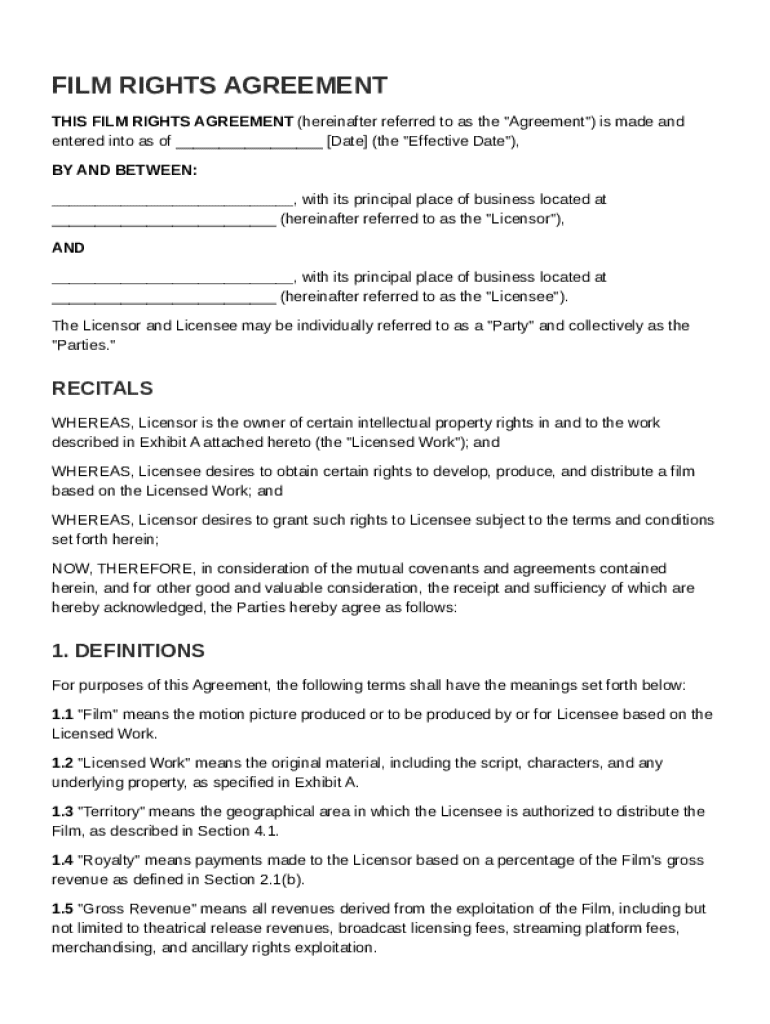
A Film Rights Agreement Template is a standardized legal document that outlines the terms and conditions under which a licensor grants a licensee the rights to develop, produce, and distribute a film based on a specified licensed work. It serves as a foundational agreement ensuring that both parties fully understand and agree on the scope of the film project. This template includes clauses detailing the transfer of specific rights, such as adaptation, reproduction, distribution, and exhibition, which are essential for legally producing a film using existing intellectual property.
The agreement clearly defines the parties involved, the licensed work, and the scope of rights granted. It also covers terms related to compensation, production responsibilities, intellectual property ownership, and various warranties to protect both licensor and licensee. Such agreements are essential for filmmakers and content creators who wish to lawfully transform existing material into a new film project.
How to Use the Film Rights Agreement Template
Understanding the Template Structure
-
Read the Entire Document: Before filling out the Film Rights Agreement Template, it is crucial to read and understand each section thoroughly. This ensures that you are aware of all the legal and financial obligations involved.
-
Identify Your Roles: Clearly determine whether you are the licensor or licensee, and ensure that your counterpart has been properly identified in the agreement.
-
Input Necessary Information:
- Details about the licensed work, including titles, descriptions, or scripts.
- Names and contact information for all parties.
- Specific details regarding the scope of rights being transferred.
Completing the Agreement
- Fill In Required Fields: Utilize text fields within the template to input personalized information.
- Set Compensation Terms: Define any payment structures, such as royalties or lump sums, to be paid in exchange for the rights granted.
- Review and Amend as Needed: You may include or modify clauses to align with specific business needs or to comply with legislative changes.
Key Elements of the Film Rights Agreement Template
Core Components
-
Grant of Rights: Specifies the exact rights being granted by the licensor, including whether the adaptation includes sequels, prequels, or derivative works.
-
Compensation and Royalties: Details the financial arrangements, distinguishing between upfront payments, recurring royalties, or profit-sharing mechanisms.
Additional Provisions
-
Warranties and Representations: Ensures both parties make accurate statements regarding their legal capacities and the validity of their claims to the licensed work.
-
Termination Conditions: Clarifies under what circumstances the agreement can be terminated, including breaches or failure to meet specific milestones.
Important Terms Related to the Film Rights Agreement Template
Common Terminologies
- Licensor: The party granting the rights to adapt the licensed work.
- Licensee: The party receiving the rights to produce and distribute the film.
- Licensed Work: The specific intellectual property being adapted or utilized.
- Derivative Rights: Rights beyond the initial adaptation, such as sequels or merchandise.
Nuanced Clauses
- Moral Rights: Discusses the creator's rights to preserve the integrity and attribution of the original work.
- Indemnity: Outlines the responsibilities of each party to cover legal costs arising from disputes over the rights.
Steps to Complete the Film Rights Agreement Template
- Initial Preparation: Gather all necessary information, including identification documents, details of the licensed work, and financial forecasts.
- Document Drafting: Input all required details into the template, ensuring accuracy in legal descriptions and terms.
- Legal Review: Consult with legal professionals to validate the terms and identify potential legal pitfalls.
- Negotiate Terms: Engage with the counterpart to resolve any ambiguities and finalize terms to mutual satisfaction.
- Final Signatures: Once agreed upon, both parties should sign and date the agreement, formalizing the contract.
Who Typically Uses the Film Rights Agreement Template


Common Users
-
Film Producers: Producers often use this template to secure rights to turn existing stories or artworks into films.
-
Authors/Creators: Authors might use the agreement to license their literary work for cinematic adaptation.
-
Corporate Studios: Large studios utilize these templates to acquire adaptation rights en masse and develop a comprehensive production slate.

Scenarios for Use
- Independent Filmmakers: Secure legal rights before beginning production to avoid disputes.
- Publishing Companies: Grant adaptation rights for books and literary works to motion picture studios.
Legal Use of the Film Rights Agreement Template
Compliance and Legality
- ESIGN Act Adherence: Ensure signatures are legally binding by complying with electronic signature regulations.
- Intellectual Property Laws: The agreement must fit within the legal framework for intellectual property rights in the U.S.
Avoiding Legal Pitfalls
- Careful Drafting: Avoid vague language that could lead to misinterpretation.
- Regular Updates: Review the agreement periodically to ensure it aligns with current legal standards.
State-Specific Rules for the Film Rights Agreement Template
Jurisdictional Considerations
- California: Familiarity with state-specific laws impacting intellectual property, particularly around entertainment law, is vital.
- New York: Recognize regulations in major filming hubs that may impact contract validity or execution.
Variations and Adaptations
- Regional Compliance: Adjust template terms to meet legal requirements in different states.
- Influence of Venue: Court jurisdiction clauses should reflect the state where disputes would be resolved.
Adjust these sections as necessary to fully cover the complexities of the Film Rights Agreement Template and ensure that all relevant aspects have been addressed for a comprehensive understanding.




