Definition & Meaning
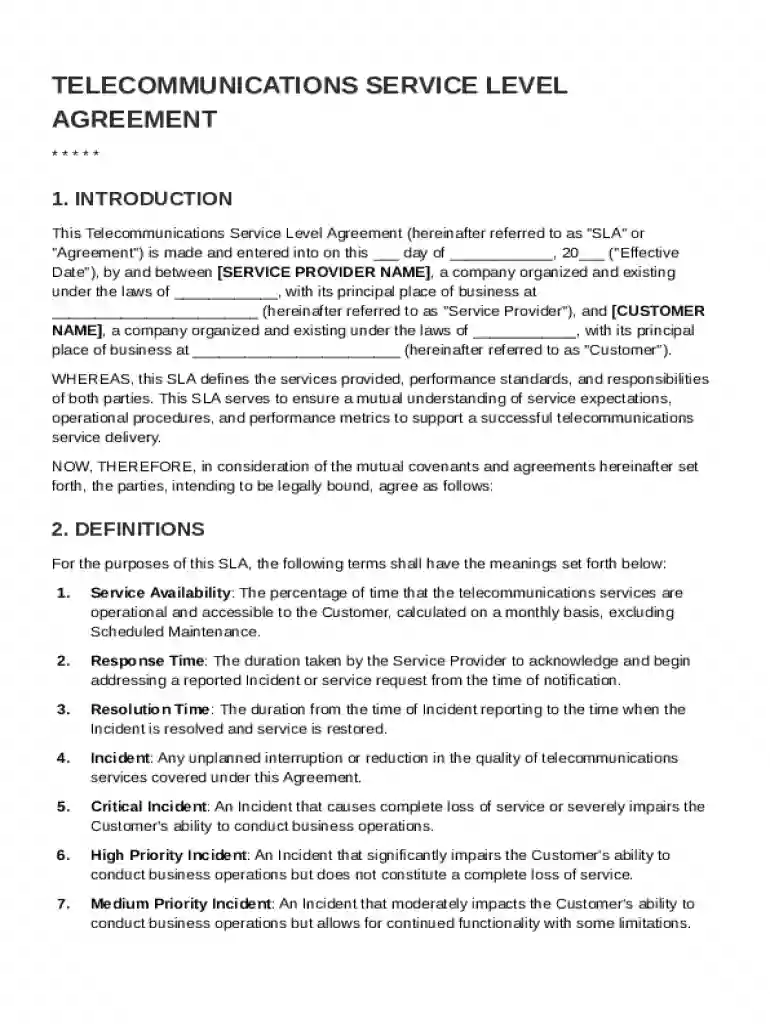
A Telecommunications Service Level Agreement (SLA) is a formal document that outlines the services agreed upon between a telecommunications service provider and their customer. It defines critical aspects such as service availability, performance standards, and the roles and responsibilities of both parties. This agreement sets clear expectations and accountability, ensuring that all parties understand the framework within which telecommunications services will be delivered. It aims to protect both parties by providing a comprehensive understanding of the terms, conditions, and expectations associated with the service.
Key Elements of the Telecommunications Service Level Agreement Template
An effective Telecommunications SLA template includes several vital components:
- Service Availability: Defines the expected uptime for services and the measures for ensuring consistent service delivery.
- Response and Resolution Times: Clarifies the maximum acceptable times for resolving incidents.
- Performance Metrics: Includes standards for speed, reliability, and quality of service.
- Maintenance Protocols: Details scheduled and unscheduled maintenance, including notice periods.
- Penalties for Non-Compliance: Outlines consequences for failing to meet the agreed performance standards.
- Dispute Resolution: Provides a process for handling disagreements between the provider and the customer.
Why Use a Telecommunications Service Level Agreement Template
Using a Telecommunications SLA template brings several benefits:
- Consistency: Ensures a uniform approach to drafting agreements across different services and clients.
- Time Savings: Provides a foundation that can be quickly customized, reducing the time required to develop an agreement from scratch.
- Clarity: Clearly articulates expectations and responsibilities, reducing the likelihood of misunderstandings and disputes.
- Risk Mitigation: By specifying all terms, it helps minimize risks associated with service delivery and performance discrepancies.
How to Use the Telecommunications Service Level Agreement Template
Utilizing the Telecommunications SLA template involves several key steps:
- Customize the Template: Tailor the generic template to fit specific service offerings and organizational requirements.
- Outline Services and Metrics: Clearly define the services provided and the metrics by which service levels will be measured.
- Set Responsibilities: Specify the roles and responsibilities of both parties, including communication protocols.
- Review and Revise: Ensure all stakeholders review the document to confirm accuracy and completeness.
- Finalize the Agreement: Seek legal advice if necessary and finalize the SLA with signatures from all parties involved.
Important Terms Related to Telecommunications Service Level Agreement Template
Understanding key terms within an SLA is crucial:
- Uptime: The period during which the service is operational and available to the customer.
- Incident: An unplanned interruption to a service or reduction in the quality of a service.
- Latency: The time taken for data to travel between two points in a network.
- Throughput: The amount of data successfully delivered over a communication channel within a specified period.
- Redundancy: Additional resources in place to maintain service availability in case of failure.
Steps to Complete the Telecommunications Service Level Agreement Template
To complete a Telecommunications SLA template, follow these structured steps:
- Identify the Parties: Clearly state the names and details of the service provider and the customer.
- Define the Service Scope: Describe the services covered, including exclusions.
- Set Performance Standards: Specify the metrics and key performance indicators (KPIs) for service assessment.
- Determine Reporting Procedures: Establish how and when performance will be reported.
- Include Terms of Payment: Define the payment structure and any penalties for non-compliance.
- Outline the Legal Clauses: Include dispute resolution, termination clauses, and any legal constraints related to the agreement.
Legal Use of the Telecommunications Service Level Agreement Template
The SLA carries legal weight and is a critical document in mitigating disputes:
- Contractual Obligation: It represents a binding contract once finalized and signed by both parties.
- Dispute Prevention: Clearly articulated terms minimize misunderstandings and legal disputes.
- Compliance with Regulations: Must adhere to industry standards and legal mandates applicable within the relevant jurisdiction.
- Audit Trail: Provides a reference in case of service failures or discrepancies, supporting enforcement of the agreed terms.