




Definition & Meaning
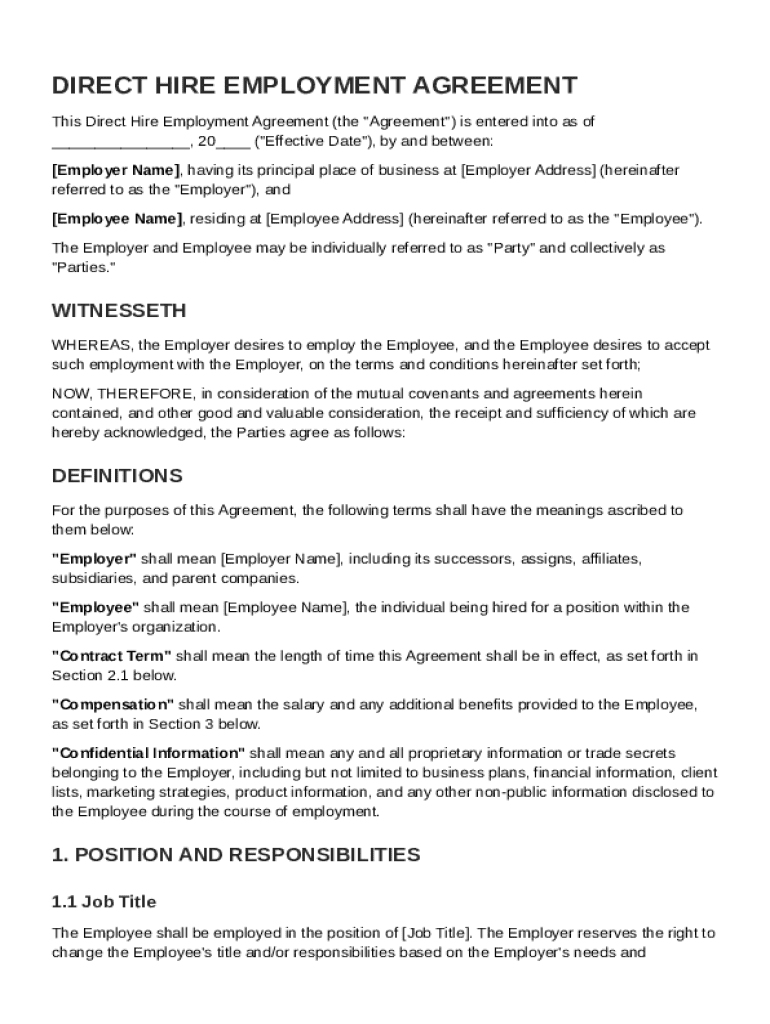
The Direct Hire Contract Template is a formal agreement used to outline the terms and conditions between an employer and an employee when hiring directly. It specifies key elements like job title, responsibilities, compensation, benefits, confidentiality obligations, non-compete clauses, termination procedures, and governing law. This template is designed to provide a comprehensive framework for the mutual agreements and expectations of both parties, ensuring clarity and preventing potential disputes. It serves as a legal document that delineates the rights and obligations of each party during the employment period.
Key Elements of the Direct Hire Contract Template
The template includes several critical elements that ensure a thorough understanding of the employment relationship:
- Job Title and Responsibilities: Specifies the position in question and the duties expected of the employee, providing a reference point for performance evaluations and organizational hierarchy.
- Compensation and Benefits: Details the employee's salary, bonuses, commissions, and benefits such as health insurance, retirement plans, and paid leave, ensuring transparency in financial arrangements.
- Confidentiality and Non-Compete Clauses: Protects the employer's proprietary information and trade secrets, and may restrict the employee from engaging in competitive activities during or after employment.
- Termination Procedures: Describes the conditions under which employment can be terminated by either party, including notice periods, severance payments, and grounds for immediate dismissal.
- Governing Law: Indicates the legal jurisdiction that will govern any disputes or interpretations of the contract, which is typically the state where the employment is located.
How to Use the Direct Hire Contract Template
Using this template involves several steps to ensure its effectiveness:
- Download the Template: Obtain the template from a reliable source, ensuring it meets the specific needs of your business and adheres to local laws.
- Customize for Company Needs: Modify sections to reflect the specific terms agreed upon between the employer and employee, such as job description, salary figures, and employment terms.
- Consult Legal Advice: Have a legal professional review the contract to ensure compliance with applicable employment laws and to address any potential legal concerns.
- Review with the Employee: Go over the contract with the employee, explaining each section clearly and addressing any questions or concerns they might have.
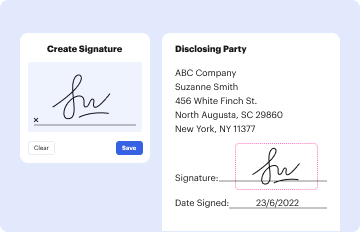
- Sign the Agreement: Both parties should sign the contract, and copies should be distributed to ensure record-keeping and future reference.
Important Terms Related to Direct Hire Contract Template
Understanding the terminology used within the contract can aid in comprehending its implications:
- Employee vs. Independent Contractor: Recognizes the significant distinction between regular employment and freelance or contract work, with differing legal and tax implications.
- At-Will Employment: Common in the U.S., this term refers to employment that can be terminated by either party at any time, for any reason, without prior notice.
- Severance Pay: Compensation paid to an employee upon termination, usually predetermined in the contract to provide financial support during the transition to new employment.
- Performance Review Periods: Defined intervals at which the employee's performance will be formally evaluated, often impacting eligibility for raises or promotions.
Legal Use of the Direct Hire Contract Template
The Direct Hire Contract Template must be used in accordance with the law to be enforceable:
- Compliance with Labor Laws: Ensure that the contract adheres to federal and state labor laws, including wage and hour statutes, anti-discrimination laws, and workplace safety regulations.
- Incorporation of Employment Policies: Refer to and incorporate company policies and employee handbooks within the contract to set consistent expectations and standards.
- Protection of Intellectual Property: Include clauses that protect the employer's innovations, patents, and other intellectual properties, preventing their unauthorized use or disclosure.
State-Specific Rules for the Direct Hire Contract Template
Employment laws can vary significantly between states:
- Right-to-Work Laws: Some states have laws that prevent mandatory union membership as a condition of employment, impacting the clauses permissible in an employment contract.
- Minimum Wage and Overtime Requirements: State-specific wage laws must be followed, especially in states with higher minimum wage or unique overtime regulations compared to federal law.
- State-Specific Clauses: Certain states require specific clauses or disclosures in employment contracts, such as those related to non-compete agreements or final paycheck regulations.
Software Compatibility
While the Direct Hire Contract Template can be completed using various tools, it's essential to ensure software compatibility for efficient processing and documentation:
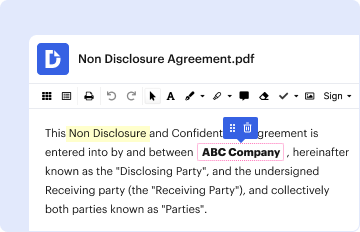
- DocHub Integration: Allows easy editing, signing, and sending of the contract document via a cloud-based platform compatible with formats like PDF and DOC.
- Google Workspace Compatibility: Enables importing and exporting of the contract through Google Drive, maintaining seamless collaborativity and version control.
- Use with Other Software: Programs like Microsoft Word and Adobe Acrobat are widely used to modify and share contract templates while ensuring data protection and accessibility.
Examples of Using the Direct Hire Contract Template
Several scenarios highlight the utility of the Direct Hire Contract Template:
- Startup Employment: Small businesses hiring their first employees can use this contract template to establish a clear, legal basis for employment agreements, protecting both parties' interests.
- Corporate Expansion: For companies expanding across state lines, the template helps standardize employment terms while permitting customization to meet regional legal requirements.
- High-Turnover Industries: Industries such as retail or hospitality can benefit from the template's ease of reuse, allowing quick adaptations for new hires with minimal resource expenditure.