





Definition & Meaning
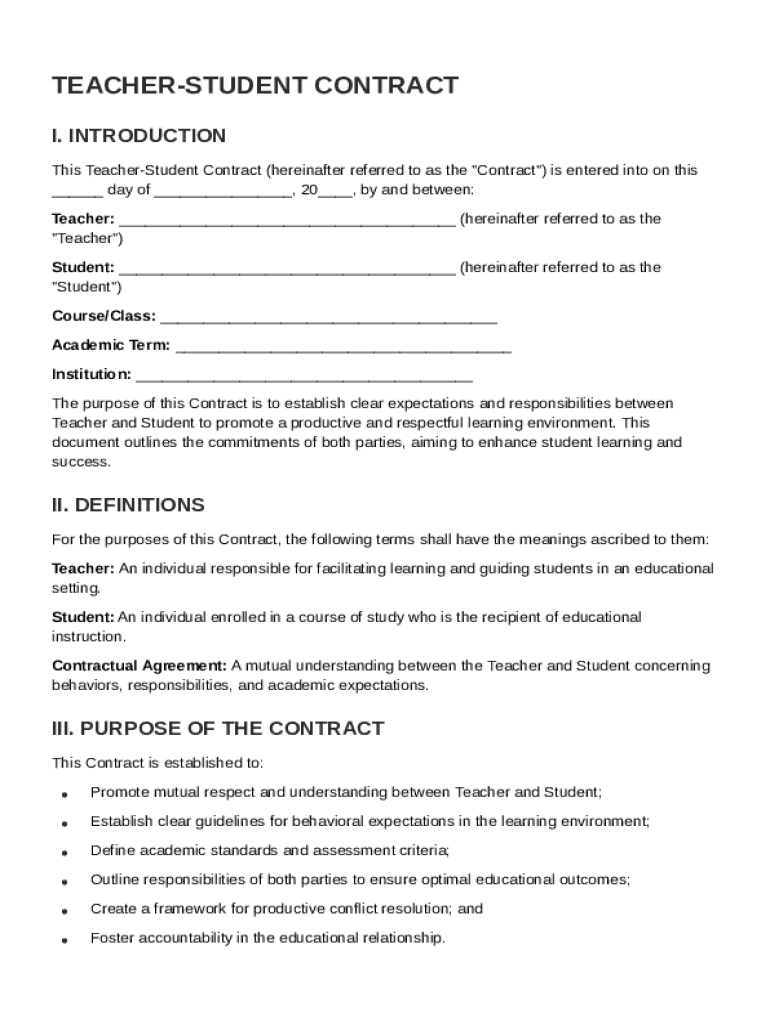
The Teacher-Student Contract Template serves as a formal agreement between educators and students to establish clear expectations, responsibilities, and guidelines within an educational setting. It is designed to foster a productive learning environment by outlining each party's commitments, facilitating better understanding and communication. This contract could include agreements on curriculum delivery, communication protocols, classroom engagement, respect, and academic integrity. It also offers guidelines for conflict resolution, assessment criteria, and provisions for review and amendments to accommodate evolving educational needs.
Key Elements of the Teacher Student Contract Template
A well-structured Teacher-Student Contract Template typically contains several critical components to ensure clarity and effectiveness:
- Responsibilities of the Teacher: Details the teacher's role in delivering curriculum, providing feedback, and maintaining an orderly classroom.
- Responsibilities of the Student: Outlines expectations for student behavior, homework completion, participation, and attendance.
- Communication Guidelines: Establishes how and when communication will occur between teachers and students, including preferred channels and response times.
- Assessment and Grading Criteria: Details the methods and criteria used for evaluating student performance, including tests, homework, and class participation.
- Conflict Resolution Protocols: Provides strategies for resolving disputes or disagreements that may arise, ensuring a fair and consistent approach.
- Review and Amendment Procedures: Explains how the contract may be reviewed and amended to address new needs or changes in circumstances.
Steps to Complete the Teacher Student Contract Template
Filling out a Teacher-Student Contract Template requires careful attention to detail to ensure both parties understand and agree on the terms:
- Gather Necessary Information: Collect all relevant details, including teacher and student names, course information, and academic year.
- Define Roles and Expectations: Clearly outline the responsibilities of both the teacher and student, ensuring both parties agree on their commitments.
- Outline Communication Methods: Specify how communication will occur, including preferred methods and expected response times.
- Specify Evaluation Methods: Detail the criteria and methods for student assessments and evaluations.
- Include Conflict Resolution Procedures: Outline steps for handling disputes, ensuring both parties agree on a resolution process.
- Set Review Guidelines: Discuss how and when the contract will be reviewed or amended if necessary.
- Sign and Date the Contract: Both the teacher and student should sign and date the contract to formalize the agreement and demonstrate mutual understanding.
How to Use the Teacher Student Contract Template
To effectively utilize the Teacher-Student Contract Template, follow these guidelines:
- Customization: Tailor the template to fit specific course or program needs by modifying sections to reflect different educational contexts.
- Communication: Before finalizing, discuss the contract with the student, allowing space for questions and clarifications.
- Review: Regularly review the contract at key intervals, such as the start of each semester, to ensure it remains relevant and effective.
- Documentation: Keep a copy of the signed agreement for both parties, ensuring easy reference throughout the academic term.
Why You Should Use the Teacher Student Contract Template
Employing a Teacher-Student Contract offers numerous benefits:
- Clarity and Structure: Provides a structured approach to the roles and expectations of both parties, reducing misunderstandings.
- Accountability: Enhances accountability by clearly defining responsibilities and consequences for failing to meet agreed-upon standards.
- Enhanced Communication: Facilitates open dialogue by setting out communication protocols, improving relationships and cooperation.
- Conflict Prevention: By outlining conflict resolution methods, potential issues can be addressed promptly and effectively.
- Adaptability: Allows for adaptability with provisions for reviews and amendments, accommodating evolving educational needs.
Examples of Using the Teacher Student Contract Template
Real-world scenarios illustrate the utility of the Teacher-Student Contract Template:
- High School Setting: A high school teacher uses the template to establish rules for classroom behavior and expectations for homework submission, ensuring all students are aware of academic requirements.
- Online Learning Environment: An educator at an online university employs the template to communicate expectations for virtual attendance and participation, clarifying how students should engage in online discussions and assignments.
- Tutoring Programs: Tutors leverage the contract to outline session goals and expectations for both the tutor and student, facilitating more focused and productive sessions.
Legal Use of the Teacher Student Contract Template
Ensuring legal compliance is crucial when using a Teacher-Student Contract Template:
- Legally Binding Agreement: Although generally informal, a Teacher-Student Contract can be considered legally binding if both parties are capable and provide mutual consent.
- Adherence to Policies: The contract should comply with local educational policies and school regulations to be effective and enforceable.
- Privacy Considerations: Address student privacy rights and information protection, ensuring the contract does not violate any local laws or regulations.
State-Specific Rules for the Teacher Student Contract Template
Educators should be aware of variations in regulations across different states:
- Regulatory Compliance: Ensure the contract aligns with state-specific educational requirements and standards to maintain validity.
- State-Specific Provisions: Include any additional provisions required by state law, such as specific conflict resolution procedures or academic standards.
- Cultural Sensitivity: Be mindful of cultural and regional differences that may affect the content and implementation of the contract, adapting terms as necessary to reflect local values and expectations.