







Understanding Weld Continuity and Its Importance
Weld continuity refers to the consistent application and performance of welding practices and the verification of the quality of welds over time. It involves maintaining a standard of weld integrity that is crucial for ensuring safe and reliable structures, machinery, and piping systems. In various industries, such as construction and manufacturing, adherence to proper weld continuity practices helps prevent failures that could have serious safety implications.
Significance of Weld Continuity in Industries
- Safety Assurance: Consistent welds mitigate risks of failures that could lead to catastrophic incidents.
- Regulatory Compliance: Following weld continuity guidelines ensures compliance with industry standards and governmental regulations.
- Performance Reliability: A well-maintained continuity log contributes to the reliability of products and structures, which is crucial for longevity and functionality.
Components of a Weld Continuity Log
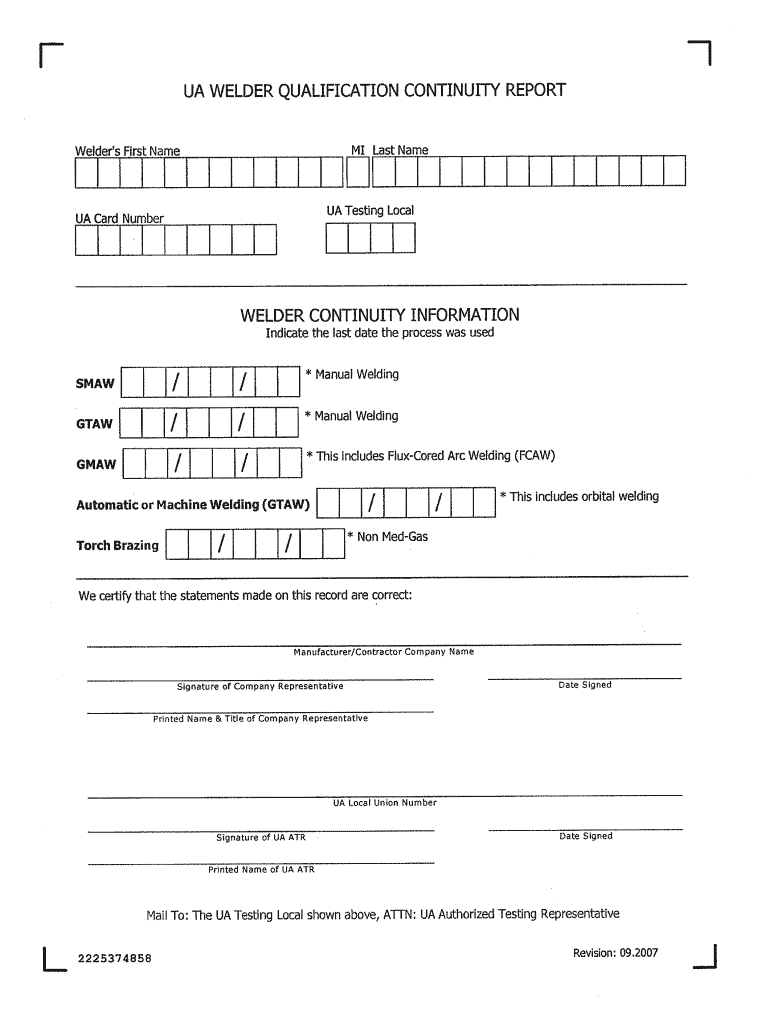
A welder continuity log captures the essential details of a welder’s qualifications and performance over time. This documentation typically includes:
- Welder Identification: Name, card number, and relevant certifications.
- Welding Procedures Used: Specific techniques and practices adhered to during welding.
- Dates of Certification: When the welder was certified and the start of continuity monitoring.
- Type of Materials Welded: Details on the materials and thicknesses involved in the welding process.
Managing a Weld Continuity Log
To maintain an effective continuity log, following a structured approach is recommended:
- Documentation Strategy: Develop a standardized template to capture all relevant information consistently. A welder continuity record format can help ensure uniformity.
- Regular Updates: Regularly update the log to reflect new training, additional qualifications, or changes in welding practices.
- Review Procedures: Implement periodic reviews to ensure that the log is up-to-date, accurate, and compliant with relevant standards.
Best Practices for Recording Weld Continuity
A well-maintained weld continuity log includes keeping meticulous records of all welding activities. The following practices can enhance the effectiveness of your continuity documentation:
- Use of Technology: Explore digital solutions to streamline logging procedures. For example, creating a welder continuity log PDF may facilitate easier sharing and storage.
- Real-time Entry Updates: Encourage welders to update their logs immediately following a completed task to promote accuracy.
- Validation Mechanisms: Implement checks for accuracy, such as periodic audits of logs to ensure data integrity and compliance with established standards.
Examples of Weld Continuity Logs
Weld continuity logs can take various forms, depending on organizational needs. Here are a few scenarios:
- Welding Projects in Construction: Logs that track the performance of multiple welders on significant construction sites, specifying project details and completion dates.
- Manufacturing Environments: Individual logs that assess a welder's skill level and the consistency of the welds through various production runs.
- Maintenance Operations: Logs focused on the quality of repair welds applied to existing structures, useful in lifecycle management.
These examples illustrate the necessity of comprehensive records not only for compliance purposes but also for enhancing the overall quality of welding practices in diverse industrial applications.
Conclusion
Weld continuity is a critical aspect of ensuring the safety and reliability of welded structures. By understanding its definition, maintaining diligent records, and employing best practices to document weld activities, companies can uphold high standards of quality in their welding operations. Whether through a welder continuity log template or regular updates to the logs, these methods serve to support compliance and quality assurance in welding processes.




