






Definition & Meaning
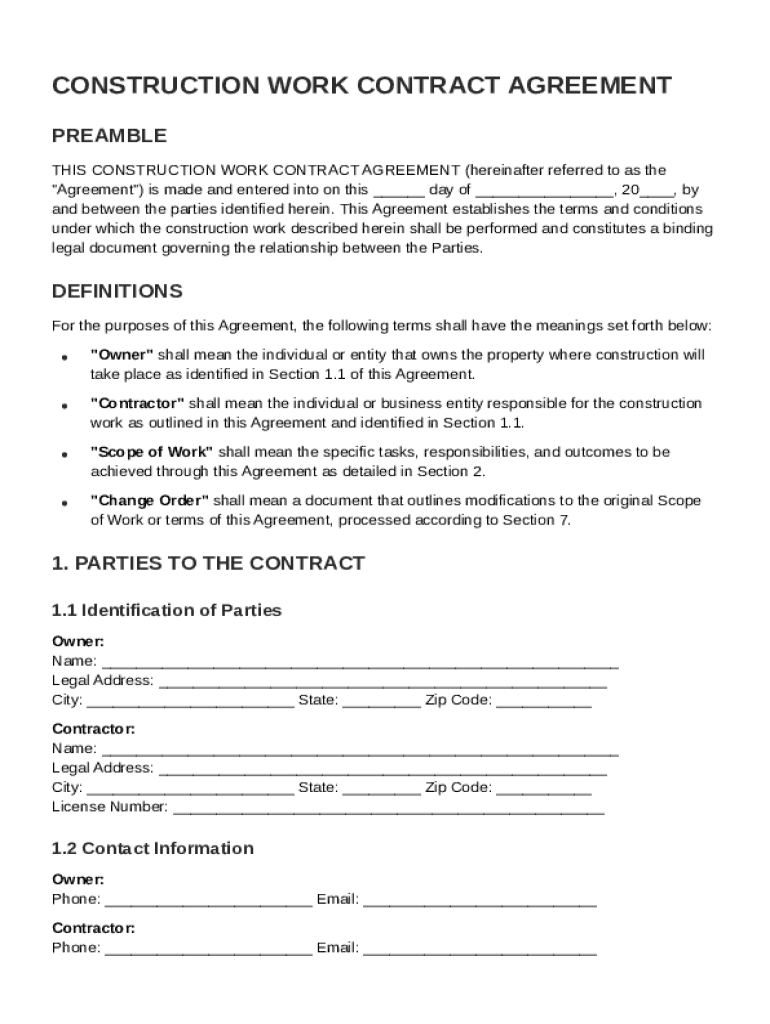
A Construction Work Contract Agreement is a formal document that clearly outlines the terms and conditions governing construction work between an owner and a contractor. This template serves as a binding agreement that specifies the roles, responsibilities, and expectations of each party involved, ensuring a mutual understanding of the project scope and legal obligations. Such contracts are foundational in construction projects, providing a clear framework for collaboration and reducing the likelihood of disputes.
Key Components
- Owner and Contractor Details: Identifies the parties involved, including legal names and contact information.
- Scope of Work: Defines the specific construction tasks, deliverables, and standards required.
- Contract Price: Lists the total compensation for the project, including payment schedules and terms.
- Timeline: Details the project duration, including start and completion dates.
How to Use the Construction Work Construction Contract Template
To effectively utilize the Construction Work Construction Contract Template, users should begin by compiling all relevant project details, such as the scope of work, timelines, and financial terms. This information serves as a foundation for entering accurate data into the template, ensuring that all parties have a clear understanding of their commitments.
Step-by-Step Instructions
- Download the Template: Access the template from a document management tool like DocHub, which allows for easy editing and sharing.
- Input Project Details: Fill in the project-specific information, ensuring clarity and completeness.
- Review Legal Provisions: Carefully assess sections related to legal obligations, dispute resolution, and warranty terms.
- Customize as Needed: Adjust the template for any additional specific conditions or state requirements.
- Finalize and Save: Once the contract is complete, review it for accuracy and save it for distribution.
Key Elements of the Construction Work Construction Contract Template
The Construction Work Contract Template is comprehensive and designed to cover all critical elements of a construction project. It ensures clarity and precision in establishing the legal framework and expectations.
Important Elements
- Change Order Procedures: Specifies how modifications to the project are managed and approved.
- Insurance Requirements: Details the types of insurance coverage both parties must carry.
- Warranty Terms: Articulates the warranties provided by the contractor for the completed work.
- Termination Conditions: Defines the circumstances under which the contract can be dissolved.
Legal Use of the Construction Work Construction Contract Template
This contract template adheres to legal standards and practices, providing a legally binding agreement that is enforceable in court. Users must ensure compliance with local and federal construction laws, including licensing and building codes.
Compliance Steps
- State Law Alignment: Adjust the template according to any state-specific construction regulations.
- Permits and Licenses: Verify that all necessary permits and professional licenses are secured.
- Contract Review: Consider having the contract reviewed by a legal professional to ensure all clauses meet statutory requirements.
Important Terms Related to Construction Work Construction Contract Template
Understanding the terminology within a Construction Work Contract is crucial for proper execution and compliance. Each term has a specific legal and practical implication for the agreement.
Common Terms
- Scope of Work: The detailed description of all tasks, materials, and deliverables.
- Performance Standards: The criteria and benchmarks that the construction work must meet.
- Dispute Resolution: The method by which any disagreements are mediated or arbitrated.
- Indemnification: The provision where one party agrees to compensate the other for any incurred losses or damages.
Examples of Using the Construction Work Construction Contract Template
This template can be applied to a variety of construction projects, each with unique requirements and circumstances. Understanding its use in different scenarios provides valuable insights into its flexibility and importance.
Practical Examples
- Residential Projects: A homeowner and contractor agree on renovating a kitchen, using the template to outline specific requirements and budget constraints.
- Commercial Buildings: A developer contracts with a construction company for an office building, specifying timelines and safety standards.
- Public Works: A government agency utilizes the template for road construction, ensuring all legal and regulatory conditions are met.
State-Specific Rules for the Construction Work Construction Contract Template
Each state may have specific rules and codes that impact how a construction contract is drafted and executed. These laws ensure that construction practices meet local standards and protect public interests.
Understanding Variations
- Regulatory Differences: State laws might dictate specific clauses related to environmental standards or labor laws.
- Licensure Requirements: Some states have stringent licensing requirements that contractors must meet to execute agreements legally.
- Consumer Protection: States may impose additional measures on contracts to protect homeowners from predatory practices.
Who Typically Uses the Construction Work Construction Contract Template
The template is a valuable resource for a wide range of individuals and entities involved in the construction industry. It facilitates clear communication and legal protection across various stakeholder relationships.


Common Users
- Contractors: Construction managers and general contractors use the template to formalize project terms.
- Property Owners: Individuals and organizations owning property rely on the template to ensure a thorough understanding of project expectations.
- Architects and Designers: These professionals may use the template to align their designs with the construction team's execution plans.

State-by-State Differences
State-specific laws can dramatically influence the content and execution of a Construction Work Contract. It is vital to be aware of these differences to ensure compliance and avoid legal complications.
Key Differences
- Building Codes: Different states have distinct building standards that must be included in the contract.
- Safety Regulations: State safety regulations often dictate specific contract provisions related to worker protection.
- Dispute Resolution Laws: Some states mandate particular arbitration or mediation processes for contractual disputes.
By understanding these varied elements and nuances, users can effectively utilize the Construction Work Construction Contract Template to enhance project clarity and accountability.