







Definition and Meaning
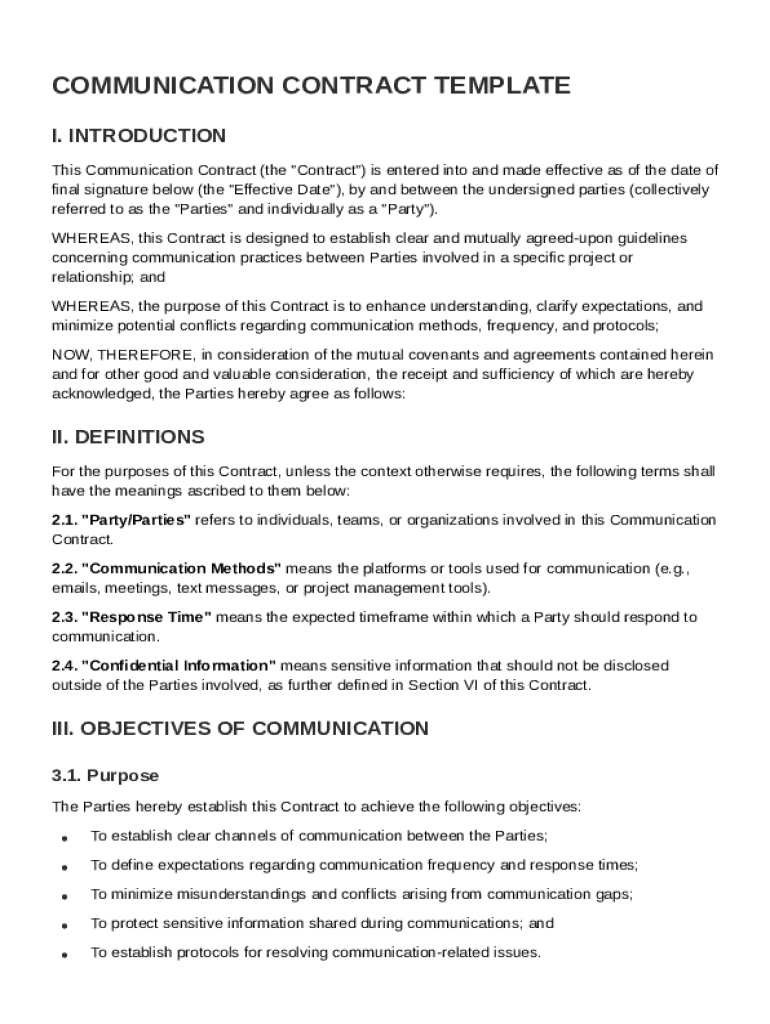
The Communication Contract Template is a structured agreement designed to establish clear guidelines for effective communication between parties involved in a project or collaboration. It serves as a roadmap by defining key aspects such as objectives, preferred communication channels, frequency of updates, confidentiality protocols, and procedures for modifying the agreement. By setting these standards, the template aims to enhance understanding, clarify expectations, and minimize potential conflicts related to communication between involved parties.
Objectives
- Clarify Roles: Clearly define the roles and responsibilities of each party in communication.
- Set Expectations: Ensure all parties are aware of response time and channels to be used.
- Conflict Reduction: Minimize misunderstandings by providing a reference for agreed communication practices.
Practical Example
Consider a project involving multiple teams: having a communication contract can prevent miscommunications by ensuring everyone follows the same procedures and timelines for information exchange.
How to Use the Communication Contract Template
Using the Communication Contract Template involves several specific steps to customize it for your project's unique requirements. Begin by evaluating the communication needs and preferences of the parties involved to tailor the template effectively.
- Identify Communication Needs: Determine the scope and channels of communication essential for the project.
- Customize Sections: Modify template sections to include relevant details specific to the current project, such as unique terms and conditions.
- Review and Approve: Share the customized template with all involved parties for review and obtain necessary approvals or feedback.
Implementation Tips
- Regular Updates: Periodically review the contract to ensure it remains relevant as project conditions change.
- Inclusive Review: Involve all stakeholders in the drafting process to ensure comprehensive coverage of needs.
- Consensus Building: Facilitate discussions to reach agreements on any differing communication preferences.
Key Elements of the Communication Contract Template
The template comprises several critical components that need to be filled accurately to ensure its effectiveness in facilitating communication.
- Definitions: Clearly define key terms and abbreviations used throughout the contract to prevent misinterpretations.
- Preferred Communication Methods: Outline which tools and platforms (like email, video conferencing, or instant messaging) will be primarily used.
- Response Time Expectations: Establish expected timeframes for responding to communications based on urgency and context.
- Confidentiality Protocols: Define guidelines for maintaining the confidentiality of shared information.
- Amendment Procedures: Specify steps for making changes to the contract, ensuring they are efficient and agreed upon by all parties.
Scenarios and Use Cases
- Project Kick-off Meetings: Use the template as part of initial project meetings to set the stage for all subsequent communications.
- Remote Team Collaboration: Especially vital for projects with remote or distributed teams to ensure clarity despite physical distance.
Steps to Complete the Communication Contract Template
Completing the Communication Contract Template involves a series of methodical steps designed to capture all necessary details and formalize the communication agreement effectively.
- Initial Drafting: Begin with the basic template and fill in standard information such as parties' names and contact details.
- Detail Customization: Modify sections like communication frequency to match the specific context of your project.
- Legal Review: Have the draft reviewed by a legal expert to ensure compliance with applicable laws and industry standards.
- Final Revisions: Incorporate feedback from all parties involved to finalize the contract.
- Formal Agreement: Obtain signatures from all parties to formalize the agreement and distribute copies for records.
Additional Considerations
- Version Control: Keep track of contract versions and modification dates.
- Accessibility: Ensure all parties have easy access to the finalized contract for reference during the project.
Who Typically Uses the Communication Contract Template
This template is valuable for a broad range of users across different industries who require formalized communication procedures in their projects or operations.
- Project Managers: Utilize the template to establish clear communication protocols from the onset of a project.
- Consultants: Adopt the template to define how updates and feedback will be communicated with clients.
- Team Leaders: Implement the template in team settings to streamline internal as well as external communication processes.


Business Environments
- Corporate Settings: Facilitates clear inter-departmental communication.
- NGOs and Nonprofits: Ensures alignment among various stakeholders participating in humanitarian projects.
State-Specific Rules for the Communication Contract Template
While the Communication Contract Template is versatile, it is important to consider state-specific regulations or legal requirements that could impact its use and enforceability.
- Local Regulations: Some states may have unique requirements for contracts, including digital communication agreements.
- Privacy Laws: Ensure that any confidentiality or data protection clauses comply with state-specific privacy regulations.
Considerations for Different States
- California: Review the California Consumer Privacy Act (CCPA) to align privacy protocols within the contract.
- New York: Ensure compliance with any specific communication requirements outlined by state authorities for contracts.
Examples of Using the Communication Contract Template
Real-world applications of the Communication Contract Template reveal its utility in various scenarios, illustrating how it can proactively address communication challenges.
- Construction Projects: Helps coordinate among architects, contractors, and clients by defining communication lines and expectations.
- IT Development: Streamlines communication between developers, clients, and stakeholders during software development cycles.
- Event Management: Assists in maintaining clear lines of communication between event planners, vendors, and sponsors.
Case Studies
- Case Study 1: In a multinational corporation, adopting the communication contract improved response times and reduced project delays.
- Case Study 2: A nonprofit organization used the template to enhance collaboration efficiency among cross-country project teams.
Versions or Alternatives to the Communication Contract Template
Understanding different versions or alternatives to the Communication Contract Template can help users select the most suitable option for their specific needs.
- Digital Templates: Online platforms offer digital versions that streamline modifications and distribution processes.
- Industry-Specific Models: Certain industries may have tailored templates, such as healthcare communication agreements, that address sector-specific communication challenges.
Comparison with Other Templates
- Standard Contracts: While broader in scope, these might not address the nuanced needs of communication-focused agreements.
- Letter of Intent: Often used in negotiations before a full contract, providing a general commitment statement rather than detailed communication protocols.




