Definition & Understanding
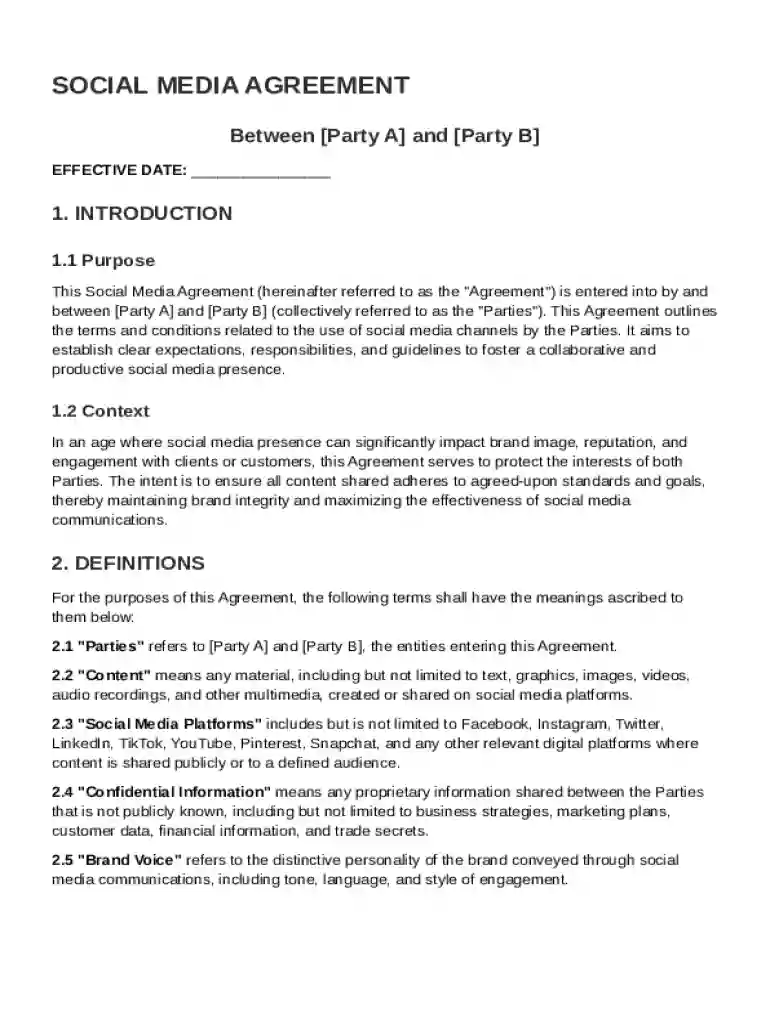
The Social Media Agreement Template is a structured document that outlines the terms and conditions between two or more parties regarding the collaborative use of social media channels. This agreement typically includes specifications on content creation, approval processes, confidentiality obligations, privacy compliance, reporting metrics, and dispute resolution methods. Its primary purpose is to ensure clear communication and protect the interests of all parties involved while maintaining brand integrity across social media platforms.
Real-World Scenarios
- Brand Collaborations: Companies engaging in joint marketing efforts can use the agreement to clarify responsibilities related to social media content.
- Influencer Partnerships: Influencers and brands often use this document to outline expectations and deliverables for promotional content.
- Employee Social Media Use: Businesses may employ this template to establish guidelines for employee usage of social media, ensuring compliance with company policies.
Steps to Complete the Social Media Agreement Template
Completing a Social Media Agreement Template involves careful attention to details to ensure that all aspects are covered and agreed upon by all parties.
-
Identify the Parties:
- Clearly name all parties involved in the agreement, typically referred to as [Party A] and [Party B].
-
Specify Roles and Responsibilities:
- Outline the duties of each party concerning content creation, approval, and posting.
-
Detail Content Guidelines:
- Provide specifications on acceptable content types, themes, and any restrictions or prohibitions.
-
Define Approval Processes:
- Establish how content approval will be handled, including who must sign off on content before publication.
-
Ensure Confidentiality and Compliance:
- Include clauses that cover confidentiality, data protection, and legal compliance to maintain trust and uphold standards.
-
Outline Reporting Metrics:
- Agree on the metrics that will be used to gauge performance and the frequency of reporting.
-
Set Dispute Resolution Terms:
- Define how disputes will be resolved, such as through mediation or arbitration.
Practical Considerations
- Tailor each section to suit the specifics of the collaboration.
- Include timelines for deliverables where necessary.
- Use clear, precise language to avoid misunderstanding.
Important Terms Related to Social Media Agreement Template
Understanding the terminology associated with a Social Media Agreement Template is crucial for drafting and executing it effectively.
- Content Creation: Refers to the process of developing and generating material for publishing on social media.
- Approval Process: The systematic series of steps taken to verify and authorize content before it is shared publicly.
- Confidentiality Clause: A section of the agreement that establishes privacy and confidentiality obligations for all parties.
- Performance Metrics: Quantitative measures used to evaluate the success of social media activities and campaigns.
Examples
- "Content Calendar": A documented schedule of content that outlines what will be posted and when.
- "Engagement Rate": A metric that measures the level of interaction and engagement a post or campaign receives.
Key Elements of the Social Media Agreement Template
A comprehensive Social Media Agreement Template should incorporate several key elements to ensure it covers all necessary facets of the collaboration.
- Purpose and Scope: Clearly define the objective of the agreement and the scope of the collaboration.
- Roles and Responsibilities: Specify the duties of each party related to content and social media oversight.
- Reporting and Evaluation: Establish the metrics for evaluating performance and success.
- Termination Clause: Define the conditions under which the agreement can be ended by either party.
Variations
- Templates may vary slightly in format and content based on industry-specific needs or additional regulatory requirements.
Legal Use of the Social Media Agreement Template
Ensuring legal validity is a critical aspect of using a Social Media Agreement Template.
- Enforceability: Drafting the template in compliance with relevant laws ensures its terms are legally binding.
- Legislation: The agreement must align with applicable laws, such as intellectual property regulations and privacy laws.
Legal Standards
- ESIGN Act Compliance: For electronic versions, the template should comply with the ESIGN Act for digital signatures to be legally binding.
- Jurisdiction Clauses: Some agreements stipulate which state’s laws will govern the interpretation and enforcement of the contract.
State-by-State Differences
Understanding how state laws affect the structure and enforceability of a Social Media Agreement can be important, especially for parties located in different jurisdictions within the United States.
Considerations
- Varied Intellectual Property Laws: State laws may differ on the specifics of intellectual property protections.
- Privacy Regulations: States like California have stricter privacy regulations that could influence the confidentiality terms.
Software Compatibility
Social Media Agreements, often prepared digitally, have specific software compatibility needs to ensure they can be executed smoothly.
- Preferred Formats: PDF, DOC, and other widely used formats should be available for ease of sharing and editing.
- Platform Integration: Tools like DocHub can facilitate document signing, editing, and collaboration.
Integration Examples
- Google Workspace: Seamlessly import and export agreement documents with Google Drive.
- Dropbox and OneDrive: Direct integration allows for easy file sharing and collaboration.
Business Types that Benefit Most from the Social Media Agreement Template
Different types of businesses can greatly benefit from implementing a Social Media Agreement Template.
- Marketing Agencies: Utilizing templates to structure client collaborations effectively.
- E-commerce Brands: Leveraging such agreements to manage influencer partnerships that drive sales.
- Corporate Entities: Establishing guidelines for employee social media activities to protect brand reputation.
Advantages
- Consistency in Messaging: Ensures that all social media activities are aligned with business objectives.
- Risk Management: Reduces potential legal and reputational risks associated with social media usage.