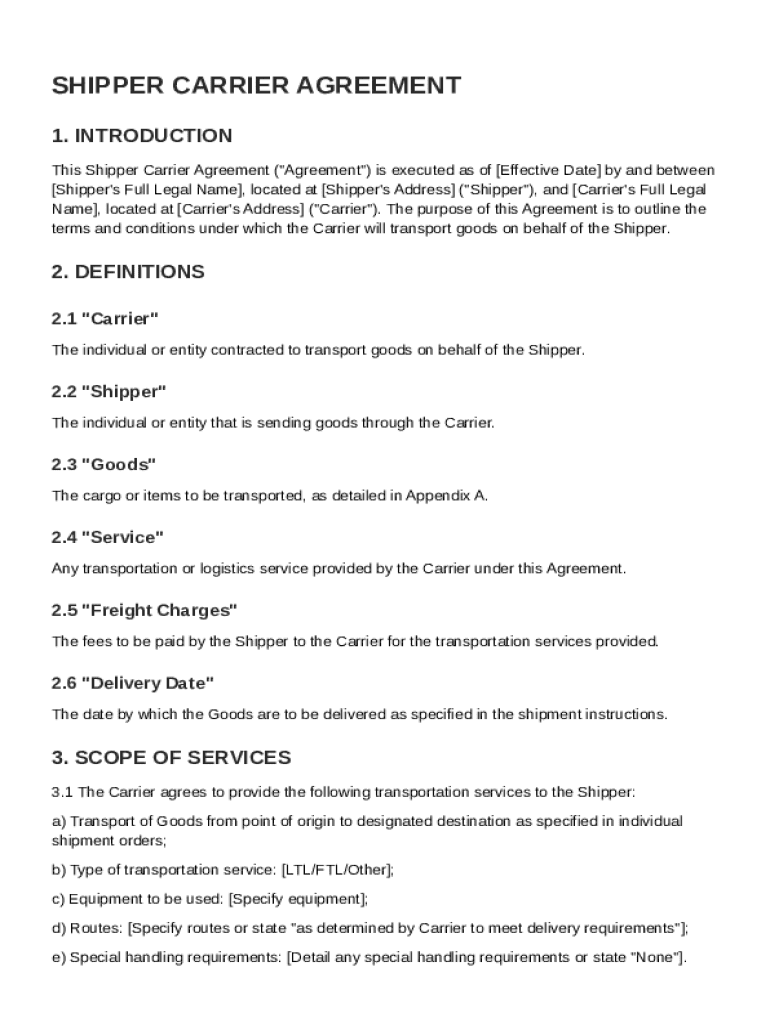







Understanding the Shipper Carrier Agreement Template
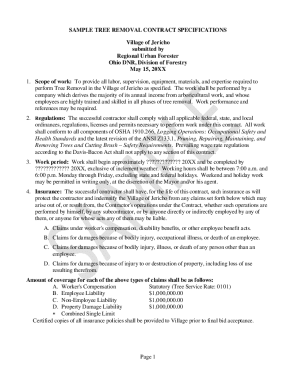
A Shipper Carrier Agreement Template is a vital legal document that lays out the terms and conditions for the transportation of goods. This agreement serves as the foundation for the relationship between the shipper and the carrier, ensuring that responsibilities are clearly defined and understood by both parties. It helps in outlining the specific obligations such as the delivery timeline, payment schedules, and the nature of the goods being transported.
Key Elements of the Shipper Carrier Agreement
- Parties Involved: Clearly identifies the shipper and the carrier, including their contact information.
- Scope of Services: Defines the type of goods transported, the pickup, and delivery locations, and any special handling instructions.
- Payment Terms: Details the compensation structure, including rates, billing cycle, and late payment penalties.
- Liability and Insurance: Specifies the extent of liability for lost or damaged goods and outlines the required insurance coverage.
Legal Use of the Shipper Carrier Agreement
The agreement is utilized to ensure compliance with applicable federal and state transportation laws. It includes clauses that mandate adherence to safety regulations, vehicular standards, and handling procedures. It also reserves the right to revise terms in response to legal changes, protecting both parties from unforeseen liabilities.
Steps to Complete the Shipper Carrier Agreement Template
- Review the Template: Examine the template's provisions to ensure they meet your transport requirements.
- Customize Specifics: Insert the parties' details, service scope, specific terms, and conditions to tailor the template to your needs.
- Negotiate Terms: Discuss the terms with the other party involved and make necessary adjustments.
- Finalize the Agreement: After mutual agreement on terms, both parties should sign the document.
- Ensure Validity: Check for compliance with any state-specific clauses or legal requirements.
How to Use the Shipper Carrier Agreement Template
Utilizing the template involves customizing it based on the nature of the goods, the agreed terms between the shipper and carrier, and the specific legal jurisdiction in which the agreement is enforced. It serves as a modular document, where various sections can be tailored to accommodate different business scenarios and requirements.
State-Specific Rules for the Shipper Carrier Agreement
Transportation laws can vary significantly between states. Some states may require additional licensing, whereas others might have specific stipulations about transporting hazardous materials. Ensure that the agreement includes a section highlighting any state-specific rules and that these are adhered to within the agreement's execution.
Who Typically Uses the Shipper Carrier Agreement Template
This template is commonly used by:
- Logistics Companies: For formalizing agreements with carriers.
- Manufacturers: To ensure reliable distribution channels for their products.
- Retail Chains: When outsourcing their transportation needs to third-party logistics providers.
- Individual Shippers: For moving personal goods over long distances.


Important Terms Related to the Shipper Carrier Agreement Template
- Indemnification: Protects against potential losses or damages that might arise during transportation.
- Force Majeure: Details circumstances under which parties are excused from performance due to uncontrollable events.
- Termination Clause: Specifies conditions under which the agreement may be terminated by either party.
Examples of Using the Shipper Carrier Agreement Template
- Scenario 1: A furniture manufacturer uses the template to establish shipping terms with a local transport company, ensuring timely delivery to retail stores.
- Scenario 2: An e-commerce platform partners with a logistics provider to handle inter-state delivery and incorporates the template to define logistics responsibilities and schedules.
Versions or Alternatives to the Shipper Carrier Agreement Template
While the Shipper Carrier Agreement Template is widely used, some businesses may opt for alternative agreements, such as:
- Freight Contracts: Typically used for bulk cargo transportation.
- Cartage Agreements: For local, short-distance deliveries.
- Transport Service Agreements: Custom agreements tailored for specific logistics operations.
Each alternative addresses different logistics needs, allowing shippers and carriers to find the most suitable contractual framework for their operations.