
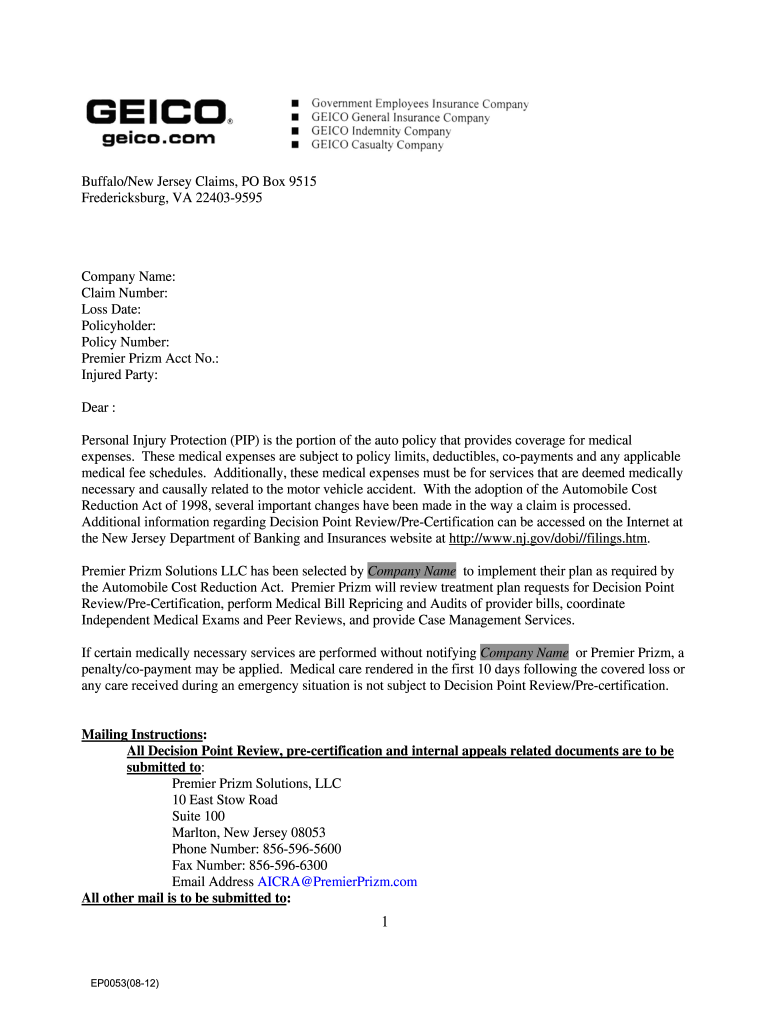







Definition and Importance of the No Claims Document GEICO Form
The no claims document GEICO form serves as a crucial record that reflects an individual's history of insurance claims. This form is typically utilized by policyholders who have not made any claims during a specified period, enabling them to demonstrate a clean claims history. Such documentation is invaluable in various circumstances, including when applying for new insurance policies or seeking to lower one’s premiums, as insurers often reward customers with discounted rates for their claim-free status.
Understanding the significance of this form can aid in recognizing its role in the broader context of insurance management. For example, maintaining a no claims history can positively affect the terms and costs associated with future insurance coverage. It is essential for customers to be aware of how this documentation influences their insurance journey, ensuring they leverage their no claims status effectively.
Key Elements of the No Claims Document GEICO Form
The no claims document GEICO form is designed to capture several key elements, including:
- Policyholder Information: This section includes the name, address, and policy number of the insured, ensuring accurate identification.
- Claim History: A detailed summary of the claims history indicating whether any claims have been filed during the applicable period.
- Effective Date: The date when the current policy became effective, providing a temporal context for the claims history.
- Signatures: The policyholder’s signature authenticates the document, confirming that the information provided is accurate and complete.
Providing detailed information in these sections reinforces the credibility of the no claims document and ensures it is accepted by insurers and financial institutions.
How to Use the No Claims Document GEICO Form
The no claims document GEICO form is primarily used in situations where verifiable proof of a clean claims history is required.
Common Uses
- Applying for New Insurance: Insurers may request this document to assess potential premium discounts.
- Loan Applications: Financial institutions may require this documentation to gauge risk related to the applicant's financial history.
- Why No Claims Matters: Demonstrating a no claims record can positively impact negotiations with insurers, leading to better premium rates.
Steps to Use the Document
- Obtain the Form: Secure a copy of the no claims document GEICO form through GEICO's website or customer service.
- Fill Out the Required Information: Complete all necessary information, ensuring accuracy to avoid complications later.
- Submit as Required: Depending on the specific requirement, provide the completed form to your insurance provider or relevant third party.
How to Obtain the No Claims Document GEICO Form
Obtaining the no claims document GEICO form is a straightforward process designed to be user-friendly for policyholders.
Methods of Acquisition
- Online: Policyholders can request the form directly from GEICO's website. This method allows for instant access and often includes detailed instructions on filling out the form correctly.
- Customer Service: Contacting GEICO's customer service team can facilitate obtaining the document. They can provide guidance on what to include and how to submit it properly.
- Mobile App: For tech-savvy users, GEICO’s mobile application might offer functionality to request and download necessary forms directly.
Ensuring that the document is obtained from authorized channels guarantees that it meets official standards and will be considered valid by other entities.
Steps to Complete the No Claims Document GEICO Form
Completing the no claims document GEICO form requires attention to detail to ensure that the information provided is accurate and comprehensive.
Step-by-Step Instructions
- Start with Personal Information: Fill in your policy number, name, and contact details as required.
- Document Claims History: Clearly outline the duration of your policy and any claims made. If no claims have been made, ensure this is prominently indicated.
- Review for Accuracy: Before submission, double-check all entries to confirm they are accurate. Pay special attention to dates and spelling.
- Sign and Date: This final step is crucial as it validates that the information entered is true and complete.
Common Mistakes to Avoid
- Incomplete Entries: All fields must be filled out accurately to avoid delays.
- Not Signing the Form: Failing to provide a signature may lead to the document being deemed invalid.
- Misrepresentation: Providing false information can result in penalties or negative consequences when filing with insurance providers.
Who Typically Uses the No Claims Document GEICO Form
The no claims document GEICO form is pivotal for various stakeholders involved in the insurance process.


Typical Users
- Individual Policyholders: Those looking to leverage their claim-free history for better insurance rates.
- Businesses and Business Owners: Small business owners seeking to establish a favorable insurance profile to protect their assets.
- Financial Institutions: Lenders may require this document to evaluate the financial stability of potential borrowers.
Understanding the broad spectrum of users who benefit from this form helps in recognizing its significance within the insurance landscape.
State-Specific Rules for the No Claims Document GEICO Form
When dealing with the no claims document GEICO form, it's important to be aware of state-specific regulations and how they may affect the usage of this document.
Variation by State
- Insurance Regulations: Different states may have varying standards and requirements governing no claims documentation. For example, states like California might have stricter norms compared to others.
- Form Acceptance: Some states may require additional documentation along with the no claims document GEICO form when applying for new policies or loans.
- Timeframe Considerations: The time frame for which a no claims history is considered valid can differ, influencing how long a policyholder might benefit from this documentation.
Familiarizing oneself with these variations can ensure compliance and maximize the potential benefits associated with a no claims history.
Summary of Penalties for Non-Compliance
Understanding the consequences of not utilizing the no claims document GEICO form appropriately is essential, as penalties can adversely impact a policyholder's insurance status.
Non-Compliance Risks
- Higher Premiums: If a clean claims history is not substantiated by the proper documentation, insurers may classify the individual as a higher risk, resulting in increased premiums.
- Loan Rejections: Financial institutions might deny loan requests without verifiable proof of a claims history, affecting access to necessary funds.
- Record Impact: Failure to present accurate documentation could lead to longer-term ramifications on claims history and the ability to establish future insurance relationships.
Awareness of these potential penalties emphasizes the importance of maintaining and effectively utilizing a no claims document.


