




Definition and Meaning
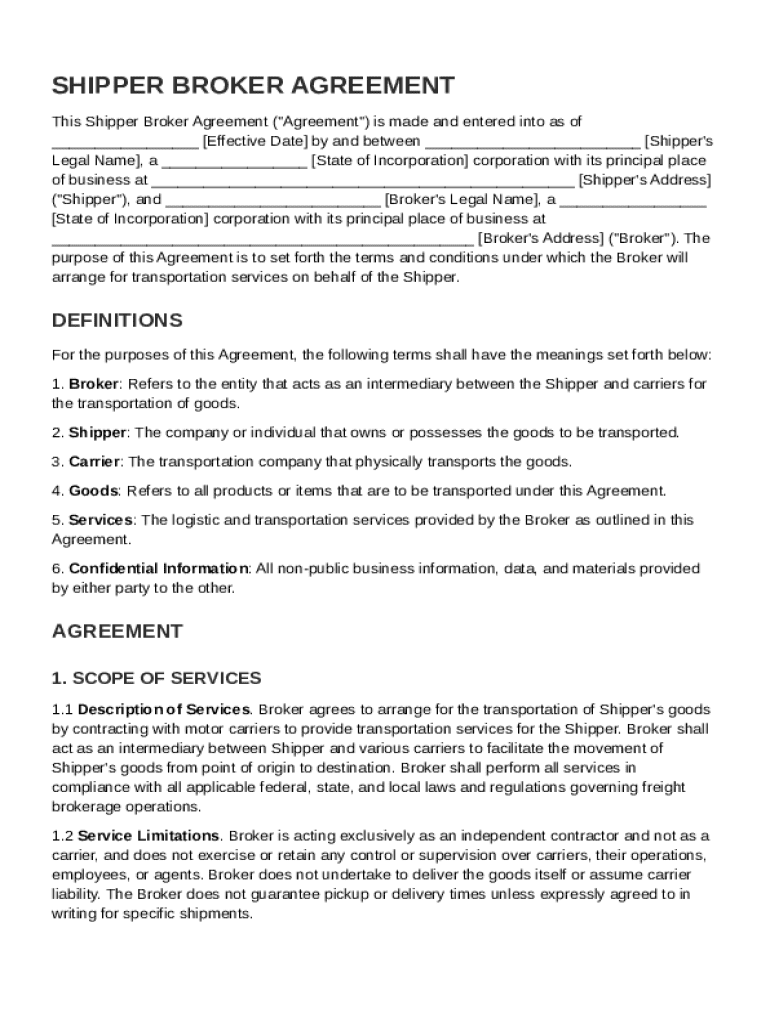
The Shipper Broker Agreement Template is a legal document designed to outline the terms and conditions under which a broker arranges for the transportation of a shipper's goods. Primarily, it defines the roles, responsibilities, and obligations of both parties involved in the transaction. This template serves as a foundational tool to ensure clear communication and understanding between shippers and brokers, detailing critical aspects such as service scope, payment terms, and liability provisions.
Key Components
- Roles and Responsibilities: Defines the specific duties of the shipper and the broker.
- Payment Terms: Outlines the payment schedule and methods.
- Liability and Indemnification: Clarifies liability responsibilities in case of loss or damage to goods.
- Dispute Resolution: Provides procedures for resolving any disagreements that may arise.
- Termination Clause: Details the conditions under which the agreement can be ended by either party.
How to Use the Shipper Broker Agreement Template
Using the Shipper Broker Agreement Template effectively involves customizing it to reflect the specific needs and conditions of the agreement between the broker and the shipper. Begin by reviewing each section to ensure it accurately represents the terms agreed upon by both parties.
Practical Steps
- Review the Template: Ensure all relevant sections are included and modify or add as needed.
- Complete Key Details: Input specific data such as names, contact information, and shipment details.
- Customize Terms: Tailor the payment and service terms to fit the agreement specifics.
- Validate Legal Compliance: Confirm that the template complies with applicable legal standards and practices.
- Secure Signatures: Obtain signatures from both parties to make the agreement legally binding.
Who Typically Uses the Shipper Broker Agreement Template
The Shipper Broker Agreement Template is utilized by a variety of parties within the logistics and transportation sectors. It is most commonly used by freight brokers, logistics coordinators, and shipping companies to formalize engagements with clients.


Typical Users Include:
- Freight Brokers: Professionals who arrange transportation services on behalf of shippers.
- Shipping Companies: Entities responsible for the physical movement of goods.
- Logistics Managers: Individuals overseeing the shipment processes and ensuring timely delivery.
Key Elements of the Shipper Broker Agreement Template
Understanding the key elements of the Shipper Broker Agreement Template is crucial for ensuring comprehensive protection and clarity for all parties involved. Each element serves a specific purpose within the agreement framework.
Core Elements
- Service Limitations and Exclusions: Defines what is and isn’t included in the service provision.
- Confidentiality Clauses: Ensures that sensitive information is protected from unauthorized disclosure.
- Independent Contractor Status: Confirms the non-employee status of the broker.
- Governing Law: Establishes the jurisdiction’s legal standards that will govern the agreement.
Steps to Complete the Shipper Broker Agreement Template
Efficiently completing the Shipper Broker Agreement Template involves following a series of methodical steps. These steps help in ensuring all necessary sections are accurately filled out and all parties comprehend the terms.
Step-by-Step Procedure
- Gather Information: Collect all necessary details regarding the parties involved.
- Fill Out Basic Information: Input names, addresses, and relevant identification numbers.
- Define Terms and Conditions: Clearly outline the agreed service scope, payment terms, and rights/obligations.
- Include Legal Provisions: Ensure all required legal clauses and disclaimers are integrated.
- Review and Revise: Engage legal counsel if necessary to review the document for compliance and clarity.
- Final Approval: Obtain confirmations from both parties before signing.
Legal Use of the Shipper Broker Agreement Template
Ensuring that the Shipper Broker Agreement Template is used legally involves adhering to all applicable laws and regulations that govern transportation and logistics agreements. The document must align with federal, state, and local statutes to provide enforceable protection.
Legal Considerations
- Compliance with Transportation Regulations: Verify adherence to the Department of Transportation regulations.
- Adherence to Commercial Laws: Ensure compliance with the Uniform Commercial Code where applicable.
- Inclusion of Required Disclosures: Include all disclosures mandated by law, such as safety and insurance information.
Examples of Using the Shipper Broker Agreement Template
Practical applications of the Shipper Broker Agreement Template can be observed across various logistics scenarios. Such examples underscore its utility in different contexts and demonstrate effective usage for successful transactions.
Practical Scenarios
- National Freight Services: Utilizing the agreement when coordinating large-scale shipments across state lines.
- Local Distribution Chains: Formalizing agreements for regional deliveries and local supply chains.
- Seasonal Shipping Contracts: Establishing temporary agreements for peak season transportation needs.
State-Specific Rules for the Shipper Broker Agreement Template
While the core format of the Shipper Broker Agreement Template is consistent, certain state-specific rules may affect the content or requirements of the document. Being informed about these differences ensures greater compliance and effectiveness.
State-Level Variations
- Jurisdiction-Specific Dispute Resolution: Requirement for mediation or arbitration may differ by state.
- State-Imposed Liability Limits: Certain states may have unique liability limitations or increased coverage requirements.
- Specialized Contractual Obligations: Some states might enforce specific provisions, such as notice periods or cancellation terms.