Definition & Meaning
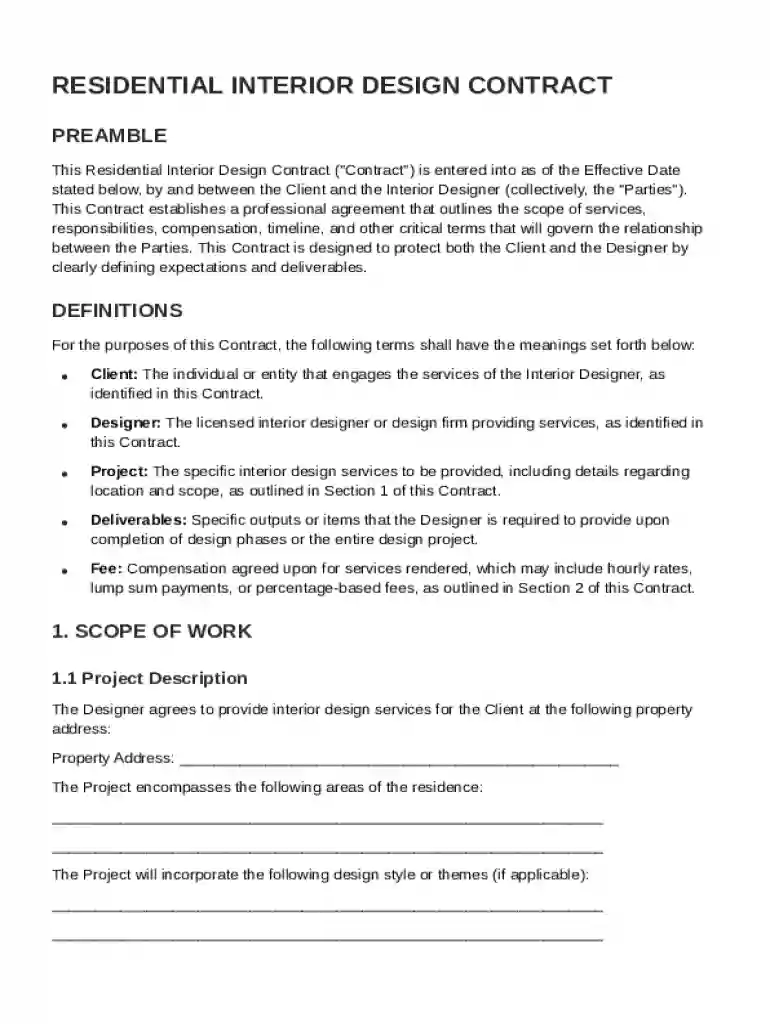
The Residential Interior Design Contract Template is a legal document outlining the terms and conditions of a professional relationship between a client and an interior designer. It serves as a groundwork for any interior design project, detailing the scope of services, project timeline, financial arrangements, and mutual responsibilities. Understanding this template is crucial for both the client and designer to establish a clear agreement and avoid potential disputes.
Key Components
- Scope of Services: Defines specific tasks the designer will undertake, such as conceptual development, design implementation, and project supervision.
- Compensation Structure: Details how the designer will be paid, including hourly rates or fixed fees, along with a payment schedule.
- Project Timeline: Outlines the start and expected completion dates for the project, ensuring both parties are aligned on deadlines.
- Terms & Conditions: Covers the legal ground such as confidentiality agreements, liability limits, and termination conditions.
Key Elements of the Residential Interior Design Contract Template
A comprehensive residential interior design contract template includes several critical elements to safeguard the interests of both the client and designer.
Scope of Work
- Detailed description of services to be provided.
- Clear definition of project deliverables and milestones.
Responsibilities
- Designer Responsibilities: Outlines tasks such as presenting design concepts and procuring materials.
- Client Responsibilities: Specifies client obligations like providing access to the property or making timely decisions.
Financial Terms
- Payment Terms: Includes deposit requirements and installment details.
- Additional Costs: Lists potential extra expenses like shipping or taxes.
Steps to Complete the Residential Interior Design Contract Template
To successfully complete the residential interior design contract template, follow these detailed steps:
- Detailing Services: Specify the scope of work, service stages, and deliverables.
- Financial Arrangements: Clearly state payment terms, deposit amounts, and payment methods.
- Project Timetable: Agree on start and end dates, with key milestones marked.
- Terms & Conditions: Outline legal terms related to termination, liability, and confidentiality.
Practical Tips
- Use precise language to minimize ambiguity.
- Review the contract with a legal advisor to ensure completeness and compliance with local laws.
Important Terms Related to Residential Interior Design Contract Template
Understanding specific terminology is essential for interpreting the residential interior design contract template.
Key Terms
- “Design Development”: Involves refining design concepts through detailed drawings and specifications.
- “Change Order”: A formal request to alter the project scope or materials, impacting cost and time.
Other Terms
- “Retainer Fee”: Upfront payment securing the designer’s availability for the project.
- “Force Majeure”: Clause that exempts parties from liability in cases of uncontrollable events.
Legal Use of the Residential Interior Design Contract Template
Using the residential interior design contract template legally requires adherence to both state and federal regulations.
Compliance and Best Practices
- Ensure all legal requirements, like disclosures and licensing, are fulfilled.
- Include confidentiality clauses to protect sensitive information.
- Stay updated with federal regulations such as the ESIGN Act for electronic signatures.
Examples of Using the Residential Interior Design Contract Template
Utilizing the contract template effectively can be illustrated through various scenarios:
Practical Applications
- Residential Projects: Covers comprehensive home design services, including room planning and furnishings.
- Luxury Developments: Caters to high-end projects requiring bespoke interior solutions.
Case Studies
- Scenario A: A client wanting a modern redesign can use the contract to outline specific aesthetic goals and deliverables.
- Scenario B: A designer handling multiple projects uses the contract to manage client expectations and resource allocation effectively.
Digital vs. Paper Version
Choosing between a digital or paper version of the residential interior design contract depends on project needs and convenience.
Digital Advantages
- Eco-friendly with reduced paper use and easy document management.
- Faster execution and modifications through online editing tools.
Paper Considerations
- Traditional Preference: Some parties may prefer hard copies for records.
- Solid Evidence: Physical signatures may carry perceived legal strength.
User Profiles
- Interior Designers: Employ the contract to set clear expectations and terms with clients.
- Residential Clients: Rely on the template to ensure design projects align with their needs and budgetary constraints.
Additional Users
- Contractors and Vendors: Can use related sections to formalize their roles in the design project.
- Legal Advisors: May assist in refining the contract’s language for legal robustness.
State-Specific Rules for the Residential Interior Design Contract Template
The contract must comply with various state regulations governing interior design practices.
Consideration of Local Laws
- State Licensing: Check if the state requires specific licensing for interior designers.
- Sales Tax Variations: Understand applicable local tax rates on design services and materials.
Adaptations and Modifications
- Modify agreements to reflect local building codes and permit requirements.
- Adjust clauses to align with state-mandated consumer protection laws to safeguard both parties.
This content provides an extensive exploration of the Residential Interior Design Contract Template, ensuring clarity and depth across all segments, beneficial for users engaging with residential interior design projects.