Definition and Meaning
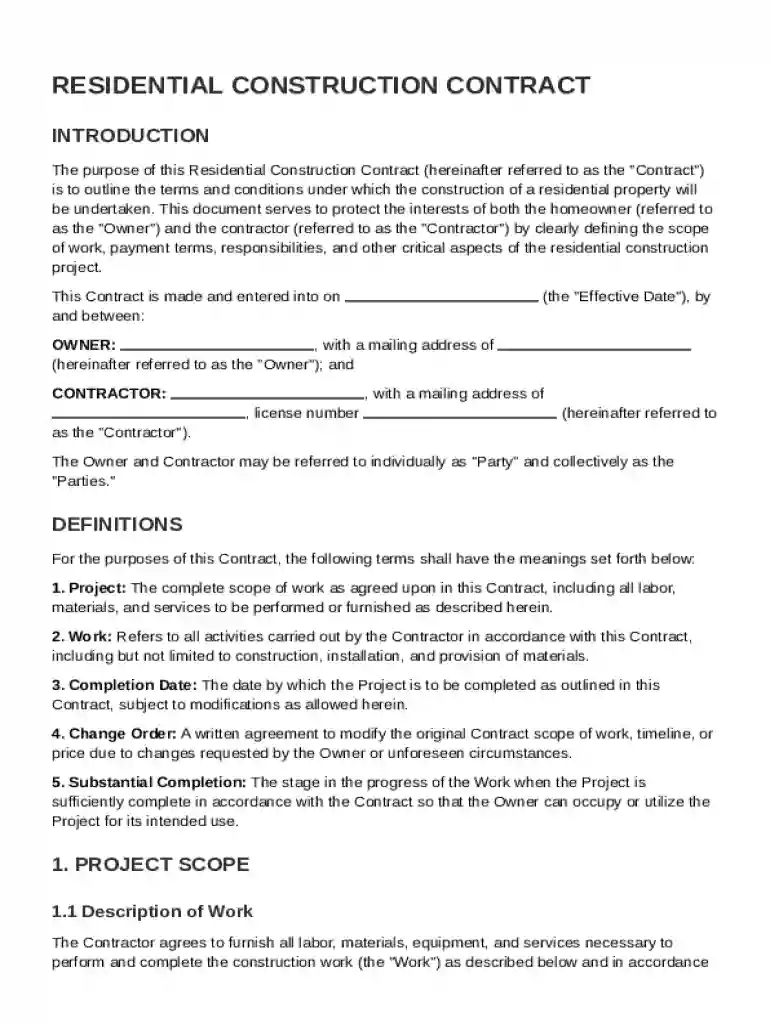
The Residential Construction Contract Template is a standardized document used to outline the terms and conditions for constructing residential properties. It defines the roles and responsibilities of both the homeowner (Owner) and the contractor (Contractor), ensuring that all parties involved have a clear understanding of the project scope, timelines, and costs associated with the construction. This document serves as a binding agreement that offers legal protections and establishes expectations, such as project milestones and payment schedules.
Key Elements of the Residential Construction Contract Template
The template includes several critical elements to ensure comprehensive coverage of all aspects of the construction project. These elements typically encompass:
- Project Scope: Detailed description of work to be performed, including specific tasks and deliverables.
- Payment Terms: Clear schedule of payments, including initial deposits, progress payments, and final settlements.
- Timelines: Project schedule with start and completion dates, including provisions for delays.
- Change Orders: Procedures for handling changes in the project scope or design, with associated cost implications.
- Warranties: Assurance that the construction work will meet specified standards, with a defined warranty period.
- Dispute Resolution: Mechanisms for resolving conflicts between the Owner and Contractor, such as mediation or arbitration.
How to Use the Residential Construction Contract Template
Utilizing the Residential Construction Contract Template involves several steps to ensure its effectiveness and compliance with relevant laws. Follow these steps to customize the template:
- Review the Template: Familiarize yourself with the entire document to understand the terms and requirements.
- Customize Details: Modify sections to reflect the specifics of your project, such as project scope, timelines, and payment schedules.
- Consult Professionals: Consider getting legal or professional advice to ensure the contract meets all necessary legal standards.
- Negotiate Terms: Discuss and agree on terms with the involved parties, making any necessary amendments.
- Finalize and Sign: Ensure all parties review and sign the document, making it a legally binding contract.
Important Terms Related to the Residential Construction Contract Template
Understanding key terms used in the Residential Construction Contract Template is essential for clarity and compliance. Some of these terms include:
- Owner: The individual or entity commissioning the construction work.
- Contractor: The company or individual responsible for carrying out the construction work.
- Subcontractor: Additional parties hired by the Contractor to perform specialized tasks.
- Specifications: Technical details outlining materials and workmanship standards.
- Retainage: A portion of payment withheld until project completion to ensure contractor performance.
Legal Use of the Residential Construction Contract Template
The Residential Construction Contract Template must be used in compliance with U.S. legal standards to ensure enforceability. Several aspects contribute to its legal validity:
- Compliance with State Laws: The contract should adhere to state-specific construction laws and regulations.
- Clarity and Completeness: All terms must be detailed and explicitly stated to avoid misinterpretations.
- Mutual Consent: Both parties must willingly agree to the terms, reflected by their signatures.
- Consideration: There should be an exchange of value between the parties, such as payment from the Owner for services rendered by the Contractor.
Steps to Complete the Residential Construction Contract Template
Completing the Residential Construction Contract Template involves a series of detailed actions to ensure it serves its intended purpose. Follow these instructions:
- Fill in Project Details: Enter specific information about the construction project, including addresses, details of the work, and materials to be used.
- Input Legal Names: Ensure that all parties' full legal names are used throughout the document.
- Establish Project Timelines: Complete the section on project start and estimated completion dates, along with milestones.
- Detail Payment Arrangements: Provide a complete payment plan, detailing deposit amounts and payment schedules.
- Define Responsibilities: Clearly articulate the duties and responsibilities of both the Owner and Contractor.
- Add Terms for Modifications: Include clauses for change orders, outlining how alterations to the project's scope will be managed.
- Review and Confirm: Conduct a thorough review with all parties involved to ensure accuracy before signing.
State-Specific Rules for the Residential Construction Contract Template
While the residential construction contract template provides a standard framework, specific state laws may require additional considerations or variations in contract terms:
- Licensing Requirements: Ensure the contractor meets state licensing standards.
- Mandatory Disclosures: Some states may require specific disclosures or notices be included in the construction contract.
- Lien Waivers: Depending on the state, lien waiver requirements may differ and need to be detailed in the contract.
- Timeline Limitations: Certain states impose restrictions on project completion timelines and necessary clauses for delays.
- Consumer Protection Laws: Compliance with state consumer protection statutes to safeguard homeowners’ rights and interests.