






Definition & Meaning
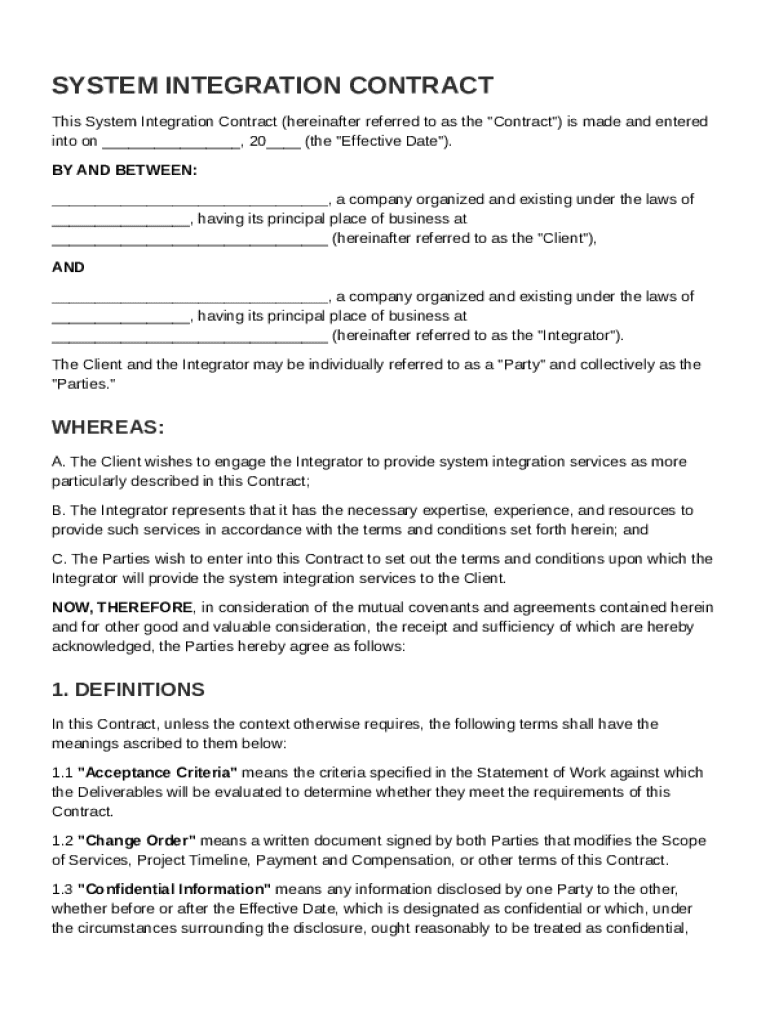
A System Integration Contract Template is a standardized document used to outline the terms and conditions for system integration services between a Client and an Integrator. This template serves as a comprehensive agreement that details the responsibilities of both parties, project timelines, scope of services, payment structures, confidentiality obligations, warranties, termination rights, and dispute resolution processes. The aim is to establish a clear framework for collaboration, ensuring that both parties have a mutual understanding of the project's objectives and the expectations from each side.
Key Elements of the System Integration Contract Template
The System Integration Contract Template includes several crucial components that provide structure and clarity:
-
Scope of Services: This section outlines the specific services the Integrator will provide. It should include detailed descriptions of the tasks, deliverables, and any exclusions.
-
Project Timelines: Specifies key milestones, deadlines, and the overall timeline of the integration project. This helps manage expectations and track progress.
-
Payment Structures: Details the payment terms, including methods, schedules, and any penalties for late payments. It may also outline costs for additional services not covered in the initial agreement.
-
Confidentiality Obligations: Describes the measures and protocols both parties agree upon to protect sensitive information during and after the project lifespan.
-
Warranties and Liability: Provides assurances from the Integrator regarding the quality of work and outlines liability in cases of breach or failure.
-
Termination Rights: Outlines the conditions under which either party can terminate the contract and the procedures for handling termination responsibly.
Important Terms Related to System Integration Contract Template
Understanding the legal and technical terms included in the template is essential for both parties to ensure clarity and avoid potential misunderstandings:
-
Integrator: The party responsible for delivering the system integration services.
-
Client: The party engaging and compensating the Integrator for their services.
-
Deliverables: Specific outputs or results expected from the Integrator at each project phase.
-
Intellectual Property: Details about the ownership rights of the software solutions and systems developed or integrated during the project.
Steps to Complete the System Integration Contract Template
Filling out the System Integration Contract Template requires careful consideration and precision:
-
Identify Parties: Clearly state the name, address, and contact information of both the Client and the Integrator.
-
Define Scope of Services: Include a comprehensive description of the services to be provided, along with any constraints or limitations.
-
Set Project Timelines: Outline the schedule for deliverables and final project completion, including milestones.
-
Determine Payment Terms: Specify the fee structure, payment schedule, and any related conditions.
-
Draft Confidentiality Clause: Establish terms regarding the protection of sensitive information.
-
Include Warranties: Integrate any assurances regarding the quality and functionality of the provided services.
-
Outline Termination Conditions: Define scenarios and processes for contract termination if necessary.
Practical Examples of Using the System Integration Contract Template
System Integration Contracts can apply to various real-world situations:
-
Technology Companies: When a tech firm collaborates with a software development company to integrate new software systems with existing hardware.
-
Healthcare Facilities: Integrating patient management systems with electronic health records (EHR) systems.
-
Financial Institutions: When banking software solutions are integrated with payment processing systems to enhance service delivery.
Legal Use of the System Integration Contract Template
The legal binding nature of the System Integration Contract Template relies on:
-
Compliance: Ensuring the contract adheres to relevant state and federal laws governing business agreements and data privacy.
-
ESIGN Act: Utilizing compliant electronic signatures to execute the agreement legally.
-
Dispute Resolution: Establishing a process for resolving disagreements, whether through negotiation, arbitration, or litigation.
Who Typically Uses the System Integration Contract Template
Various entities benefit from this template:
-
Small to Medium Enterprises (SMEs): For integrating affordable and scalable IT solutions.
-
Large Corporations: Managing complex system integrations involving multiple departments.
-
IT Consultants and Freelancers: Offering integration services to diverse clients while protecting their interests.


Versions or Alternatives to the System Integration Contract Template
The System Integration Contract Template may have variations, including:
-
Simplified Contracts: Suitable for straightforward projects with limited scope.
-
Custom Contracts: Tailored to meet the unique requirements of specific projects or industries.
-
Industry-Specific Templates: Addressing specialized needs, such as healthcare or finance, where additional regulatory compliance is necessary.
Business Types That Benefit Most from System Integration Contract Template
The template is particularly useful for:
-
Tech Startups: Aligning new technologies with existing systems to enhance performance.
-
Consulting Firms: Offering specialized system integration as part of a larger consulting strategy.
-
Manufacturing Enterprises: Streamlining operations by integrating production management systems.
Digital vs. Paper Version
Using this template digitally offers several advantages:
-
Accessibility: Easily edit, share, and store the contract online.
-
Security: With platforms like DocHub, secure electronic signatures and encrypted storage can protect sensitive contract information.
-
Efficiency: Quickly update or revise contract terms as agreements evolve or new needs arise.