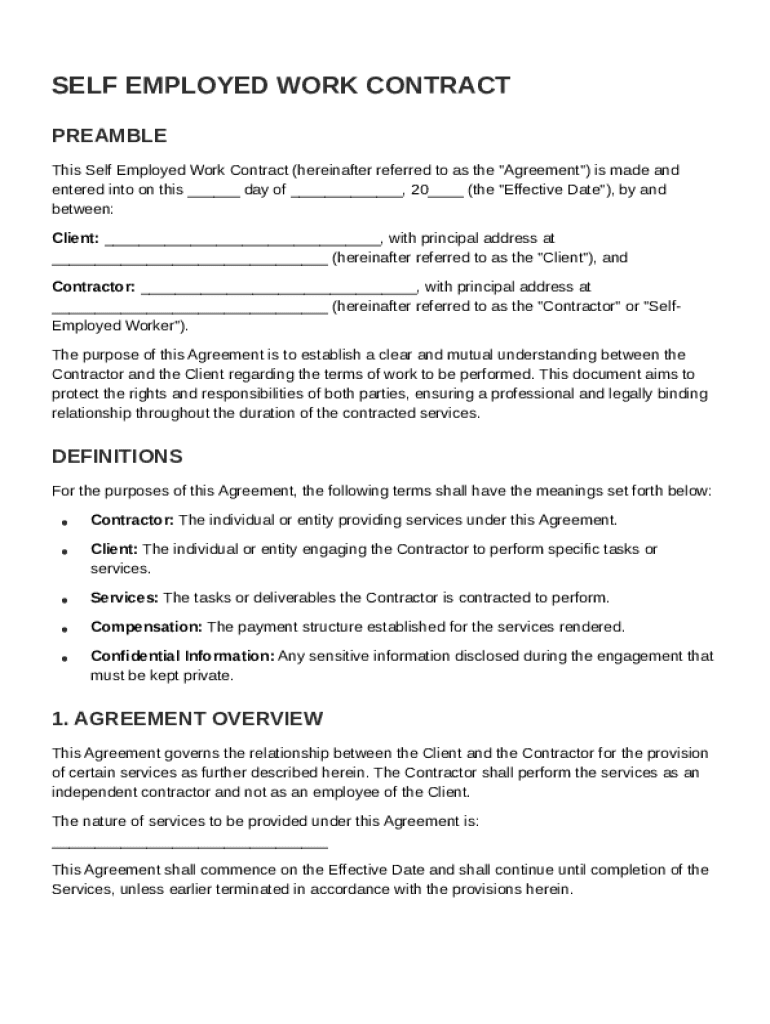







Key Elements of the Self Employed Work Contract Template
The Self Employed Work Contract Template is designed to clearly establish the terms and expectations between a client and an independent contractor. It is essential for defining roles and responsibilities, which helps prevent misunderstandings and disputes. Here are some critical components commonly found in these agreements:
- Parties Involved: Clearly state the names and addresses of both the client and the independent contractor. This ensures both parties are correctly identified.
- Scope of Work: Outline the specific tasks or services the contractor is expected to perform. This section typically includes detailed descriptions to avoid ambiguity.
- Payment Terms: Specify how and when the contractor will be compensated. This section should include the payment rate, schedule, and any other relevant financial terms.
- Duration of Agreement: State the start and end dates of the contract. If the work is ongoing, mention the terms under which the agreement can be terminated.
- Confidentiality Clause: Include provisions that protect sensitive information shared during the course of the work.
- Termination Conditions: Describe situations that may lead to the termination of the contract. This clarity helps manage expectations and protect both parties.
How to Use the Self Employed Work Contract Template
Using a Self Employed Work Contract Template can streamline the process of creating a legally binding agreement. Follow these steps to effectively utilize the template:
- Identify the Appropriate Template: Select a template that fits the specific type of work and the requirements of both parties.
- Customize the Fields: Adjust the template to include relevant details, such as party names, scope of work, and payment terms. Ensure all sections reflect the unique aspects of the project.
- Review Legal Terms: Consider consulting a legal professional to ensure the document meets legal standards and adequately protects the interests of both parties.
- Finalize the Document: Once all details are customized and agreed upon by both parties, finalize the document. Double-check for accuracy and completeness.
- Obtain Signatures: Use DocHub's e-signature feature to gather legally binding signatures from all parties involved. This ensures enforceability and compliance with legal requirements.
- Store and Share: Keep a copy of the signed contract in a secure location accessible to both parties for future reference.
Important Terms Related to the Self Employed Work Contract Template
When preparing a Self Employed Work Contract, it is crucial to understand specific terminology to ensure clarity and precision. Here are some terms often encountered:
- Independent Contractor: A self-employed individual or entity contracted to perform work or services. They are not an employee and possess distinct financial and operational independence.
- Client: The person or business engaging the services of the contractor. They typically provide the project requirements and compensate the contractor.
- Confidential Information: Any non-public material or data shared between the parties that must not be disclosed to third parties.
- Deliverables: Specific outputs or results the contractor is expected to produce and complete according to the contract.
- Force Majeure: Legal language referring to unforeseen events that prevent one or both parties from fulfilling contractual obligations, such as natural disasters.
- Intellectual Property: Creative works or inventions the contractor produces, which may require specific ownership and usage rights outlined in the contract.
Legal Use of the Self Employed Work Contract Template
To ensure the Self Employed Work Contract Template is legally binding, consider the following:
- Legal Compliance: Verify that the contract complies with relevant state and federal laws, particularly those governing independent contractor status, such as tax and employment regulations.
- Clear Language: Use unambiguous and straightforward language to ensure that both parties clearly understand their obligations.
- Amendments: Outline a process for making amendments to the contract, stating that all changes must be in writing and mutually agreed upon.
- Dispute Resolution: Include procedures for resolving disputes, such as mediation or arbitration, to avoid lengthy court battles.
- Governing Law: Specify which state laws will govern the contract. This is crucial if the parties reside in different jurisdictions.
Steps to Complete the Self Employed Work Contract Template
Completing the template involves a structured approach to ensure all necessary provisions are covered:
- Gather Initial Information: Collect all essential details about the project and parties involved.
- Personalize with Specifics: Fill in the template with specific terms agreed upon, like work descriptions and deadlines.
- Include Legal Language: Ensure mandatory legal provisions are included, such as confidentiality and termination terms.
- Review the Document: Have all parties review the contract to confirm accuracy and understanding.
- Seek Legal Advice: When possible, consult a legal advisor to review the document's compliance with applicable laws.
- Execute the Contract: Sign the document electronically using DocHub to ensure it is legally binding.
- Retain an Executed Copy: Save copies of the signed contract with both parties for record-keeping and future reference.
Who Typically Uses the Self Employed Work Contract Template
This template is utilized by a variety of individuals and organizations that engage the services of contractors:
- Freelancers: Individuals offering specific services, such as writing, design, or technology services, often use these contracts to formalize their engagements.
- Small Businesses: Companies hiring contractors for projects or tasks beyond their internal capacity rely on this format to outline terms clearly.
- Agencies: Entities acting as intermediaries between clients and experts utilize these templates to manage multiple contracts efficiently.
- Consultants: Professionals providing specialized advice or services regularly use work contracts to document the engagement terms with their clients.


Variations or Alternatives to the Self Employed Work Contract Template
There are several variations and alternatives to the Self Employed Work Contract Template, catering to specific needs or preferences:
- Project Contracts: These are focused on particular projects with clear deliverables within a defined timeframe.
- Retainer Agreements: For ongoing services, these contracts outline continuous service terms and regular payment schedules.
- Non-Disclosure Agreements (NDAs): Often included in work contracts to specifically focus on protecting sensitive information shared during the contract period.
- Service Level Agreements (SLAs): Define expected service standards and responsibilities, often used in consulting and IT services.
Choosing the appropriate form depends on the particular work context and the nature of the engagement.