
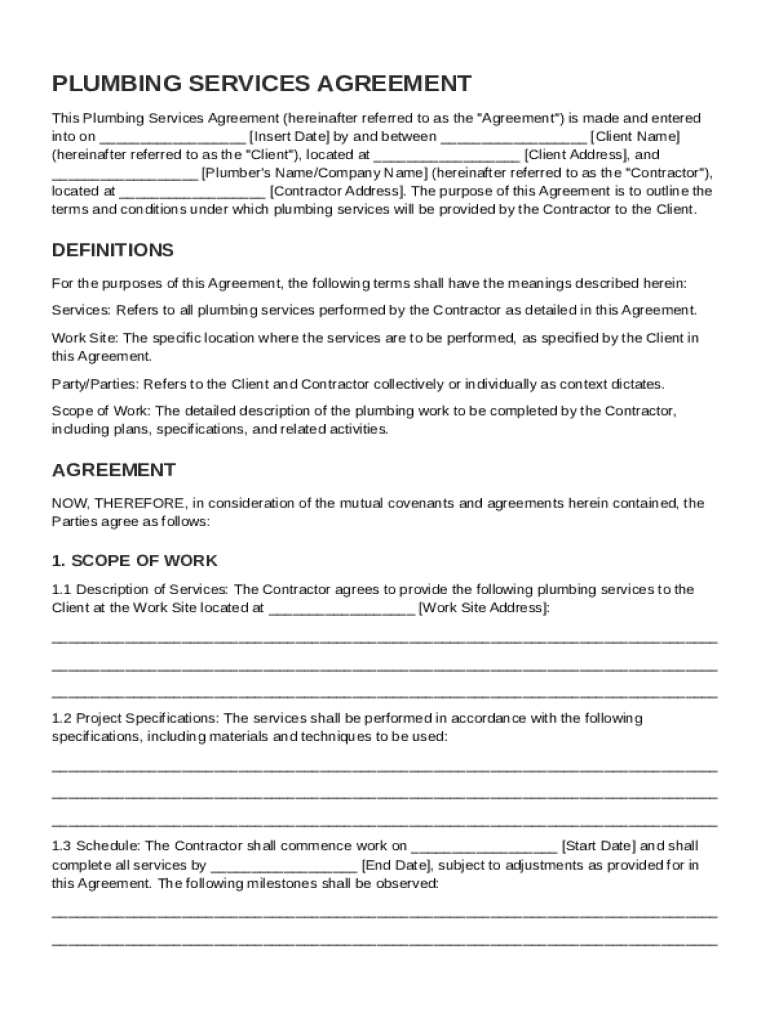







Definition and Meaning
The Plumbing Agreement Template serves to formalize the relationship between a contractor (the plumber) and a client. It outlines the scope of services to be provided, payment terms, and other critical terms and conditions. This document ensures clarity and sets expectations for both parties, facilitating a mutual understanding that helps prevent disputes or misunderstandings. By establishing a legal framework, it provides a basis for accountability and performance, detailing aspects such as liability, insurance requirements, warranties, termination rights, and dispute resolution procedures.
Key Elements of the Plumbing Agreement Template
The Plumbing Agreement Template encompasses various essential components that provide comprehensive coverage of the contractual arrangement. These elements include:
- Scope of Work: Defines the specific plumbing services to be provided, including any materials to be used and deadlines for completion.
- Payment Terms: Outlines payment schedules, amounts, and methods, including any deposits required before work begins.
- Responsibilities: Details the obligations and responsibilities of both parties, ensuring that each knows their role in the agreement.
- Liability and Insurance: Specifies required insurance coverages such as general liability, outlining any indemnification clauses to protect parties from potential legal claims.
- Warranties and Guarantees: Highlights any guarantees provided by the contractor about the work performed or materials used.
- Termination Rights: Provides conditions under which either party may terminate the agreement, including any notice periods or requirements.
- Dispute Resolution: Details procedures for resolving conflicts, including mediation or arbitration clauses if applicable.
Steps to Complete the Plumbing Agreement Template
Completing the Plumbing Agreement Template involves several steps to ensure its accuracy and completeness. Here’s a guide to help:
- Gather Information: Collect necessary details from both parties, including names, addresses, and contact information.
- Define Terms: Clearly outline the scope of work, using specific language to avoid ambiguity.
- Set Payment Terms: Agree on payment schedules, amounts, and accepted methods, ensuring transparency for both sides.
- Assign Responsibilities: Clearly demarcate the responsibilities of both the client and contractor to avoid potential disputes.
- Outline Warranties: Specify any warranties or guarantees offered, including coverage and duration.
- Address Termination Conditions: State the conditions under which the agreement can be terminated by either party.
- Include Legal Provisions: Insert necessary legal clauses, such as dispute resolution methods, to protect both parties.
By carefully following these steps, both parties can ensure that the agreement is comprehensive and legally enforceable.
Legal Use of the Plumbing Agreement Template
The Plumbing Agreement Template is legally binding, serving as a critical tool in formalizing the service relationship. It follows principles set by the ESIGN Act, allowing for electronic execution and providing a valid legal document upon completion. To ensure its legality:
- Sign and Date: Both parties must sign and date the agreement, either physically or electronically, ensuring its enforceability.
- Compliance with State Laws: It must comply with state-specific construction and contracting laws, including any licensing or regulatory requirements.
- Record Keeping: Each party should keep a signed copy for records, ensuring it can be referenced or used in legal proceedings if necessary.
How to Use the Plumbing Agreement Template
Utilizing the Plumbing Agreement Template effectively involves understanding key features and applying them to specific scenarios. Here’s how to use it:
- Customize as Needed: Tailor sections such as the scope of work and payment terms to fit the specific job and agreement between parties.
- Attach Necessary Documents: Include any supplementary documents, like project plans or blueprints, that are relevant to the job.
- Review for Accuracy: Double-check the information filled in for accuracy and completeness, modifying any sections as required to reflect agreed-upon changes.
By following these tips, the template can be effectively employed to secure a fair and mutually beneficial agreement.
Who Typically Uses the Plumbing Agreement Template
The Plumbing Agreement Template is predominantly used by:
- Plumbing Contractors: To formalize service agreements with clients, ensuring clarity on project details and expectations.
- Homeowners and Commercial Clients: Looking to secure services, ensuring they receive agreed-upon work as detailed in the contract.
- Legal and Contract Professionals: Who aid in drafting or reviewing contracts to ensure compliance with legal standards.
This broad range of users underscores the template’s versatility and utility across different scenarios.


State-Specific Rules for the Plumbing Agreement Template
The application of the Plumbing Agreement Template can vary based on state laws, as each jurisdiction may have distinct regulations governing contracts and plumbing services. Considerations include:
- Licensing Requirements: Some states require plumbers to hold specific licenses, which must be referenced and verified within the agreement.
- Work Permits and Codes: Ensure that the contract complies with local building codes and work permits regulations, which may impact the scope or nature of work.
- Consumer Protection Laws: Be aware of consumer rights and protections that may influence contract terms or the handling of disputes.
Understanding these state-specific nuances is crucial for the validity and enforceability of the agreement.
Important Terms Related to the Plumbing Agreement Template
Familiarity with certain terms can enhance the understanding and application of the Plumbing Agreement Template. Key terms include:
- Indemnification Clause: Protects one party from being liable for certain issues caused by the other party.
- Material Breach: Refers to a substantial failure to perform the contracted obligations, allowing for contract termination.
- Force Majeure: Clauses that relieve parties from obligations due to unforeseen events beyond their control, like natural disasters.
- Arbitration Clause: Specifies that disputes will be resolved through arbitration rather than court litigation, often expediting the process.




