






Definition & Meaning
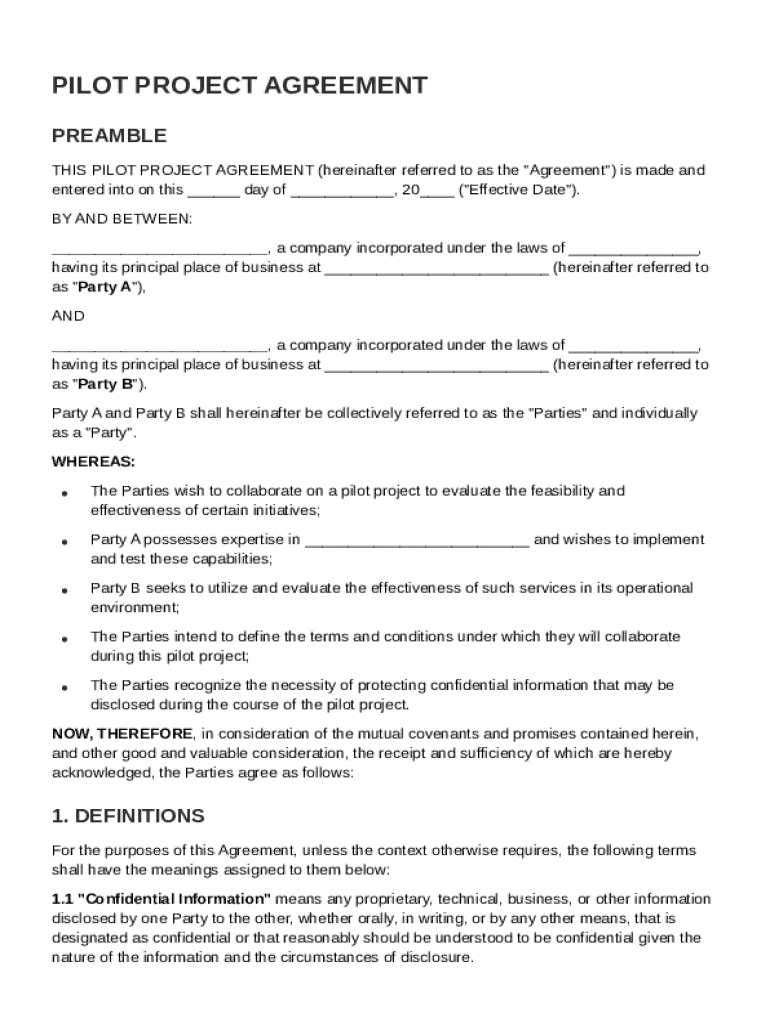
A Pilot Project Agreement Template is a comprehensive document designed to formalize a collaboration between two parties, often referred to as Party A and Party B, on a specific pilot initiative. This agreement serves as a legal framework that outlines essential components of the partnership, including the scope of the project, roles and responsibilities, deliverables, and evaluation metrics. The primary aim of the template is to facilitate a structured approach to testing new initiatives or innovative ideas in a controlled environment. By defining clear terms, the agreement helps both parties manage expectations and ensure a mutual understanding of the project’s objectives and outcomes.
The template typically includes several critical elements: financial arrangements detailing the costs and compensation related to the pilot project, confidentiality clauses to protect sensitive information shared during the collaboration, and intellectual property rights to designate ownership and usage rights of the project's outcomes. Additionally, the agreement will usually encompass risk management strategies to address potential issues or conflicts that could arise during the project timeline.
Key Elements of the Pilot Project Agreement Template
Project Scope and Objectives
- Clearly outlines the goals and parameters of the pilot project.
- Defines the specific initiatives to be tested and the expected outcomes.
- Includes timelines, milestones, and success criteria to evaluate the project's effectiveness.
Roles and Responsibilities
- Assigns specific duties to each party involved in the project.
- Details the responsibilities of Party A and Party B in executing the project tasks.
- Ensures accountability by specifying lead roles for critical activities.
Deliverables and Financial Provisions
- Lists the deliverables expected at each project stage, including reports, prototypes, or other outputs.
- Documents the financial terms, such as budget allocations, payment schedules, and financial obligations.
- Includes provisions for reimbursement or cost-sharing and ensures transparency in financial dealings.
Confidentiality and Intellectual Property Rights
- Provides guidelines for maintaining the confidentiality of shared data and information.
- Establishes rules regarding the handling and protection of intellectual property generated through the project.
- Details the ownership rights of any inventions, designs, or innovations produced.
How to Use the Pilot Project Agreement Template
- Identify Parties Involved: Specify the organizations or individuals entering the agreement, clearly identifying each as Party A or Party B.
- Define Objectives: Clearly articulate the project's aims and what both parties seek to achieve through this pilot initiative.
- Assign Responsibilities: Use the template to designate roles and allocate tasks among the involved parties to ensure clarity and avoid overlaps.
- Outline Terms: Fill in the financial terms, deliverables, and confidentiality requirements to form a comprehensive agreement.
- Review Clauses: Carefully evaluate all sections of the template to ensure they reflect the agreed intentions and legal considerations of both parties.
- Legal Consultation: Although templates provide a starting point, seeking legal advice is crucial to tailor provisions to specific needs and jurisdictional requirements.
Important Terms Related to Pilot Project Agreement Template
- Deliverables: Specific outputs or results expected at different phases of the pilot project.
- Milestones: Predefined points in the project timeline marking progress or achievement of certain objectives.
- Confidential Information: Data or knowledge shared during the project that must remain undisclosed outside of the collaborating parties.
- Intellectual Property (IP): Creations or ideas derived from the project that may include research findings, technological breakthroughs, or creative works.
Examples of Using the Pilot Project Agreement Template
Case Study 1: Software Development Collaboration
A technology company (Party A) partners with an educational institution (Party B) to develop a new educational software platform. The agreement specifies the development stages, testing periods, and the role of each party in the conceptualization and coding processes. The terms include a mutual non-disclosure agreement to protect proprietary programming techniques and data, along with a profit-sharing model for any commercialized aspects of the product post-trial.
Case Study 2: Renewable Energy Initiative
An energy firm (Party A) engages with a local government (Party B) to pilot a solar energy project. The agreement outlines the installation, maintenance, and monitoring roles, with specified deliverables including energy efficiency reports and community impact assessments. The intellectual property rights section clarifies that technological improvements developed during the project remain the property of the energy firm, while the local government maintains rights to usage statistics for policy proposals.
This structured breakdown delivers an effective overview of the Pilot Project Agreement Template, ensuring parties understand all facets of its formulation and execution.