
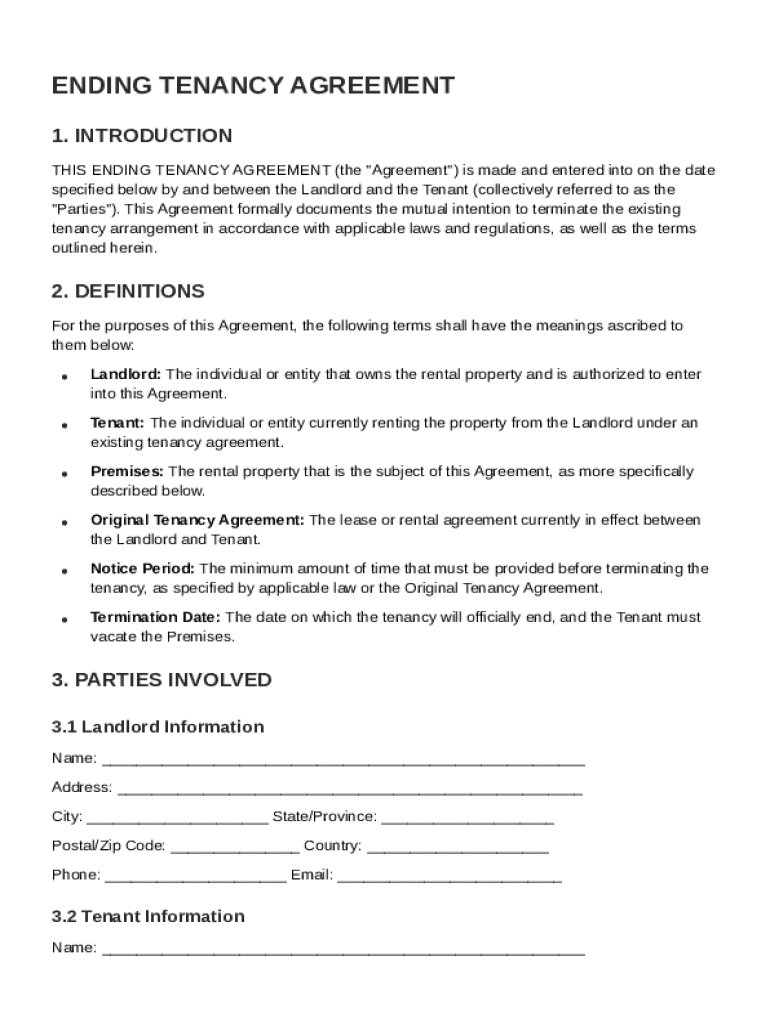







Definition and Meaning of the Ending Tenancy Agreement Template
The Ending Tenancy Agreement Template is a formal legal document designed to outline the terms and conditions under which a lease between a landlord and tenant is terminated. It facilitates a mutual understanding and agreement on ending a tenancy arrangement, ensuring both parties adhere to specific obligations and timelines. The document typically includes details of the original lease terms, notice requirements, and stipulations on property handover. This template serves to protect the interests of both the landlord and the tenant, providing clarity and minimizing potential disputes during the process of terminating a lease agreement.
Key Components of the Agreement
- Parties Involved: Identifies the landlord and tenant to ensure proper communication.
- Notice Requirements: Details the period required for notifying the other party of the termination.
- Security Deposit Return: Outlines the process and conditions for refunding the tenant's security deposit.
- Move-Out Procedures: Specifies the steps the tenant must take before vacating the property.
How to Use the Ending Tenancy Agreement Template
Using the Ending Tenancy Agreement Template involves several detailed steps to ensure an accurate and legally compliant document. Both parties should review the template thoroughly, ensuring all sections align with the original lease terms and any specific requirements they wish to include. It is essential to enter accurate tenant and landlord information, specify the termination date, and outline any conditions related to the return of security deposits or final inspections. Once completed, the agreement should be signed and dated by both parties to be legally binding.
Steps for Effective Use
- Review Existing Lease: Ensure all terms align with the current agreement.
- Customize the Template: Add details like names, addresses, and specific conditions.
- Consult Legal Counsel: Optional but recommended for complex situations.
- Sign and Date: Both parties must sign and date the agreement to validate it.
Steps to Complete the Ending Tenancy Agreement Template
Completing the Ending Tenancy Agreement Template requires careful attention to detail to ensure thorough documentation of the lease termination process.
- Gather Necessary Information: Have the original lease documents and personal identification for both parties on hand.
- Fill in Basic Details: Include names, addresses, and contact information of the landlord and tenant.
- Specify Termination Date: Agree upon a final date for the lease.
- Outline Move-Out Requirements: Detail cleaning, repairs, and inspections necessary before vacating.
- Add Security Deposit Terms: Explain conditions for the deposit's return.
- Review and Edit: Make sure there are no errors and all sections are complete.
- Finalize with Signatures: Both parties should sign to confirm their agreement.
Important Terms Related to the Ending Tenancy Agreement Template
Understanding key terms associated with the Ending Tenancy Agreement Template is crucial for interpreting the document accurately.
Common Terms and Their Implications
- Lease Termination: The official end of the lease agreement.
- Security Deposit: A refundable sum paid by the tenant, returnable upon satisfying move-out conditions.
- Notice Period: The time frame within which the termination notice must be given.
- Governing Law: The legal jurisdiction that oversees the agreement's enforcement.
Legal Use of the Ending Tenancy Agreement Template
The Ending Tenancy Agreement Template serves as a legally binding document that both parties must adhere to. It is important that the template complies with state and federal laws governing tenancy and lease terminations. Landlords and tenants should ensure that the agreement does not violate any housing regulations and state-specific mandates, providing a legal framework for the lease's termination. Consulting with a legal professional for thorough verification can ensure the agreement is compliant.
State Compliance and Legal Considerations
- State Laws: Different states have unique regulations regarding notice periods and security deposits.
- Dispute Resolution: The agreement can outline methods for resolving potential disagreements post-termination.
- Record Keeping: Both parties should keep a copy for their records to avoid future discrepancies.
State-Specific Rules for the Ending Tenancy Agreement Template
Each state in the U.S. may have specific regulations governing tenancy agreements and their termination. These rules can affect aspects like notice period lengths, security deposit handling, and required documentation for a lawful termination process. Understanding these distinctions is crucial for compliance and avoiding legal complications.
Examples of State Variations
- Notice Periods: Some states require a 30-day notice, while others may mandate longer periods.
- Security Deposit Laws: States have varying timeframes and conditions for returning security deposits.
- Legal Documentation: States may require additional documents to accompany the termination agreement.
Examples of Using the Ending Tenancy Agreement Template
Real-world scenarios illustrate the practical application of the Ending Tenancy Agreement Template. This can include cases where tenants wish to relocate, landlords need to renovate, or both parties mutually decide to end the lease for other reasons. Each scenario demands adaptation of the template to suit unique requirements and compliance with legal standards.
Scenario-Based Applications
- Tenant Relocating for Job: The tenant provides the required notice, and the agreement outlines how they can retrieve their deposit after passing a final inspection.
- Mutual Termination for Renovations: Both parties agree to terminate the lease early, with conditions specified for early deposit return based on the property's condition.
- Dispute Settlement: Utilized when a dispute arises over lease terms, and both parties wish to formalize an amicable end to their agreement through documentation.




