




Definition and Purpose of a Vendor Confidentiality Agreement Template
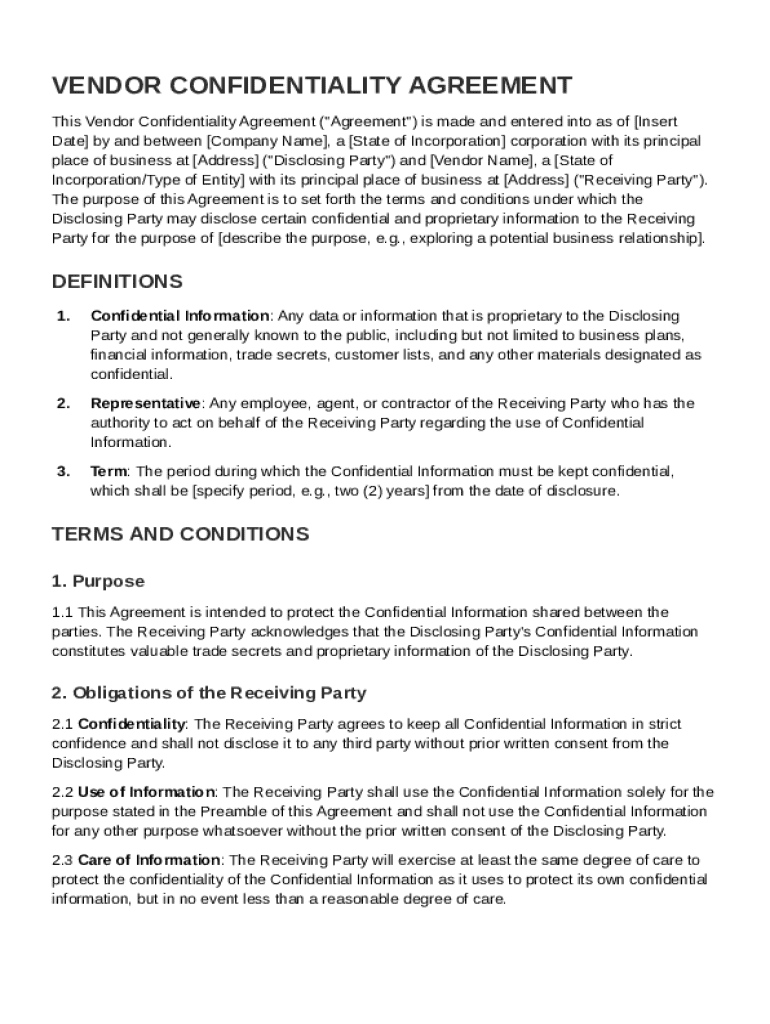
A Vendor Confidentiality Agreement Template serves as a legally-binding document between a company, referred to as the Disclosing Party, and a vendor, known as the Receiving Party. This agreement is designed to protect confidential information shared between the two parties during the course of their business relationship. By establishing clear terms regarding the handling and protection of sensitive data, it ensures that proprietary information, trade secrets, and other privileged details remain secure. Additionally, it defines what constitutes 'Confidential Information' and outlines specific obligations for maintaining confidentiality, thereby helping prevent unauthorized disclosure and potential breaches.
How to Use the Vendor Confidentiality Agreement Template
Using the Vendor Confidentiality Agreement Template involves several crucial steps to ensure it is correctly executed and serves its intended purpose effectively. First, it is important to customize the template to reflect the specific nature of the business relationship. This includes detailing the types of confidential information to be exchanged and any particular restrictions that apply. Users should also ensure both parties review and understand each clause thoroughly before signing. This proactive approach minimizes misunderstandings and reinforces compliance with the specified terms. Once filled out and agreed upon, both parties should keep a signed copy for their records.
Who Typically Uses the Vendor Confidentiality Agreement Template
The Vendor Confidentiality Agreement Template is most commonly used by businesses that engage third-party vendors or service providers. Industries that frequently rely on such agreements include technology, manufacturing, healthcare, and finance, where sensitive data such as client lists, proprietary technologies, or financial information may be shared. Beyond companies, individual consultants, freelancers, and small business vendors also employ these agreements to safeguard their interests when handling confidential data. The agreement is pivotal where access to sensitive information is a necessary component of the vendor's role.

Important Terms Related to the Vendor Confidentiality Agreement Template
Understanding the key terms within the Vendor Confidentiality Agreement Template is vital for all parties involved. Key terms often included are:
- Confidential Information: Specific details that are protected under the agreement.
- Permitted Use: Defines how the confidential information can be used by the Receiving Party.
- Duration: The period during which the confidentiality obligations apply.
- Return of Materials: Specifies requirements for returning or destroying confidential materials upon termination of the agreement.
- Exclusions: Details information that is not subject to confidentiality obligations.
These terms set the framework for understanding respective responsibilities and boundaries concerning confidential data.
Key Elements of the Vendor Confidentiality Agreement Template
The Vendor Confidentiality Agreement Template is composed of several essential elements that collectively ensure thorough protection of confidential information. These elements typically include:
- Scope of Agreement: Clearly defines what information is considered confidential.
- Non-Disclosure Obligations: Limits the circumstances under which information can be shared with third parties.
- Liability and Indemnification Clauses: Outlines responsibilities if confidential information is disclosed or misused.
- Governing Law: Indicates which state laws will govern the agreement, central for enforcing terms legally.
These components are crucial for maintaining the integrity and enforceability of the confidentiality agreement.
Legal Usage of the Vendor Confidentiality Agreement Template
The legal usage of the Vendor Confidentiality Agreement Template rests heavily on its adherence to state and federal laws governing confidentiality and privacy. Such agreements are recognized under laws like the Uniform Trade Secrets Act and similar state-level statutes. The document often includes a clause ensuring compliance with all relevant legislations, thereby establishing a firm legal basis for any actions required due to a breach. Furthermore, careful drafting and review by legal professionals are recommended to ensure the agreement is comprehensive, clear, and enforceable in a court of law if necessary.
State-Specific Rules for the Vendor Confidentiality Agreement Template
State-specific rules may affect the enforcement and interpretation of a Vendor Confidentiality Agreement. Certain states, like California, might have unique requirements or restrictions, particularly concerning non-compete clauses or limitations on confidentiality timelines. Understanding these local nuances is critical for crafting agreements that are not only fair but also fully compliant with regional legislation. Consulting local legal counsel ensures that the template conforms to these variations while still meeting business needs efficiently.
Examples of Using the Vendor Confidentiality Agreement Template
Real-world examples show the varied application of the Vendor Confidentiality Agreement Template across industries. In tech companies, for instance, these agreements are commonplace when a vendor is given access to software codes or algorithms. In healthcare, they might be used to protect patient information shared with third-party IT service providers. Additionally, manufacturing firms might use such agreements when outsourcing production, ensuring their proprietary designs remain confidential. These examples illustrate the versatile and crucial role of confidentiality agreements in modern business practices.