






Definition and Meaning of a Proposed Contract Template
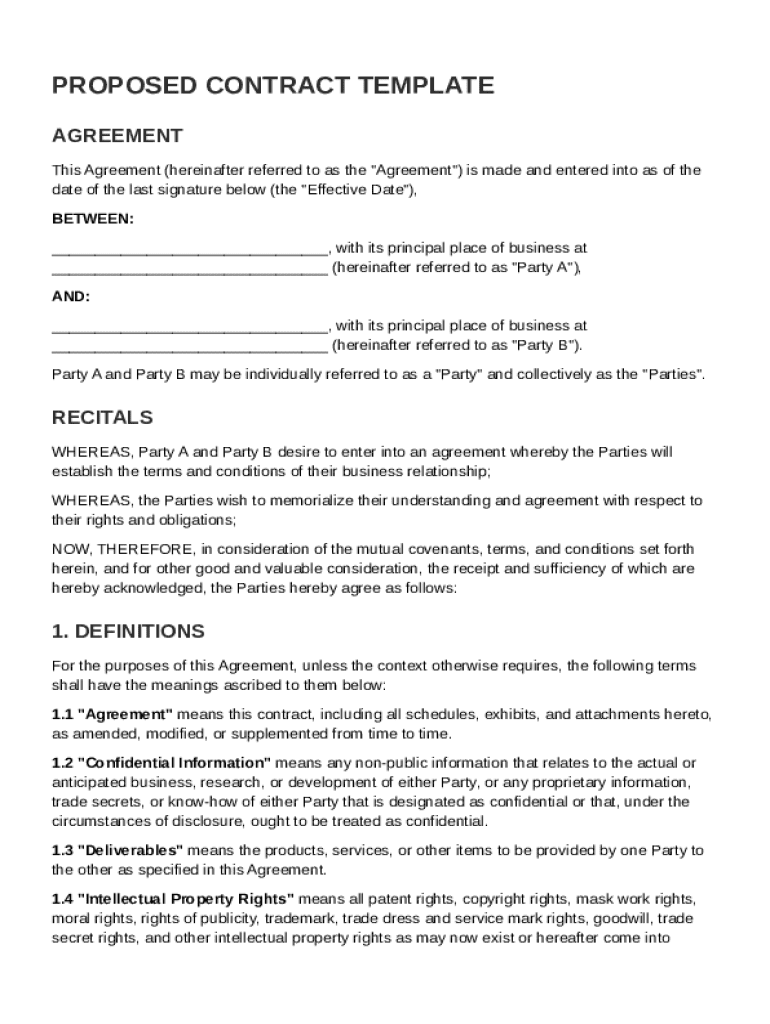
A proposed contract template is a comprehensive document that serves as a preliminary agreement between two parties, typically referred to as Party A and Party B. This template outlines the key terms and conditions that govern their business relationship, including definitions, scope of work, compensation, confidentiality, intellectual property rights, termination clauses, and dispute resolution procedures. The main purpose of this template is to formalize the mutual understanding and obligations of both parties while ensuring the protection of confidential information and intellectual property.
The proposed contract template is a versatile tool that can be adapted to various business arrangements. For instance, it can be used for service agreements, sales contracts, or partnership arrangements. By providing a structured format, the template helps parties avoid common pitfalls in contract drafting, such as vague language or overlooked legal requirements. Using this template, parties can ensure that all relevant aspects of the agreement are documented clearly and comprehensively.
How to Use the Proposed Contract Template
To utilize the proposed contract template effectively, begin by reviewing each section to ensure it aligns with the specific needs and details of your arrangement. Customize sections, such as the scope of work and compensation, to reflect the unique aspects of your agreement. Adjust the language in confidentiality and intellectual property clauses to meet both parties' expectations.
- Reviewing Sections: Carefully read through every section of the template to understand its implications and ensure it covers all necessary aspects of your business relationship.
- Customizing Details: Modify sections like the scope of work to provide precise descriptions of the services or products involved.
- Adjusting Legal Clauses: Tailor confidentiality and intellectual property clauses to ensure they protect your interests adequately.
Once the template is customized, both parties should review the final draft and seek legal advice if necessary. This assures that the document meets all legal requirements and reflects the parties' intentions accurately.
Key Elements of the Proposed Contract Template
Scope of Work
Defining the scope of work is essential in a proposed contract template as it outlines the specific services or deliverables that one party will provide. This section should clearly describe the tasks to be completed, deadlines, and any milestones or benchmarks for progress.
Compensation
The compensation section details how and when payments will be made, including the amount or rate agreed upon by both parties. It may also include terms for reimbursable expenses or bonuses tied to performance metrics. Ensure this section also addresses potential scenarios involving late payments or adjustments.
Confidentiality and Intellectual Property
In business agreements, safeguarding sensitive information is crucial. This section stipulates how each party must handle proprietary information and sets out the rights concerning intellectual property created during the contract term. Ensure this section aligns with applicable laws and regulations.
Steps to Complete the Proposed Contract Template
- Gather Necessary Information: Collect all relevant data about the business relationship, such as parties’ names, contact details, and services to be provided.
- Customize the Template: Modify the template to fit the specific details of your arrangement, ensuring to fill in every necessary section accurately.
- Consult Legal Counsel: If unsure about any legal requirements or implications, consult a lawyer to review the agreement before finalizing.
- Review and Edit: Make sure both parties review the document meticulously and agree on each term before signing.
- Sign and Distribute: Once finalized and agreed upon, both parties should sign the document. Each party should retain a copy for record-keeping.
Important Terms Related to the Proposed Contract Template
Dispute Resolution
The dispute resolution clause outlines how disagreements between the parties will be handled, whether through mediation, arbitration, or legal proceedings. This helps avoid costly and prolonged litigation.
Termination Clauses
Termination clauses specify the conditions under which the contract may be ended by either party. They define the procedure for terminating the agreement and any associated penalties or obligations.
Definitions
A definitions section clarifies specific terms used throughout the contract. This ensures that both parties have a mutual understanding of these terms, reducing the risk of misinterpretation.
Legal Use of the Proposed Contract Template
The proposed contract template should comply with U.S. legal standards, particularly the Uniform Commercial Code (UCC) that governs commercial transactions. It should also align with state-specific laws, which may vary in terms of contract validity and enforceability.
Ensure that the contract includes an acknowledgement from both parties that they agree to the terms voluntarily and have the authority to enter into the agreement. Legal review is recommended to confirm that all necessary legal requirements are met and that the contract is enforceable.
Who Typically Uses the Proposed Contract Template
Businesses of all sizes and industries commonly use proposed contract templates to streamline their contractual processes. They are particularly useful for small and medium enterprises (SMEs) and startups that need a reliable and pre-structured document to formalize their business dealings without incurring significant legal expenses.
- Service Providers: Consultants, freelancers, and contractors utilize these templates for service agreements.
- Vendors and Suppliers: Manufacturers and distributors use them to outline sales terms with suppliers or retailers.
- Partnerships and Joint Ventures: Companies entering collaborative projects benefit from a clear framework that addresses contributions and profit-sharing.


Examples of Using the Proposed Contract Template
Consider a software development company providing custom solutions to a client. The proposed contract template would be valuable to explicitly define project deliverables, deadlines, and payment terms. Similarly, a marketing agency collaborating with a new client could use the template to set boundaries around service scope and intellectual property rights.
For a nonprofit organization entering into a partnership, the template aids in articulating each party's contributions and responsibilities, ensuring that the collaboration aligns with its mission and objectives.
These examples illustrate the template's versatility across various business scenarios, providing a robust foundation for creating a well-structured contract.