Definition and Meaning of the Proposal Contract Template
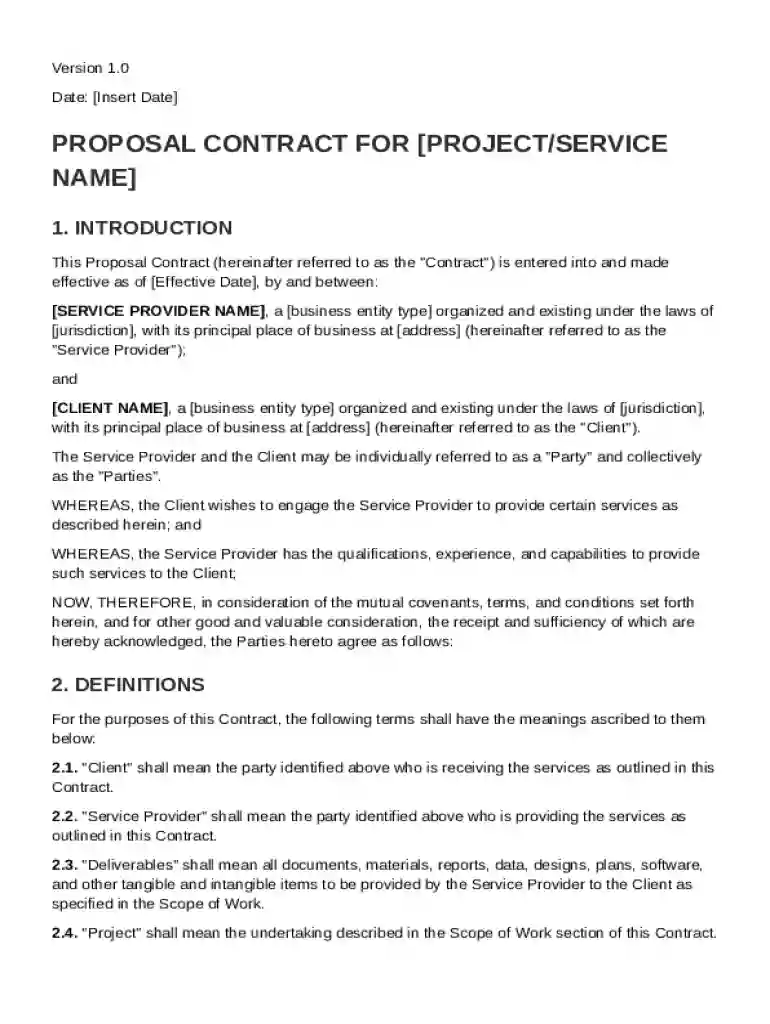
A Proposal Contract Template serves as a foundational document between a service provider and a client, outlining the terms and conditions under which services are to be rendered. This template standardizes the process of creating binding agreements that detail specific expectations and responsibilities. It includes sections detailing the scope of work, timelines, payment terms, confidentiality clauses, and dispute resolution mechanisms. By providing a structured format, this template ensures clarity and consistency in contractual agreements, minimizing potential misunderstandings or conflicts.
Key Components of a Contract Template
- Terms and Conditions: Outlines the general rules and guidelines for executing the contract.
- Scope of Work: Specifies the services to be provided, including any deliverables and project timelines.
- Compensation Details: Describes payment terms, methods, and schedules.
- Confidentiality: Sets conditions for protecting sensitive information shared during the project.
- Dispute Resolution: Provides mechanisms for addressing disagreements, often preferring mediation or arbitration before litigation.
How to Use the Proposal Contract Template
Effectively utilizing a Proposal Contract Template involves understanding its structure and customizing it to fit specific agreements. Users should begin by gathering detailed information about the project and parties involved. The template should be tailored to reflect accurate descriptions of the services, deadlines, and compensation to ensure both parties have clear expectations.
Steps for Customization
- Insert Company Information: Ensure all relevant details such as company names, addresses, and contact information are accurate.
- Define Project Scope: Clearly articulate the tasks to be completed, including any important milestones.
- Set Payment Terms: Clearly outline the payment structure, including conditions for pre-payment or deposits.
- Include Legal Clauses: Add relevant clauses covering liability, intellectual property, and confidentiality.
- Review and Revise: Double-check for any omissions or errors and confirm with legal advisors if necessary.
Steps to Complete the Proposal Contract Template
Completing the Proposal Contract Template requires careful attention to ensure all sections are accurately filled out. The goal is to reflect a mutual understanding and agreement between the service provider and the client.
Detailed Process for Completion
- Gather Necessary Information: Collect all pertinent details about the project and the parties involved.
- Fill Out the Template: Input all required information in the appropriate sections, ensuring nothing is left blank.
- Review for Accuracy: Carefully review the entered details for any errors or inconsistencies.
- Get Approval: Share the completed template with the other party for their review and agreement.
- Sign Off: Once both parties are satisfied, sign and date the contract to make it legally binding.
Important Terms Related to the Proposal Contract Template
Understanding the key terms used within a Proposal Contract Template is crucial for ensuring that all parties have the same understanding of the contract's stipulations. These terms are often legally binding and can affect the project's outcome and the relationship between the contracting parties.
Commonly Used Terms
- Breach of Contract: Occurs when one party fails to fulfill their obligations.
- Force Majeure: Protects parties from liability when external, uncontrollable events impede contract fulfillment.
- Indemnification: Ensures one party is compensated for losses or damages caused by the other.
- Amendment: Refers to any changes made to the original contract terms.
- Jurisdiction: Specifies the legal framework and courts that will govern the contract.
Legal Use of the Proposal Contract Template
The Proposal Contract Template must adhere to specific legal standards to be enforceable. It outlines obligations that both the service provider and client must legally follow, making it essential to understand these requirements.
Legal Considerations
- Compliance with Laws: Ensure the contract complies with all applicable local, state, and federal laws.
- Legal Capacity: Confirm all parties have the authority and capacity to enter into the contract.
- Clear and Concise Language: Use precise language to prevent ambiguity and misinterpretation.
- Execution and Delivery: A contract must be properly executed and delivered to be valid.
Examples of Using the Proposal Contract Template
Examples of Proposal Contract Template usage vary widely across industries. Each scenario underscores the template's adaptability and highlights its importance in formalizing agreements.
Real-World Scenarios
- Marketing Services: A marketing agency uses the template to outline deliverables, such as social media campaigns, to a client.
- Software Development: A software company details design, development, and deployment phases for a bespoke application.
- Consulting Services: A business consultant specifies meetings, analysis, and reporting as part of a strategy development project.
State-Specific Rules for Proposal Contracts
While a generic form exists, state-specific regulations may necessitate modifications to the Proposal Contract Template. These stipulations ensure compliance with regional laws, which can differ significantly across the United States.
Considerations for U.S. States
- Employment Terms: Certain states have specific laws regarding employment contracts and compensation.
- Data Protection: States have varying requirements regarding data privacy and protection.
- Business Regulations: Local regulations may affect how businesses engage in contracts; adherence is mandatory.
Key Elements of the Proposal Contract Template
The core of any Proposal Contract Template is its structured layout that encompasses all necessary clauses and agreements to form a complete proposal and contract.
Essential Components
- Party Identification: Clearly identifies the entities participating in the agreement.
- Project Overview: Provides a comprehensive summary of the project goals.
- Timeline and Milestones: Establishes deadlines and key milestones for project completion.
- Terms of Termination: Specifies conditions under which the contract can be terminated.
Through these well-defined structures, the Proposal Contract Template ensures both clarity and accountability. This structured approach not only strengthens professional relationships but also safeguards the interests of both parties involved.