Definition and Purpose of a Peace Agreement Template
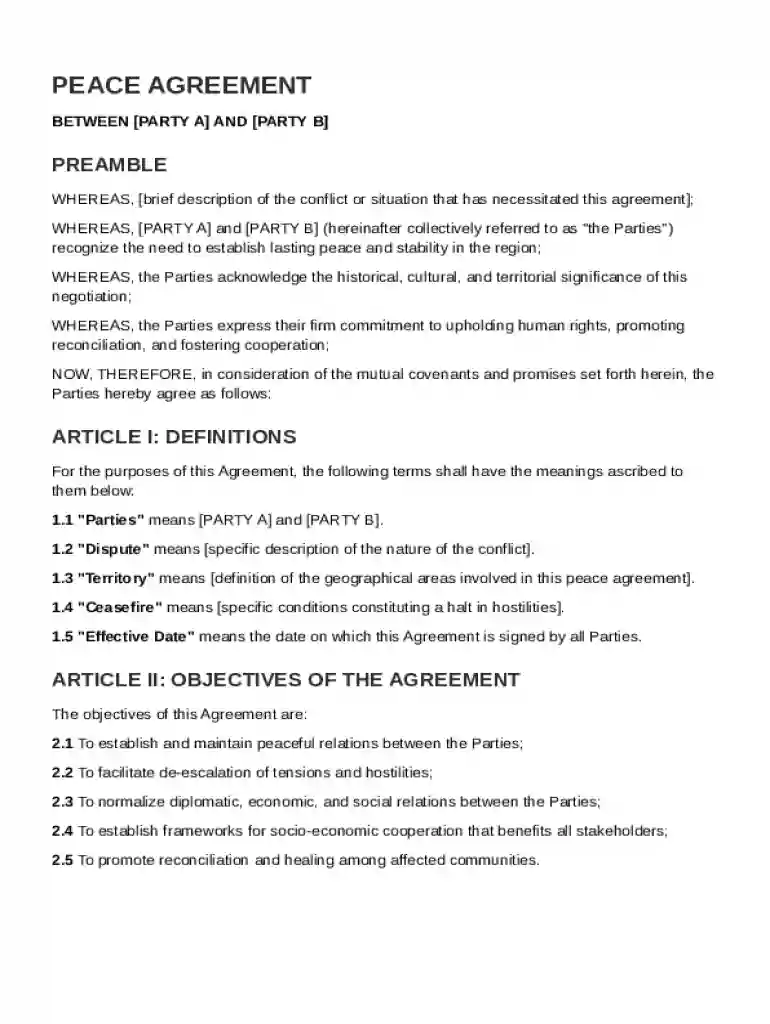
A Peace Agreement Template is a structured document used to formalize agreements between conflicting parties to establish and maintain peace in regions affected by conflict. This template outlines essential aspects, such as the cessation of hostilities, withdrawal of forces, disarmament procedures, and mechanisms for dispute resolution. By providing a clear framework, it facilitates the process of negotiating terms and ensuring mutual understanding between parties, ultimately aiming to achieve lasting peace and stability.
Key Elements of a Peace Agreement Template
A comprehensive Peace Agreement Template includes several critical components to address the complexities of conflict resolution:
- Objectives and Principles: Defines the overarching goals of the peace agreement, emphasizing the importance of sovereignty, reconciliation, and the protection of human rights.
- Ceasefire Provisions: Details agreements related to the cessation of hostilities, withdrawal of military forces, and maintenance of peace in contentious areas.
- Disarmament and Demobilization: Outlines steps for disarming combatants, dismantling military structures, and reintegrating former combatants into civilian life.
- Implementation Mechanisms: Establishes committees or bodies responsible for overseeing the agreement's execution and resolving any arising disputes.
How to Use the Peace Agreement Template
Using the Peace Agreement Template involves a collaborative effort between conflicting parties, facilitators, and legal experts to ensure the document's thoroughness and compliance:
- Initial Negotiations: Begin by discussing the terms, objectives, and key elements each party wishes to include in the agreement.
- Drafting the Template: Utilize the Peace Agreement Template to draft the initial version, incorporating all agreed-upon elements and provisions.
- Review and Revision: Both parties, along with mediators and legal advisors, review the draft to ensure clarity, fairness, and comprehensiveness.
- Finalization: Once all parties are satisfied, the final document is formalized with signatures from representatives of each party, witnesses, and mediators.
Important Terms Related to the Peace Agreement Template
Understanding key terms within the Peace Agreement Template is crucial for effective implementation and compliance:
- Arbitration: A method of dispute resolution where an impartial third party makes binding decisions in case of conflicts.
- Demilitarization: The process of reducing or eliminating military forces in specific areas as per the agreement.
- Reconciliation: Efforts to restore friendly relations between previously conflicting parties through dialogue and community-building initiatives.
Legal Use and Compliance
The legal framework surrounding the use of a Peace Agreement Template ensures that agreements are enforceable and respected:
- Binding Nature: Peace agreements typically have a legally binding nature, obligating parties to adhere to the terms and conditions.
- Enforcement: International bodies or local governing authorities may ensure compliance with the agreement and mediate disputes.
- Adaptation: While templates provide a standardized framework, legal teams must adapt agreements to comply with local laws and international standards.
Steps to Complete the Peace Agreement Template
Filling out the Peace Agreement Template involves a systematic approach to ensure nothing is overlooked:
- Reach Consensus on Terms: Ensure all parties agree on the main points and concessions made by each side.
- Fill Mandatory Sections: Complete sections detailing ceasefire provisions, withdrawal protocols, and disarmament.
- Detail Dispute Resolution: Elaborate on preferred methods and mechanisms for handling potential disagreements.
- Sign-off: Secure signatures from all necessary parties, ensuring that each understands their commitments.
Who Typically Uses the Peace Agreement Template
This template is typically utilized by:

- Government Officials: Engaged in formal peace negotiations between states or regions.
- Non-Governmental Organizations: Facilitating grassroots or regional peacebuilding efforts.
- Legal Experts and Mediators: Working as part of international missions or local peace initiatives to document agreements.
Examples of Using the Peace Agreement Template
Real-world applications of the Peace Agreement Template highlight its versatility and effectiveness:
- Regional Peace Treaties: Agreements brokered between neighboring countries to establish demilitarized zones.
- Civil Conflict Resolutions: Used in post-civil war settings to reintegrate former combatants and mend social divisions.
- Community-level Disputes: Templates assist village or tribal councils in mediating local conflicts and restoring harmony.
State-Specific Considerations for the Peace Agreement Template
While Peace Agreement Templates provide a consistent format, state-specific regulations and considerations must be adhered to ensure compliance:
- Regional Laws: Adapt the template to align with local legal frameworks and precedents related to treaties and agreements.
- Cultural Sensitivities: Consider cultural traditions and customs that may influence the negotiation and acceptance of peace terms.
By incorporating these structured segments effectively, the Peace Agreement Template serves as a crucial tool for fostering peace and resolving conflicts strategically and lawfully.