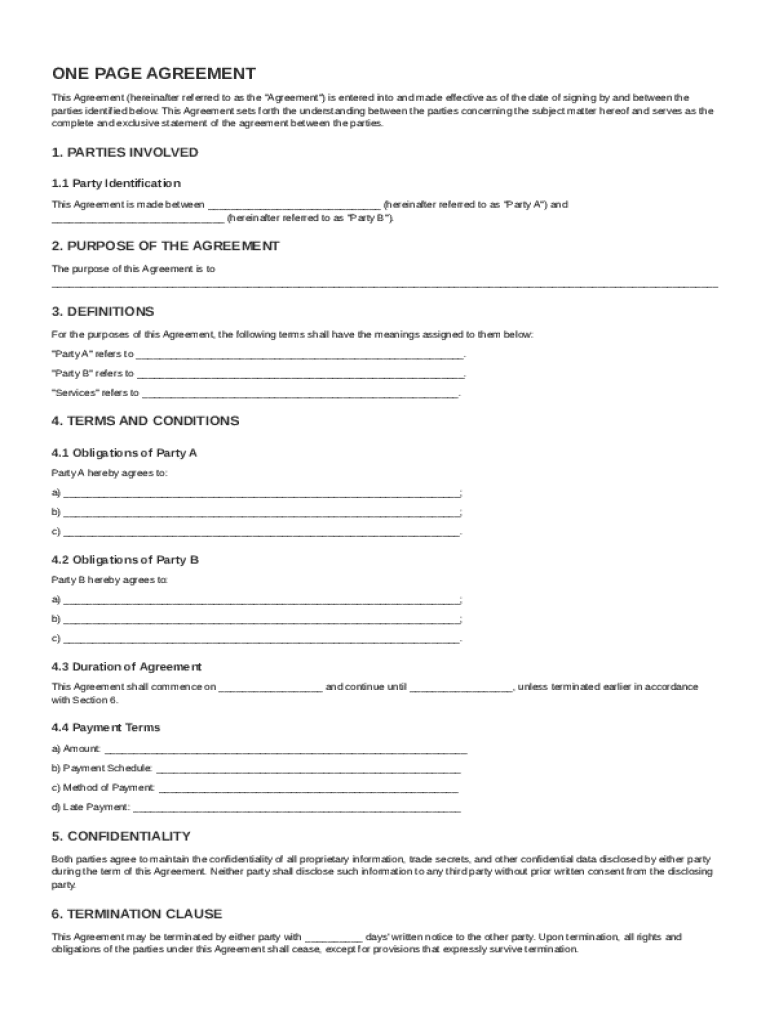







Definition & Meaning
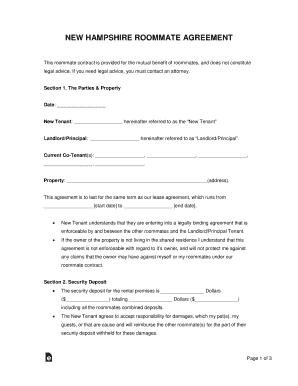
A One Page Agreement Template is a succinct legal document designed to outline the essential terms and conditions between two parties. This template is often used when the agreement is straightforward and doesn't require elaboration across multiple pages. It includes core sections such as party identification, purpose, definitions, obligations, duration, payment terms, confidentiality, termination clauses, and dispute resolution procedures. By consolidating these elements into a single page, the document is both time-saving and efficient, ensuring clarity in brief yet comprehensive language.
How to Use the One Page Agreement Template
Using a One Page Agreement Template involves several critical steps to ensure all necessary information is accurately captured. Begin by identifying the parties involved, referred to as Party A and Party B, and the purpose of the agreement. Next, detail the specific obligations each party must adhere to, followed by the payment terms agreed upon. It's essential to include confidentiality provisions to protect sensitive information exchanged during the arrangement. Duration and termination clauses will outline the timeline and circumstances under which the agreement can be ended. Finally, specify the dispute resolution mechanisms to preemptively address any potential conflicts.
Steps to Complete the Template
- Identify Parties: Clearly define Party A and Party B.
- Specify Agreement Purpose: Describe the intent and goals of the agreement.
- List Obligations: Outline responsibilities and expectations for each party.
- Include Payment Terms: Detail payment amounts, schedules, and methods.
- Confidentiality Clause: Include terms to protect sensitive information.
- Define Duration: State the time frame the agreement will be in effect.
- Termination Terms: Explain how the agreement can be legally ended.
- Dispute Resolution: Establish a plan for resolving conflicts that may arise.
Who Typically Uses the One Page Agreement Template
A One Page Agreement Template is commonly utilized by individuals and businesses seeking straightforward and efficient contractual arrangements. Freelancers and consultants often use this format for client agreements due to its simplicity. Small business owners can also benefit when entering partnerships or service agreements, where an extensive contract may not be warranted. Additionally, it is a popular choice for temporary or project-based collaborations, where clarity and quick execution are crucial.


Key Elements of the One Page Agreement Template
The fundamental components of a One Page Agreement Template are designed to cover all necessary aspects without unnecessary complexity. Key elements include:
- Party Identification: Clearly names and details of parties involved.
- Purpose and Scope: A concise explanation of the agreement's objectives.
- Definitions: Specific terms within the agreement, clarified to avoid misunderstandings.
- Obligations: Responsibilities each party assumes under the agreement.
- Payment Terms: Detailed financial arrangement including payment schedules and amounts.
- Confidentiality Clause: Terms that safeguard any proprietary or sensitive information.
- Duration and Termination: Time frame of the agreement and the conditions for its termination.
- Dispute Resolution: Mechanism for addressing any disagreements or breaches.
Legal Use of the One Page Agreement Template
The One Page Agreement Template must adhere to legal standards to be enforceable. It should reflect the mutual consent of all parties involved and be signed by authorized representatives. The language should be clear and precise to eliminate ambiguity. While the template can simplify the agreement process, it may still be subject to laws governing contract execution in specific jurisdictions. Therefore, it's advisable for users to consult legal professionals to ensure the template meets all requisite legal criteria and remains compliant with relevant state and federal laws.
State-Specific Rules for the One Page Agreement Template
Each U.S. state may have unique regulations affecting the creation and enforcement of agreements using the One Page Agreement Template. For instance, certain states require specific disclosures or clauses to be included in contracts to be considered valid. These can include consumer protection measures, statutory rights, or fee structures. Understanding these variations is crucial for parties involved to avoid potential legal pitfalls. Consulting legal experts familiar with state-specific laws can ensure that the template is adapted appropriately to meet local requirements.
Software Compatibility for the One Page Agreement Template
The One Page Agreement Template is designed for pliability across various software platforms, which enhances its usability and facilitates easy integration into existing document workflows. Compatible editing tools include major applications such as Microsoft Word, Google Docs, and comprehensive PDF editors. Users can import the template into these programs to modify, share, or sign documents. This compatibility ensures broad accessibility, allowing users across different systems to utilize the template with ease, enhancing productivity without technical constraints.
Business Types that Benefit Most from the One Page Agreement Template
Several business entities find the One Page Agreement Template particularly advantageous due to its streamlined nature. Small and medium enterprises (SMEs) often opt for this format when establishing quick, efficient service contracts or vendor agreements. Freelancers and independent contractors benefit from its simplicity, as it allows them to formalize their client engagements without unnecessary legal complications. Partnerships and creative collaborations, particularly those that revolve around short-term projects, also leverage this template to save time and maintain clarity. By using a concise and clear agreement format, these businesses maintain professionalism while managing operational risks effectively.