






Definition and Purpose of the Grass Cutt Contract Template
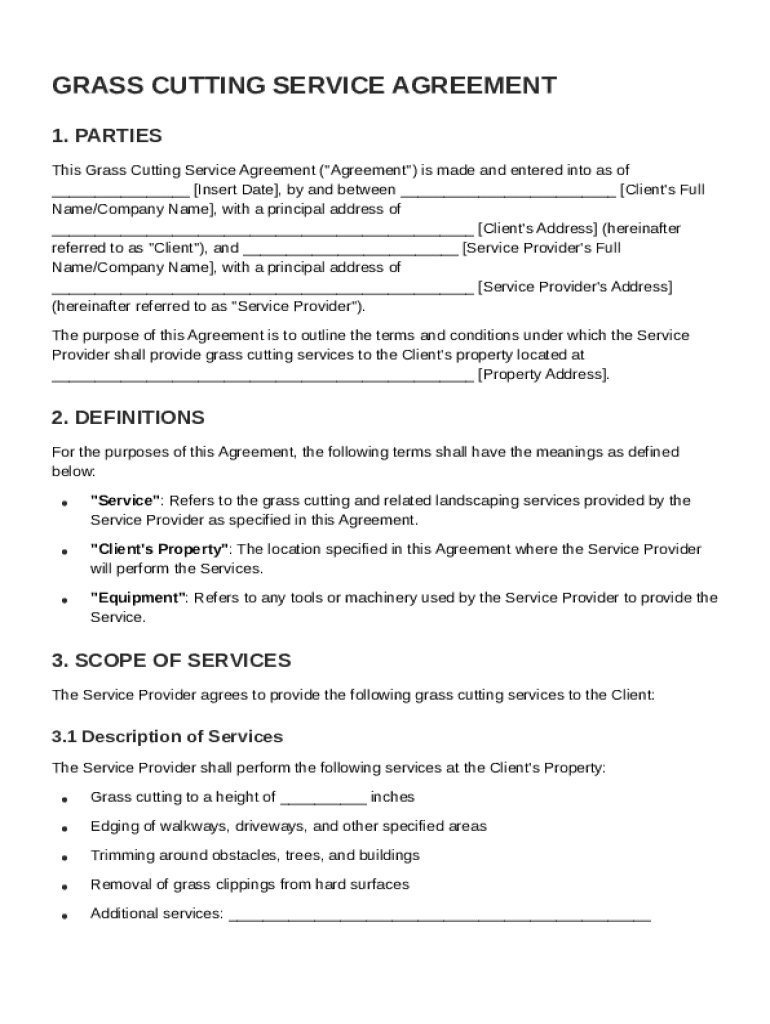
The Grass Cutt Contract Template is a formal agreement designed to outline the terms and obligations between a client and a service provider for grass cutting services at a specified property. The contract details crucial elements such as the scope of services, payment terms, and the responsibilities of both parties, which aim to establish clear expectations and avoid potential disputes. This template is essential for ensuring that both the client and service provider have a mutual understanding of the services to be performed and the associated conditions, thereby facilitating a smooth business transaction.
Key Elements of the Grass Cutt Contract Template
Scope of Services
- Service Specifications: Detailed description of the tasks involved, including frequency and specific areas to be serviced.
- Equipment Usage: Specifications on whether the service provider or the client will supply the necessary equipment.
- Additional Services: Any extra services, such as edging, trimming, or fertilizer application.
Payment Terms
- Pricing Structure: Explanation of pricing models, whether it’s hourly, per service, or a flat rate.
- Payment Schedule: Timelines and conditions for payments, including deposits and installments.
- Late Payment Penalties: Fees or interest incurred for delayed payments, ensuring timely transactions.
Responsibilities of Both Parties
- Client Obligations: Accessibility, clearing obstructions, and timely communication.
- Service Provider Duties: Timeliness, reliability, and adherence to service quality standards.
Steps to Complete the Grass Cutt Contract Template
- Review and Edit the Template: Customize the template to include specific details regarding the services, payment terms, and parties involved.
- Identify the Parties: Clearly detail the names and contact information of both the client and the service provider.
- Define Services and Pricing: Ensure precise descriptions of the services, costs, payment terms, and timelines.
- Outline Expected Roles and Responsibilities: Discuss and document the obligations of each party, emphasizing clarity.
- Sign and Secure the Document: Obtain signatures from all parties to formalize the agreement, ensuring it is legally binding and enforceable.
Legal Use of the Grass Cutt Contract Template
The template serves as a legally binding document, providing protections and obligations under contract law once signed by both parties. Adhering to its terms is crucial, as any breach can lead to legal consequences, including claims for damages or cancellation of services. This template ensures compliance with applicable state laws pertaining to service contracts within the United States, safeguarding both parties’ interests throughout the contractual period.
Popular Use Cases of the Grass Cutt Contract Template
Residential Services
Homeowners often utilize this template to formalize agreements with individual landscapers or smaller landscaping businesses for regular lawn maintenance.
Commercial Properties
Property management companies can employ this template when engaging with service providers for maintaining grounds of businesses, apartment complexes, or office buildings.
Government and Institutional Contracts
Municipal bodies or educational institutions frequently use this template to contract services for public spaces, parks, or campuses.
Who Typically Uses the Grass Cutt Contract Template
This template is commonly used by both small business owners providing landscaping services and private clients or organizations seeking to establish clear contractual arrangements for grass cutting. Service providers often include freelance landscapers, small to medium-sized landscaping companies, and contractors, while clients range from individual homeowners to corporate facility managers and institutional property administrators.

State-Specific Rules for the Grass Cutt Contract Template
While this template provides a general framework applicable across various jurisdictions, it’s crucial to consider any state-specific regulations or licensing requirements that may influence certain components of the contract. For example, some states mandate additional consumer protection clauses or specific terms for service cancellations and refunds. Consulting a legal advisor familiar with state laws is advisable to ensure compliance and prevent potential legal complications.