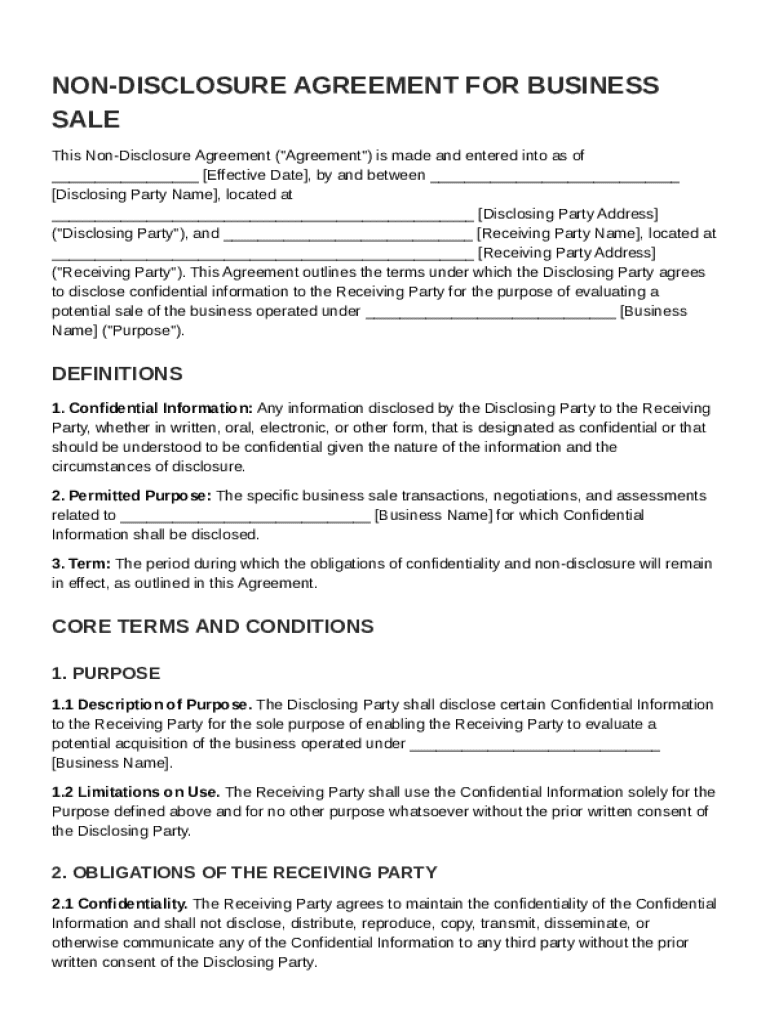







Definition & Purpose of the Non-Disclosure Agreement Template
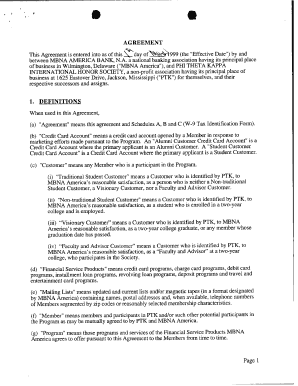
A Non-Disclosure Agreement (NDA) for business sales establishes confidentiality between parties during the evaluation of a business sale. This legally binding contract ensures that sensitive information shared by the disclosing party remains confidential and is not disclosed to third parties without authorization. The NDA clarifies terms such as "Confidential Information," outlining the commitment of the receiving party to uphold confidentiality unless exceptions are specified, and details the legal ramifications of breaching this agreement.
Key Components of an NDA Template
-
Identification of Parties: Clearly define who the disclosing and receiving parties are within the agreement. This section is crucial for establishing who will share and who will protect the information.
-
Definition of Confidential Information: Specify what constitutes confidential information. This can range from business plans to financial records. Precision in this section protects the disclosing party by clearly outlining the scope of protected information.
-
Obligations and Exclusions: Detail the duties of the receiving party to maintain confidentiality, coupled with specified exclusions, such as information that is publicly available or independently developed by the receiving party.
-
Duration of Obligations: Typically, NDAs specify the period during which confidentiality must be maintained, even beyond the termination of the agreement in some cases. This timeline is essential for ensuring ongoing protection of the information.
-
Consequences of Breach: The NDA should outline consequences for breach, including legal actions or compensation. This acts as a deterrent to unauthorized disclosure.
Steps to Use the NDA Template Effectively
Using the Non-Disclosure Agreement template requires careful attention to ensure it meets the specific needs of the business transaction.
Step-by-Step Instructions
-
Preparation: Gather all relevant information that needs protection. Understanding what needs confidentiality will guide how you fill in the NDA template.
-
Customize the Template: Tailor the template to your specific situation by inserting the relevant parties' names, detailing what constitutes confidential information, and specifying any exclusions to confidentiality.
-
Legal Review: Before finalization, have a legal professional review the document. This step is crucial to adapt the NDA to comply with specific state laws and the unique aspects of the business transaction.
-
Execution: Both parties should sign the NDA. In some situations, notarization is recommended to reinforce the document’s validity.
-
Implementation: Once signed, share only necessary confidential information and follow up to ensure both parties adhere to the terms outlined.
Legal Use and Compliance
An NDA for business sales must adhere to legal standards to ensure enforceability. Understanding the legal context enhances the NDA’s effectiveness in protecting confidential information.
Compliance with U.S. Laws
-
ESIGN Act Compliance: Ensure that electronic signatures on NDAs are legally valid as per the ESIGN Act, providing similar enforceability as handwritten signatures.
-
State-Specific Regulations: Variations in state laws may affect NDA enforceability. It is important to incorporate state-specific legal requirements, especially if the business transaction involves multiple jurisdictions.
Importance of Using an NDA Template in Business Sales
Utilizing an NDA template in business sales plays a pivotal role in protecting sensitive information exchange. This proactive measure safeguards against potential misuse of information that could harm a business’s competitive position.
Benefits of an NDA
-
Protection of Proprietary Information: NDAs prevent crucial business information from reaching competitors or being used against the interests of the disclosing party.
-
Clear Communication of Legal Rights: NDAs establish a mutual understanding among parties about the boundaries of information use and disclosure.
-
Structured Processes for Dispute Resolution: In the event of a dispute, an NDA outlines clear legal frameworks for addressing breaches, adding security to the transaction.
Key Terms in an NDA Template
Understanding the core terminology used in an NDA is crucial for effective execution and comprehension of the agreement.
Common Terms Explained
-
Disclosing and Receiving Party: The party providing the confidential information and the party receiving it.
-
Confidential Information: Specific details deemed protected under the agreement.
-
Remedies: Legal solutions available should a breach occur, including injunctions or damages.
-
Term: Duration of confidentiality obligations.
Types of Business Entities That Benefit Most
Different types of business entities can greatly benefit from using a well-structured NDA when engaging in business sales.
Business Types and Advantages
-
Corporations: NDAs help protect trade secrets and sensitive business strategies during mergers and acquisitions.
-
Limited Liability Companies (LLCs): Aligning business interests without risking exposure of proprietary information.
-
Partnerships: Prevent unauthorized information sharing amongst current or former partners.
State-Specific Variances and Regulations
Each state in the U.S. can have specific requirements and restrictions concerning NDAs, which must be adhered to ensure enforceability.
Considering Variability Across Jurisdictions
-
Confidentiality Periods: Different states may have rules governing how long confidentiality obligations should last.
-
Enforceability Clauses: Varying standards on what constitutes reasonable restrictions on confidentiality might apply.
Digital Signature Utility with NDAs
Leveraging digital capabilities like electronic signatures can streamline NDA execution and management.
Benefits of Digital Integration
-
Ease of Use: Electronic signing saves time and reduces logistical challenges faced during document processing.
-
Enhanced Tracking: Digital platforms offer audit trails and document status checks, enabling efficient management of the signing process.
By incorporating these comprehensive insights, businesses can maximize the utility of the NDA template, safeguarding their interests during critical transactions.