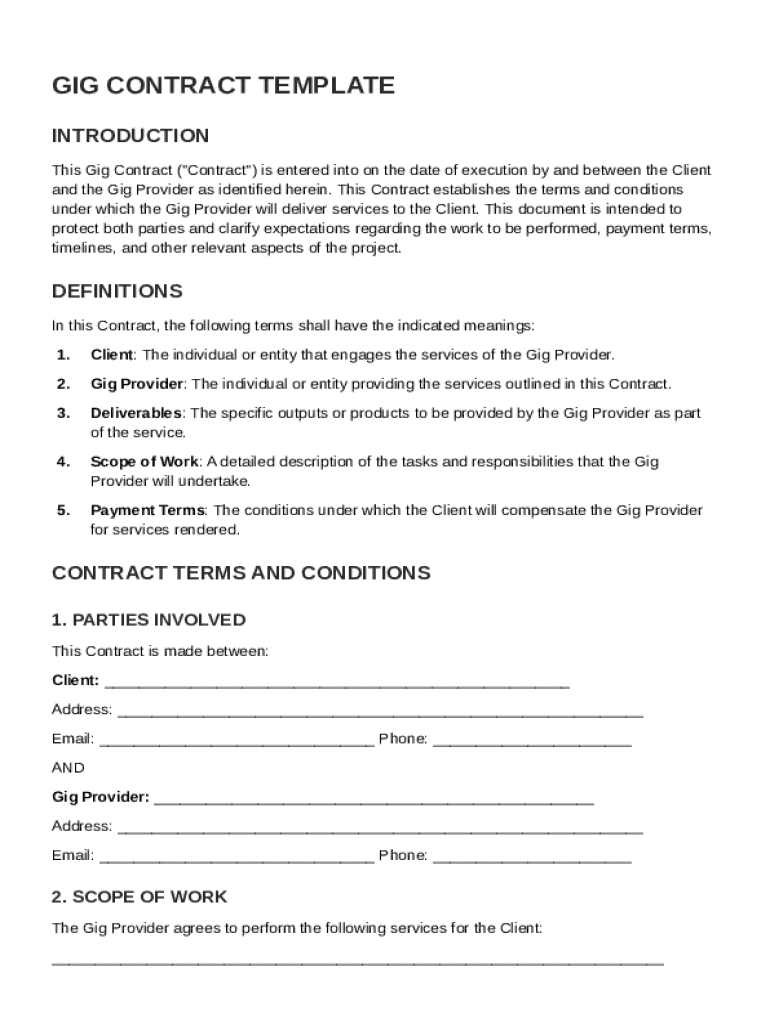







Definition and Explanation
The Gig Contract Template serves as an essential document outlining the professional arrangement between a client and a gig provider. This template ensures that both parties have a mutual understanding of the terms and conditions governing the service delivery. It typically includes critical components such as definitions of key terms, scope of work, deliverables, payment terms, timelines, confidentiality obligations, termination clauses, and the governing law. By detailing these elements, the template safeguards the interests of both the client and provider, offering clarity and protection throughout the engagement.
Key Elements of the Template
Understanding the components of a gig contract template is vital for effective use. The following are fundamental elements you should expect to find:
- Scope of Work: Clearly defines the responsibilities and outcomes expected from the provider.
- Payment Terms: Details payment amounts, schedules, and conditions under which payments will be made.
- Timeline: Includes deadlines and milestones within the project duration.
- Confidentiality Obligations: Protects sensitive information shared during the collaboration.
- Intellectual Property Rights: Specifies ownership rights over the work produced.
- Termination Clauses: Outlines conditions and procedures for contract termination.
- Dispute Resolution: Provides methods for addressing disagreements.
Each component is meticulously crafted to provide a comprehensive framework for professional interactions, ensuring both parties' expectations are met.
Steps to Complete the Gig Contract Template
Completing a Gig Contract Template involves a systematic approach:
- Fill In Basic Information: Include names and contact details of both the client and gig provider.
- Define the Scope of Work: Clearly articulate the tasks and objectives to avoid misunderstandings.
- Establish Payment Terms: Detail payment amounts, methods, and schedules to ensure transparency.
- Specify Deadlines: Establish timelines for deliverables and project milestones.
- Add Confidentiality Clauses: Protect sensitive data and information shared during the project.
- Outline Intellectual Property Rights: Clarify ownership and usage rights over work produced.
- Include Termination Conditions: Set the terms under which the contract can be terminated.
- Finalize Dispute Resolution Procedures: Agree on a method for managing potential disputes.
This structured approach ensures that all necessary elements are addressed, providing peace of mind to both parties involved.
How to Use the Gig Contract Template
Utilizing the Gig Contract Template effectively requires a thorough understanding of its context and application:
- Customization: Tailor the template to fit the specific needs of your project or service, ensuring all relevant details are included.
- Consultation With Legal Professionals: Seek professional legal advice to ensure compliance with applicable laws and regulations.
- Review and Negotiate: Discuss the terms with the other party to ensure mutual agreement before finalizing the document.
- Signatures and Execution: Formalize the agreement by having both parties sign, confirming their acceptance of the terms.
Applying the template with attention to detail helps facilitate a smooth and successful partnership.
Legal Considerations
Legal compliance is paramount when using a Gig Contract Template:
- Governing Law: The document should specify which jurisdiction's laws will apply in the event of a legal dispute.
- Legally Binding Signatures: Ensure that the signatures are collected properly to make the document enforceable. Electronic signatures can offer a legally binding solution, depending on jurisdictional requirements.
- Regulatory Compliance: Stay informed about any industry-specific regulations or requirements that could impact your contract's validity.
These considerations help protect against legal issues, providing both parties with security and assurance.
State-Specific Rules and Variations
While the Gig Contract Template provides a general framework, state-specific regulations can affect certain contractual aspects:
- Variations in Applicable Law: Each U.S. state might have different laws governing freelance or gig work agreements, which can influence legal enforceability.
- State-Specific Clauses: Consider incorporating state-specific provisions that may be necessary to meet local legal standards.
- Employment Classification Rules: States may have different interpretations of contractor versus employee status, affecting tax and labor implications.
Awareness of these state-specific nuances ensures that your contract remains valid across different jurisdictions.
Business Types Benefiting From the Gig Contract Template
Various business entities find the Gig Contract Template highly beneficial:
- Freelancers and Independent Contractors: Protects their rights and clarifies terms of engagement with clients.
- Startups and Small Businesses: Helps streamline operations by providing clear terms for hiring gig workers.
- Large Enterprises: Offers a standardized process for managing multiple gig engagements simultaneously.
This template thus supports diverse business needs by offering a structured and reliable solution for gig work engagements.
Examples of Using the Gig Contract Template
Practical examples demonstrate how the Gig Contract Template can be applied:
- Graphic Design Services: A designer uses the template to agree on deliverables and payment terms with a startup.
- Writing Services: A freelance writer establishes deadlines and reporting obligations when contracting with a publication.
- App Development: A tech startup collaborates with a freelance developer by outlining project scope and milestone payments.
These scenarios illustrate the template's versatility in fostering successful engagements across various industries.