Definition & Meaning
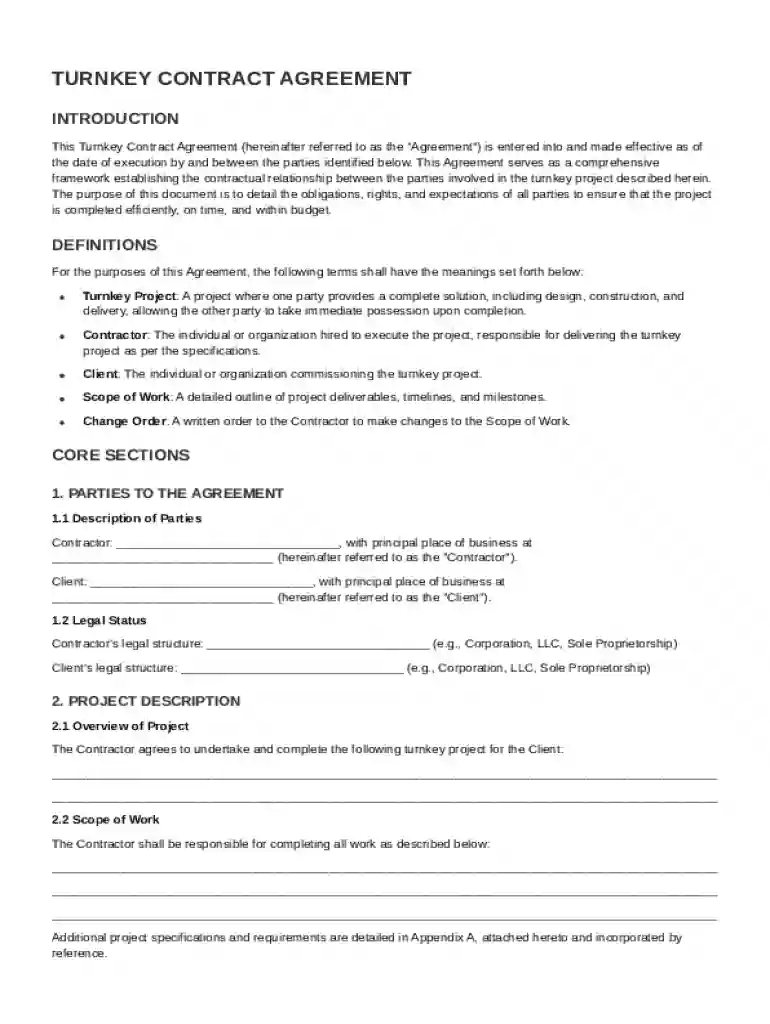
A Turnkey Contract Template is a pre-formatted document that outlines the contractual framework between a contractor and a client for a turnkey project. In these agreements, the contractor is responsible for completing a project and handing it over to the client in a ready-to-use condition. Key components include project scope, timelines, cost, roles, and responsibilities, ensuring both parties are clear on their obligations and expectations. The overarching goal is to provide a seamless path from project initiation to completion, minimizing risks by ensuring clarity and comprehensiveness in contractual terms.
Practical Scenarios
- Construction Projects: Commonly used in construction, where the contractor handles everything from design to final touches.
- Software Development: Employed when a client wants a complete software solution, with the developer responsible for everything from coding to implementation.
- Manufacturing: Utilized when a contractor provides all materials, labor, and logistics to deliver a finished product.
How to use the Turnkey Contract Template
The Turnkey Contract Template can be effectively utilized by following a systematic approach to customization and implementation.
- Review and Understand: Begin by thoroughly reviewing the template to understand its standard clauses and identify any areas that require modification.
- Customize Specifics: Tailor the template to fit the unique needs of the project by adding project-specific details, such as scope, timelines, budget, and quality standards.
- Incorporate Legal Guidance: Ensure that the contractual terms comply with legal requirements by consulting with legal experts, especially focusing on clauses like dispute resolution and confidentiality.
- Collaborate with Stakeholders: Engage relevant stakeholders, including project managers and legal advisors, to review and approve the draft.
- Finalize and Execute: Once all adjustments are made and agreed upon, the contract should be finalized, executed, and stored securely for future reference.
Step-by-step Process
- Edit the Template: Use document editing software like Microsoft Word or Google Docs to make necessary changes.
- Seek Feedback: Present the draft to project stakeholders for feedback and adjustments.
- Legal Review: Have the final draft reviewed by a legal professional to ensure compliance and effectiveness.
Key Elements of the Turnkey Contract Template
The template comprises several critical elements that ensure its efficacy in governing project contracts.
- Project Scope: Comprehensive description of the work to be completed, including specifications, deliverables, and quality standards.
- Compensation: Clearly outlines how and when payments will be made, covering deposit terms and milestone payments.
- Responsibilities: Defines the roles and duties of both the contractor and client, ensuring alignment in project execution.
- Change Orders: Procedures for handling any modifications in project scope or timelines, with implications for cost and deadlines.
- Warranties and Guarantees: Terms that assure the project meets specified standards and performance criteria.
Variations in Elements
- Scope Adjustments: Tailor project scope to handle varying project sizes, complexities, and industries.
- Payment Options: Different compensation structures may include lump-sum payments, cost-plus pricing, or milestone-based payments.
Legal Use of the Turnkey Contract Template
Adhering to legal standards is crucial in turnkey contracts.
Compliance with U.S. Legal Standards
- Contract Law: The contract must comply with local, state, and federal laws governing contractual agreements.
- ESIGN Act: For electronic signatures, ensure compliance with the ESIGN Act to make electronic signatures legally binding.
- Dispute Resolution: Include legally recognized methods for resolving disputes, such as arbitration or mediation.
Importance of Legal Formats
- Prevention of Legal Disputes: Clear legal terminology and structured clauses reduce the risk of misunderstandings and litigation.
- Security of Investment: Legal compliance ensures that the client's investment is protected by enforceable obligations.
Steps to Complete the Turnkey Contract Template
A structured approach is essential to effectively fill out and finalize the Turnkey Contract Template.
- Gather Project Details: Obtain all relevant details about the project, including objectives, deliverables, and timelines.
- Customize the Template: Edit template sections to reflect specific project details, including financial arrangements, roles, and responsibilities.
- Review Clauses: Examine each contractual clause to ensure they align with project goals and legal regulations.
- Stakeholder Approval: Circulate the draft among key stakeholders for review and obtain necessary approvals.
- Finalize and Execute: After incorporating all feedback, finalize the document and ensure all parties sign to execute the contract officially.
State-specific Rules for the Turnkey Contract Template
While the template provides a comprehensive framework, state-specific variations are often necessary.
Examples of State Variations
- Licensing Requirements: Different states may have unique contractor licensing requirements that must be addressed in the contract.
- Payment Terms: Some states regulate timelines for payments to contractors and subcontractors.
- Dispute Resolution: Certain states might mandate specific arbitration processes or forums.
Importance of State Compliance
- Legal Enforceability: A contract that reflects state-specific legal requirements is more likely to withstand any legal scrutiny.
- Local Adaptability: Adhering to local laws and regulations helps in creating more adaptive and legally robust agreements.
Examples of Using the Turnkey Contract Template
Adopting a Turnkey Contract can lead to successful project completion when applied appropriately.
Case Studies
- Large-Scale Housing Projects: A contractor successfully used a turnkey agreement to deliver a residential development, managing every aspect from design to handover.
- IT Systems Implementation: A company utilized the template for deploying a comprehensive IT system, ensuring a single point of accountability and seamless integration.
Lessons Learned
- Project Clarity: Ensures both parties have mutual understanding, reducing the risk of over-budget scenarios.
- Efficient Completion: By clearly defining responsibilities, projects are more likely to meet deadlines and quality expectations.
Who Typically Uses the Turnkey Contract Template
Understanding the primary users of a Turnkey Contract Template can provide direction on how the document is best applied.

Industries and Users
- Construction Firms: Often employ turnkey contracts for building projects, ensuring a complete solution is delivered to the client.
- Technology Companies: Use such contracts for full-scale software or system deployments.
- Manufacturing Companies: Engage in turnkey contracts for product development, covering design to delivery stages.
Suitability
- Small and Medium Enterprises (SMEs): Gain from clear scope definitions and streamlined project handling.
- Large Corporations: Benefit from standardized processes that align with larger project initiatives.
Recognizing these core users aids in tailoring the contract to better serve industry-specific needs and challenges.