






Definition and Meaning
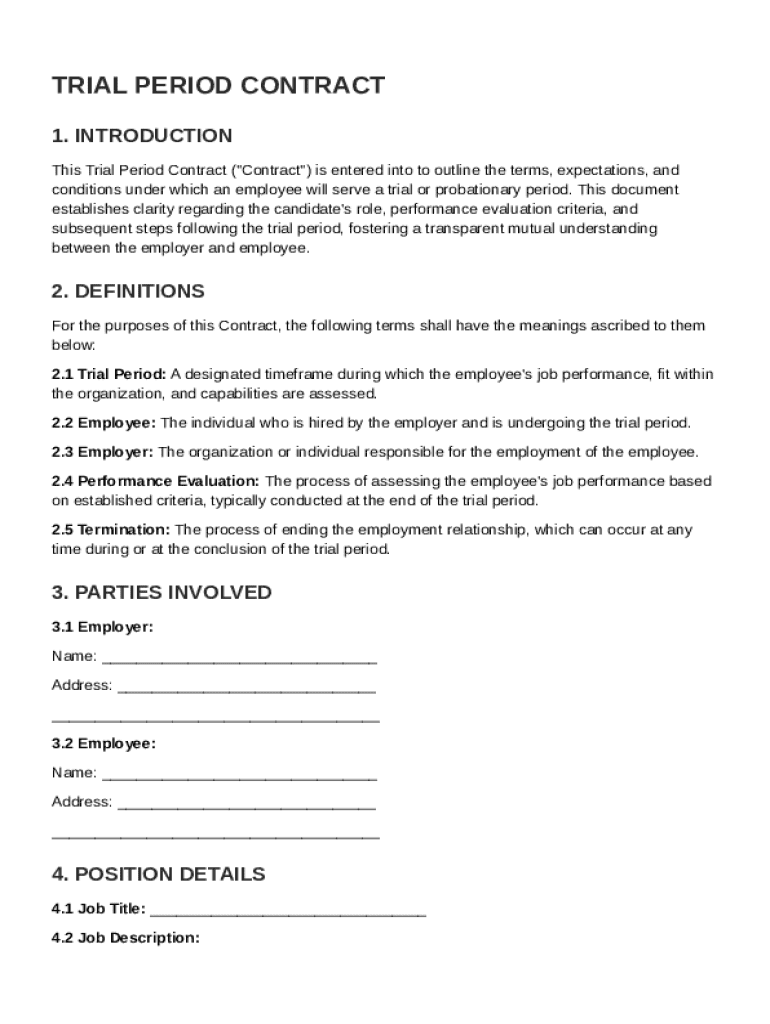
A Trial Period Contract Template provides a framework for establishing a probationary period between an employer and a new employee. It is designed to outline the expectations and conditions of employment during this trial phase. Typically, this type of agreement details roles and responsibilities, performance criteria, compensation and benefits, and rights concerning termination. Implementing a clear trial period can help both parties determine if they are well-suited to a long-term working relationship.
Performance Evaluation Criteria
During the trial period, an employee's performance will be appraised based on specific criteria outlined in the agreement. This typically includes metrics such as task completion, quality of work, adherence to company policies, and interpersonal skills. The establishment of clear evaluation criteria helps ensure that assessments are objective and based on agreed standards.
Compensation and Benefits
Compensation and benefits during the trial period should be explicitly stated in the contract. This might mirror the standard package for the position or be adjusted to reflect the temporary nature of the trial period. It's essential to include details such as salary, health benefits, and any bonuses or equity offered.
How to Use the Trial Period Contract Template
To effectively utilize this template, employers should customize it based on the specific role, company policies, and applicable laws. Begin by inputting basic details, including the duration of the trial period and evaluation metrics. Amend the template to allow for any industry-specific terms or conditions that may influence the trial stay. Ensure that both parties review the document thoroughly and provide an opportunity for questions or clarifications before signing.
Customization Tips
- Adjust the duration of the trial based on industry norms; three to six months is typical.
- Include clauses for extending the trial period if initial assessments are inconclusive.
- Define clear objectives and deliverables for the employee to guide performance evaluations.
Steps to Complete the Trial Period Contract Template
- Review Basic Information: Begin by filling in the employee's name, the job title, and the start date of employment.
- Define the Trial Period Duration: Input the agreed timeframe for the trial, typically ranging from three to six months.
- Outline Performance Metrics: Specify evaluation criteria such as key performance indicators (KPIs) and behavioral expectations.
- Detail Compensation and Benefits: Include any trial-specific adjustments to salary or benefits.
- Specify Termination Conditions: Clarify any grounds for premature termination during the trial.
- Include Confidentiality Clauses: If applicable, define any reporting and confidentiality requirements.
- Finalize Signatures: Both employer and employee must review and sign the completed document to formalize their agreement.
Key Elements of the Trial Period Contract Template
Roles and Responsibilities
Outline the essential duties and responsibilities expected from the employee during the trial. This helps set clear expectations and guides performance evaluations.
Termination Rights
The contract should clearly state the employer's rights concerning termination before the conclusion of the trial. Employees should also understand their rights to terminate the contract by providing due notice.
Confidentiality Obligations
If applicable, include clauses that safeguard sensitive company information throughout and beyond the trial period. This may entail non-disclosure agreements or data protection measures specific to the role.
State-Specific Rules for the Trial Period Contract Template
The legal application of trial period contracts may vary from state to state. Employers should verify the local labor laws governing trial periods, particularly concerning permissible duration and notice requirements. Some states may have specific regulations on employee probation that influence the structuring of such contracts.
Compliance Considerations
- Review state labor regulations to determine legal limits on trial period length.
- Ensure the contract accords with the state's wrongful termination laws and employment rights.
- Adapt confidentiality and data protection measures according to state privacy laws.
Legal Use of the Trial Period Contract Template
Trial period agreements must comply with employment law to be legally binding. This includes observance of anti-discrimination laws, established working conditions, and the provision of statutory benefits. Legal counsel should review the finalized contract to mitigate the risks of legal challenges.
Adherence to Employment Law
- Verify that the contract does not inadvertently reduce employee rights during or after the trial.
- Ensure that all statutory obligations, like minimum wage and overtime payments, are addressed within the agreement.
Who Typically Uses the Trial Period Contract Template
This template is most commonly used by employers in various industries who are considering new hires. It is especially beneficial for roles that require a substantial measure of suitability assessment or where the company processes are complex and require an adjustment period.


Benefits for Employers
- Provides a structured framework for assessing new hires.
- Offers legal protection by clearly documenting employment conditions.
- Helps manage workforce transitions by testing potential employees before long-term commitment.
Eligibility Criteria
Not all employment roles or businesses may suit incorporating a trial period. Typically, entry-level to mid-level roles are most suitable, where the job demands can be objectively evaluated over a short period.

Determining Eligibility
- Assess the immediate operational needs of the role against the practical duration of a trial.
- Evaluate the impact of a trial period on your hiring strategy and future workforce planning.
- Consider legal restrictions that may apply to specific industries or job functions.
This comprehensive resource aims to ensure that both employers and employees enter a trial period with clarity, fairness, and legal compliance. Tailor the template to reflect the unique aspects of your business and industry to optimize its effectiveness.