Definition and Key Elements of the Negotiation Agreement Template
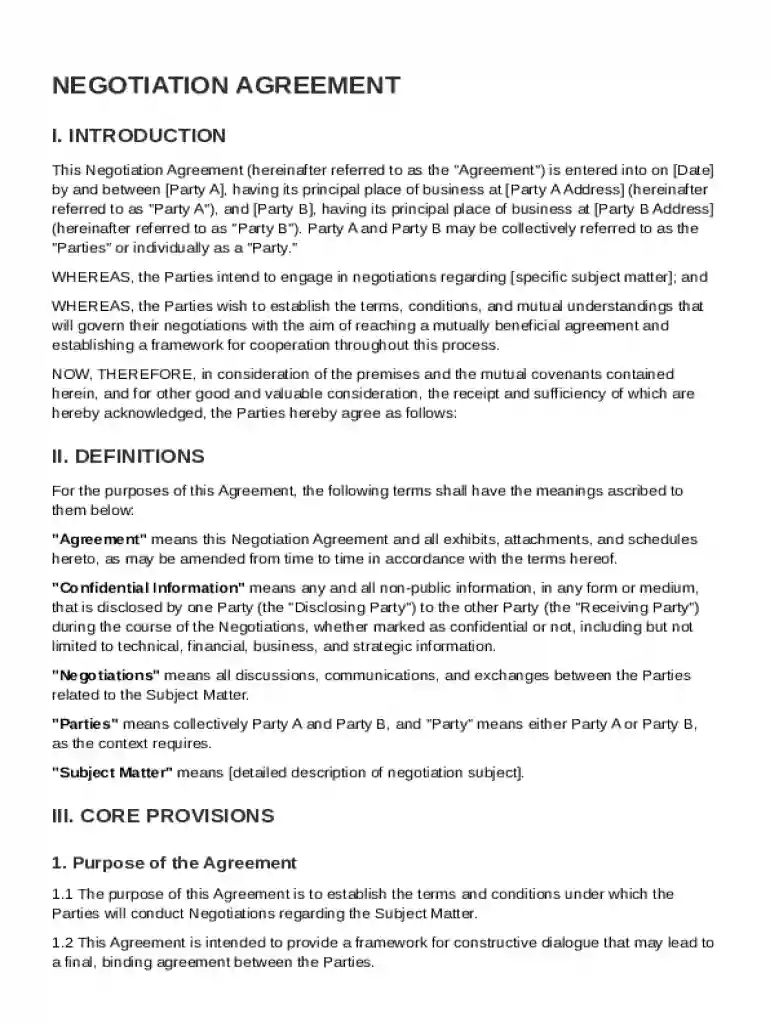
The Negotiation Agreement Template serves as a foundational document outlining the terms and conditions under which two parties engage in negotiations. It typically specifies roles, responsibilities, confidentiality obligations, and a structured timeline for the negotiation process. The agreement is designed to establish a non-binding framework until a definitive agreement is executed. Key elements include:
- Terms and Conditions: Establishes the framework for discussions, ensuring both parties have a clear understanding of the negotiation parameters.
- Confidentiality Clauses: Protects sensitive information exchanged during the negotiation process.
- Roles and Responsibilities: Defines each party's role to ensure clarity and prevent misunderstandings.
- Timeline for Negotiations: Sets deadlines to ensure timely discussions and decision-making.
Steps to Complete the Negotiation Agreement Template
When completing the Negotiation Agreement Template, it is important to follow a structured process to ensure all relevant sections are correctly filled out. Here’s a step-by-step guide:
- Initial Review: Carefully read through the entire template to understand its structure and content.
- Detailing Parties Involved: Clearly identify and record the information about the parties entering the agreement.
- Define Negotiation Scope: Specify the subject matter and objectives of the negotiation to set clear expectations.
- Timeline Specification: Enter proposed dates for each negotiation milestone and any deadlines for concluding discussions.
- Confidentiality and Amendments: Specify confidentiality terms and conditions under which the agreement can be amended.
Important Terms Related to the Negotiation Agreement Template
Understanding the terminology used in the Negotiation Agreement Template is crucial for accurate completion and compliance. Key terms often include:
- Non-Binding Agreement: Signifies that the agreement is intended to facilitate negotiations without creating legal obligations until a final agreement is signed.
- Dispute Resolution: Outlines the procedures both parties will follow if disagreements arise during negotiations.
- Amendments: Details the conditions under which the negotiation terms can be altered.
- Governing Law: Indicates the jurisdictional legal framework that the agreement adheres to.
Legal Use of the Negotiation Agreement Template in the U.S.
The Negotiation Agreement Template must be used within the bounds of U.S. legal standards. Key legal considerations include:
- Adherence to Contract Law: Even as a non-binding document, it needs to adhere to general principles of fairness and legality.
- Confidentiality: Must comply with applicable privacy laws regarding the protection of sensitive information.
- Compliance with State Laws: Each state may have specific regulations impacting the validity and enforceability of negotiation agreements, particularly regarding dispute resolutions and confidentiality clauses.
Why Use a Negotiation Agreement Template?
Using a Negotiation Agreement Template offers numerous benefits, including:
- Clarity and Organization: Provides a structured approach to negotiations, reducing misunderstandings.
- Legal Protection: Offers protection by clearly defining confidentiality obligations and negotiation parameters.
- Efficiency: Facilitates smoother negotiations by providing a clear framework and timeline.
- Collaboration Tool: Ensures all parties are aligned with expectations and responsibilities, promoting constructive dialogue.
Who Typically Uses the Negotiation Agreement Template?
The Negotiation Agreement Template is utilized by a variety of parties, primarily businesses and individuals engaged in formal negotiations. Common users include:

- Corporations: Often use these templates to negotiate partnerships, mergers, or acquisitions.
- Small Businesses: Benefit from such frameworks when engaging with suppliers or forming joint ventures.
- Legal Advisors: Use the template to draft preliminary negotiation documents for their clients.
- Contractors and Freelancers: May employ templates to outline terms with potential clients or partners.
Examples of Using the Negotiation Agreement Template
Practical applications of the Negotiation Agreement Template demonstrate its utility:
- Business Acquisitions: Corporations draft a negotiation agreement to outline preliminary terms of an acquisition, ensuring both entities agree on basic terms before proceeding.
- Partnerships: Small businesses may use it to establish negotiation parameters for alliances, allowing space for discussions around contributions and profit sharing.
- Supply Agreements: Suppliers and vendors employ the template to negotiate contracts, ensuring mutual understanding of expectations and delivery schedules.
Software Compatibility and Integration Considerations
The versatility of DocHub extends the functionality of the Negotiation Agreement Template through compatibility with various software platforms. Users can easily open, edit, and save the template using popular office software and cloud storage solutions, such as:
- Google Drive Integration: Directly import and export agreements between DocHub and Google Drive.
- Microsoft Word: Templates can be converted and edited in DOC format, facilitating ease of use across Microsoft Office Suite.
- PDF Platforms: Maintain formatting consistency and enable simple sharing through widely-used PDF software.
These integrations streamline document workflows, enhancing efficiency in managing negotiation agreements.