






Definition & Meaning
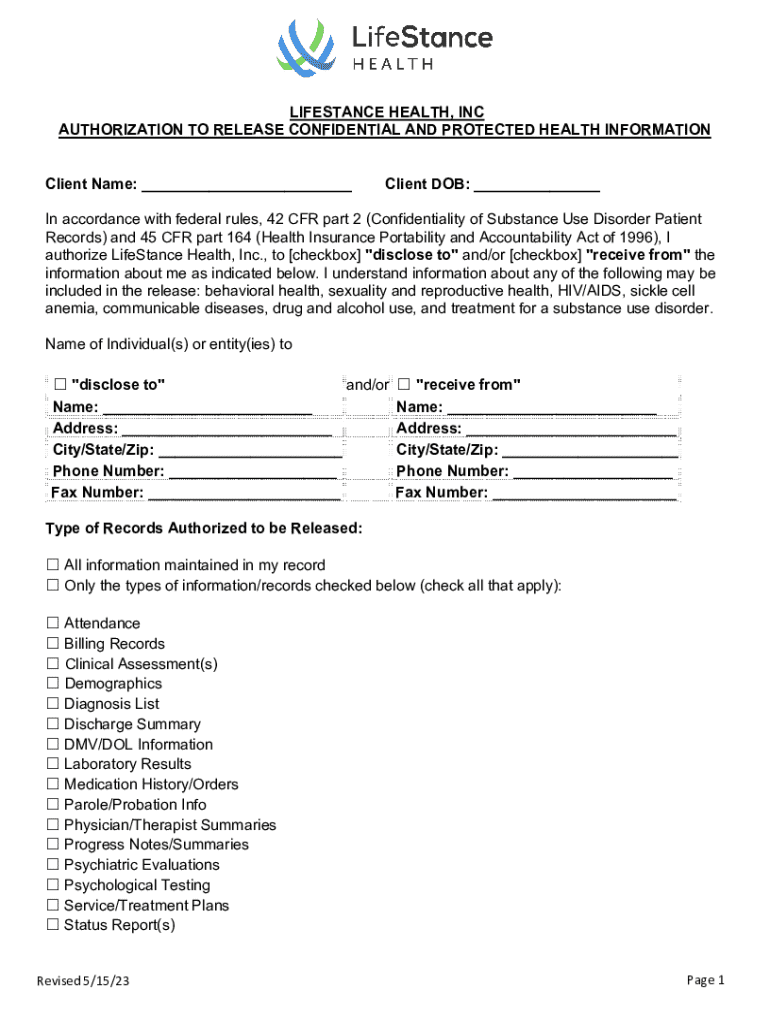
The Authorization to Release Confidential Health Information is a legal document that permits the disclosure of an individual's protected health information (PHI) to designated parties. This form serves as a consent mechanism under the Health Insurance Portability and Accountability Act (HIPAA), ensuring that patient information is shared responsibly and legally. It enables healthcare providers to communicate necessary health details to insurance companies, other medical practitioners, or related parties involved in a patient’s care.
Key Components of the Form
- Patient Information: Full name, date of birth, and contact details of the individual whose health information is being disclosed.
- Authorized Recipients: Names and details of persons or organizations authorized to receive the health information.
- Scope of Information: Specification of which medical records or types of information can be released.
- Purpose of Disclosure: A clear explanation of why the information is being shared, such as continuity of care or legal proceedings.
How to Use the Authorization to Release Confidential Health Information
The process of utilizing this form involves understanding its purpose and completing it accurately. Healthcare providers and patients should follow these steps to ensure a seamless release of information:
- Identify the Need: Determine the necessity of sharing health information and the parties who need access.
- Complete the Form: Fill out all required fields, ensuring no sections are left blank. This includes personal details, information recipients, and the disclosure purpose.
- Authorization Signature: The patient or their legal representative must sign the form to validate consent.
- Submission: The completed form is submitted to the healthcare provider holding the information intended for release.
Practical Examples
- A patient authorizes their general practitioner to release medical records to a specialist for further examination.
- An individual permits their healthcare provider to share information with an insurance company for claim processing.
Key Elements of the Authorization to Release Confidential Health Information
Understanding the critical aspects of the form ensures that it fulfills legal and procedural requirements. Here are the primary components:
- Validity Period: Defines how long the authorization remains in effect, safeguarding against indefinite sharing of information.
- Revocation Clause: Details how patients can revoke the authorization if they change their mind, usually requiring a written notice.
- Non-Redisclosure: A statement that recipients are not allowed to disclose the information further without additional consent.
Steps to Complete the Authorization to Release Confidential Health Information
Ensuring accurate completion of the form can prevent delays or the rejection of information requests. Here is a step-by-step guide:
- Gather Necessary Information: Collect personal details and healthcare records pertinent to the request.
- Detail the Receiving Party: Clearly state who will receive the information and their contact details.
- Specify the Information: Indicate which health records will be released, such as specific tests or treatment summaries.
- Sign and Date: The patient must affix their signature and the date to authorize the release officially.
- Submit for Processing: Deliver the completed form to the relevant healthcare office for processing.
Legal Use of the Authorization to Release Confidential Health Information
The form is legally binding and structured to comply with federal regulations like HIPAA. Proper use ensures that patient privacy is balanced with the need for information sharing in healthcare settings.
Important Legal Considerations
- Patient Rights: Individuals have the right to access their health information and control its distribution.
- Compliance Requirements: Legal protocols must be followed when handling health information to avoid penalties.
State-specific Rules for the Authorization to Release Confidential Health Information
Although federal law provides a framework, state-specific regulations may add additional layers of requirements.
- California: Stricter consent laws necessitate additional patient rights notifications.
- New York: Emphasizes written communication in both the authorization and revocation processes.
Examples of Using the Authorization to Release Confidential Health Information
Understanding practical applications can clarify the form’s usage scenarios:
- Case Study in Chronic Conditions: A patient with chronic illness uses the form to allow multiple specialists to coordinate care efforts seamlessly.
- Legal Proceedings: A patient permits the release of their health information for use in court as evidence in a personal injury case.
Who Typically Uses the Authorization to Release Confidential Health Information
This form is utilized by a variety of stakeholders in healthcare, ensuring effective communication and continuity of care:
- Patients and Families: To manage and coordinate healthcare services across different providers.
- Healthcare Providers: Facilitate inter-departmental or inter-specialist consultations through shared patient information.
- Insurers and Legal Professionals: Often require access to health details as part of claim verification or legal documentation requirements.