






Definition and Purpose of a Patient Contract Template
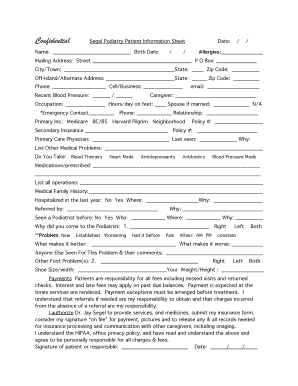
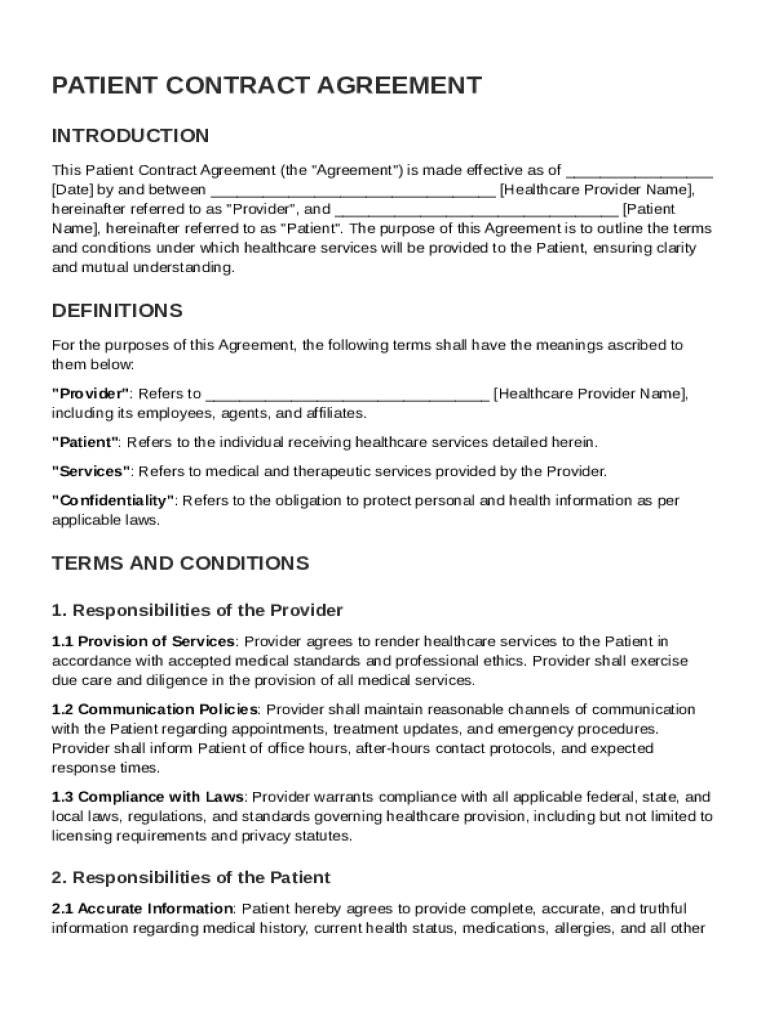
The Patient Contract Template is a legal document designed to establish clear terms and conditions for healthcare services. It sets the framework for responsibilities and expectations between healthcare providers and patients, ensuring both parties understand their roles. This contract typically includes agreements on treatment plans, confidentiality, and payment procedures. By defining these elements, the template aims to prevent misunderstandings and provide a structured approach to managing patient care.
The template's primary purpose is to safeguard both patients' rights and providers' obligations. It emphasizes the importance of clear communication and commitment to prescribed treatment regimens. Additionally, it outlines what happens in instances of disagreement or the need for amendments, featuring procedures for dispute resolution and how changes to the contract will be managed.
Key Elements of a Patient Contract Template
A comprehensive Patient Contract Template includes several critical elements that ensure clarity and legal protection:
- Terms of Service: Defines the scope of healthcare services provided, limitations, and any special provisions.
- Patient Obligations: Details the patient's duty to provide accurate health information and adhere to the treatment plan.
- Provider Responsibilities: Outlines the provider's commitments to caring standards, confidentiality, and communication.
- Payment and Billing: Specifies payment terms, accepted payment methods, and any relevant billing cycles.
- Confidentiality Clauses: Ensures patient information is protected in compliance with standard privacy laws such as HIPAA.
- Termination Conditions: Describes the circumstances under which the contract may be terminated by either party.
- Dispute Resolution: Provides mechanisms for resolving disagreements, potentially through mediation or arbitration.
Each element plays a vital role in forming a binding agreement that both the patient and healthcare provider must respect and uphold throughout their interactions.
Steps to Complete the Patient Contract Template
Composing a Patient Contract Template requires careful consideration to ensure all necessary components are addressed:
- Gather Required Information: Collect basic details from both parties, such as names, contact information, and relevant medical data.
- Define Services: Clearly outline the healthcare services that will be rendered.
- Discuss Financial Terms: Ensure there is mutual understanding regarding costs, payment schedules, and insurance coverage.
- Outline Obligations: Specify what is expected of the patient and the provider regarding appointments, treatment compliance, and communication.
- Establish Confidentiality Standards: Review confidentiality measures and obtain agreement on how patient information will be handled.
- Agree on Legal Terms: Discuss termination clauses, amendment procedures, and dispute resolution options for full transparency.
- Review and Sign: Both parties should thoroughly review the document, asking questions and seeking clarification as needed before signing.
By following these steps, both patients and healthcare providers can ensure that their contract is comprehensive and enforceable.
Legal Considerations for the Patient Contract Template
Legal use of the Patient Contract Template involves adherence to various regulations and standards to maintain its enforceable nature:
- Compliance with HIPAA: Ensures patient privacy by adhering to the Health Insurance Portability and Accountability Act stipulations.
- State Regulations: Takes into account specific state laws that may influence terms related to healthcare agreements or patient rights.
- Enforcement Clauses: Incorporates provisions to make the contract binding and legally actionable in case of disputes.
- Consent: Guarantees that all parties have willingly entered into the contract with a clear understanding of its terms.
Failure to consider these legal factors could render the template ineffective or challengeable in a court of law.
Software Compatibility for Managing Patient Contracts
The versatility of document management platforms like DocHub increases the efficiency of using Patient Contract Templates:
- File Importation: Import templates from various sources, such as cloud storage or direct uploads from your desktop.
- Editing Tools: Utilize annotations, text edits, and image insertion to customize the template as per specific needs.
- Collaboration: Multiple stakeholders can access and work on the document in real time, enhancing communication and reducing delays.
- Signature Collection: E-gather signatures through a secure, legal, and simple process to finalize the contract.
DocHub's features streamline the management of patient contracts, offering an intuitive interface and robust integration capabilities with Google Workspace.
Examples of Using Patient Contract Templates
Patient Contract Templates apply to numerous scenarios in a healthcare setting, including:
- New Patient Registration: Establishing the initial terms for all incoming patients to ensure consistent treatment and payment practices.
- Change in Treatment Plans: Amending the contract to include new interventions, medicines, or procedures agreed upon by the patient.
- Recurrent Services: Setting terms for ongoing therapies or treatments, such as physiotherapy or counseling.
- Administrative Updates: Integrating changes due to law updates or practice policies, ensuring compliance and understanding.
Each case highlights the template's role in maintaining clear communication and legal protection in varied healthcare interactions.
Variants and Alternatives to Patient Contract Templates
Different healthcare contexts may require distinct versions or adaptations of a standard Patient Contract Template:
- Specialized Contracts: Tailored templates for different medical specialties, such as dentistry or psychotherapy, with fields specific to those practices.
- Electronic Agreements: Digital versions that allow for online completion and e-signature, enhancing accessibility and efficiency.
- Simplified Forms: For practices with straightforward service offerings, a simplified contract may suffice, focusing on the most pertinent details.
- Expanded Contracts: Provide greater detail and more legal safeguards for complex treatment plans or higher-risk procedures.
These variants offer healthcare providers flexibility in managing diverse patient relationships while ensuring consistency and legality.