Definition and Meaning of a Marketing Retainer Agreement
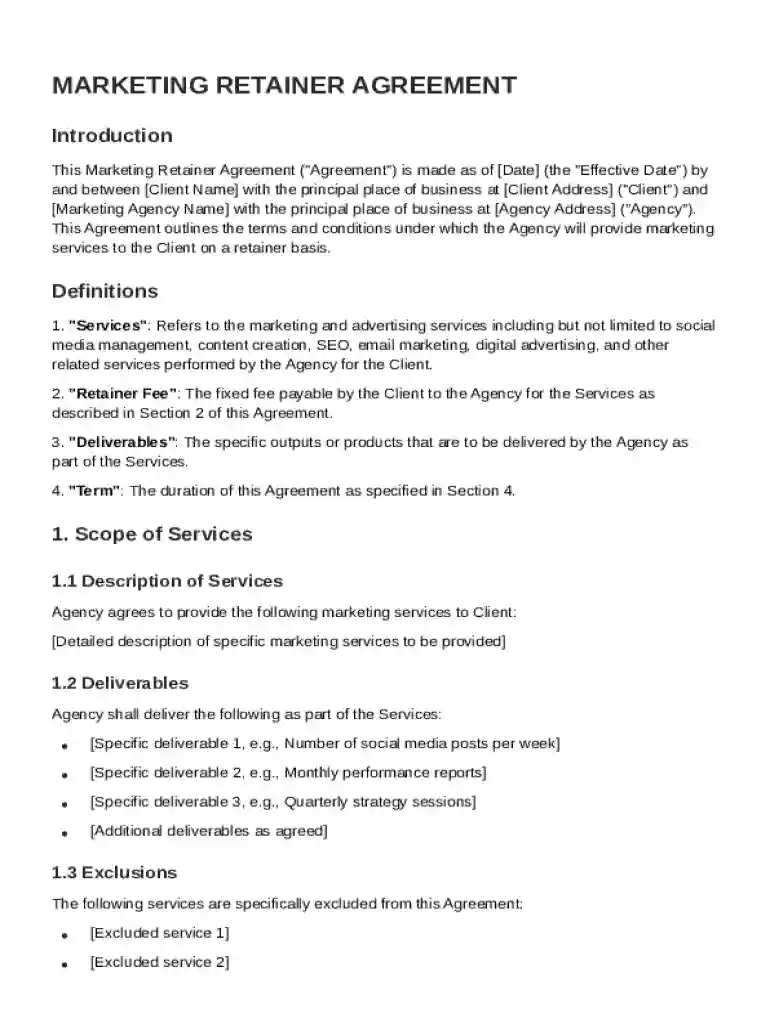
A Marketing Retainer Agreement is a formal contract between a client and a marketing agency, outlining the provision of marketing services on a retainer basis. This agreement details the expectations, responsibilities, and scope of services to be delivered over a specified period. The retainer ensures that the agency dedicates a predefined amount of resources and time each month to the client, fostering a stable and continuous marketing effort. By defining clear terms from the outset, both parties can align their objectives, reducing misunderstandings and increasing the effectiveness of their partnership.
Key Elements of the Marketing Retainer Agreement Template
A comprehensive Marketing Retainer Agreement Template typically includes several critical elements to ensure clarity and mutual understanding:
- Scope of Services: A detailed description of the marketing services to be provided, such as digital marketing, social media management, content creation, and strategy development.
- Payment Terms: Information on the retainer fee, payment schedule, invoicing process, and any additional costs. It might include provisions for adjustments based on the client’s needs or changes in the scope.
- Duration and Termination: Terms defining the duration of the agreement and conditions under which it can be terminated, such as a breach of contract or mutual consent.
- Client Responsibilities: Clear definitions of what the client must provide, such as access to necessary information, resources, and approvals to facilitate the marketing work.
- Confidentiality: Clauses that protect sensitive client information and the marketing agency’s proprietary methods and processes.
Steps to Complete the Marketing Retainer Agreement Template
Completing a Marketing Retainer Agreement Template involves several careful steps:
- Gather Necessary Information: Collect details on the services needed, timeline, and budgetary constraints. Understand the client’s goals and current market position.
- Customize the Template: Tailor the template to reflect the specific services, duration, and terms relevant to the agreement.
- Insert Client and Agency Details: Fill in both parties’ names, addresses, and contact information to formalize the agreement.
- Review Legal Clauses: Ensure all legal terms, such as liability limitations and dispute resolutions, align with both parties’ expectations and local laws.
- Seek Legal Review: Have a legal expert review the completed agreement to ensure compliance and address any potential legal issues.
- Finalize and Sign: Present the final agreement to the client for approval and signatures. Finalize the contract by obtaining signatures from both parties.
Important Terms Related to Marketing Retainer Agreement Template
Understanding key terms in a Marketing Retainer Agreement is crucial for both parties:
- Retainer Fee: A recurring amount paid in advance for reserving an agency's service time and resources.
- Scope Creep: Unauthorized or unplanned work beyond the originally agreed scope that might require renegotiation.
- ROI (Return on Investment): A measure used to assess the profitability of the marketing services provided, aligning agency performance with client goals.
- KPI (Key Performance Indicators): Specific metrics used to evaluate the effectiveness of the marketing campaigns and strategies implemented.
Legal Use of the Marketing Retainer Agreement Template
The Marketing Retainer Agreement Template is crafted to be legally binding, adhering to specific standards:
- Compliance with Regulatory Frameworks: Includes provisions that comply with federal and state regulations concerning marketing practices.
- Intellectual Property Rights: Clearly delineates ownership of any materials or intellectual property created or used during the engagement.
- Dispute Resolution: Establishes a framework for resolving any disagreements, often involving mediation or arbitration before legal proceedings.
Business Types that Benefit Most from a Marketing Retainer Agreement Template
Various business types find great value in using a Marketing Retainer Agreement:
- Startups: New businesses often require consistent marketing efforts to build a brand presence and attract customers.
- Small to Medium Enterprises (SMEs): SMEs look to maintain competitiveness in their market without the overhead of in-house marketing teams.
- E-commerce: Online retailers depend on constant and strategic marketing to drive traffic, conversions, and sales.
State-Specific Rules for the Marketing Retainer Agreement Template
While the core structure of a Marketing Retainer Agreement remains largely uniform, state-specific regulations can influence its provisions:
- Consumer Protection Laws: Some states have regulations that dictate the inclusion of specific consumer protection clauses in marketing agreements.
- Tax Implications: States may have different tax treatment for retainer fees, which could affect how agreements are structured, especially concerning invoicing and billing.
- Professional Licensing Requirements: In certain states, marketing agencies may need to meet specific licensing criteria, requiring clauses about compliance and credentials within agreements.
Who Issues the Marketing Retainer Agreement Template
Typically, the marketing agency or consultant issues the Marketing Retainer Agreement Template to initiate a formal relationship with the client. The template can be customized to fit the specific needs and requirements of both the agency and the client, serving as a foundation for a structured engagement.