




01. Edit your form online
Type text, add images, blackout confidential details, add comments, highlights and more.

Type text, add images, blackout confidential details, add comments, highlights and more.

Draw your signature, type it, upload its image, or use your mobile device as a signature pad.

Send it via email, link, or fax. You can also download it, export it or print it out.
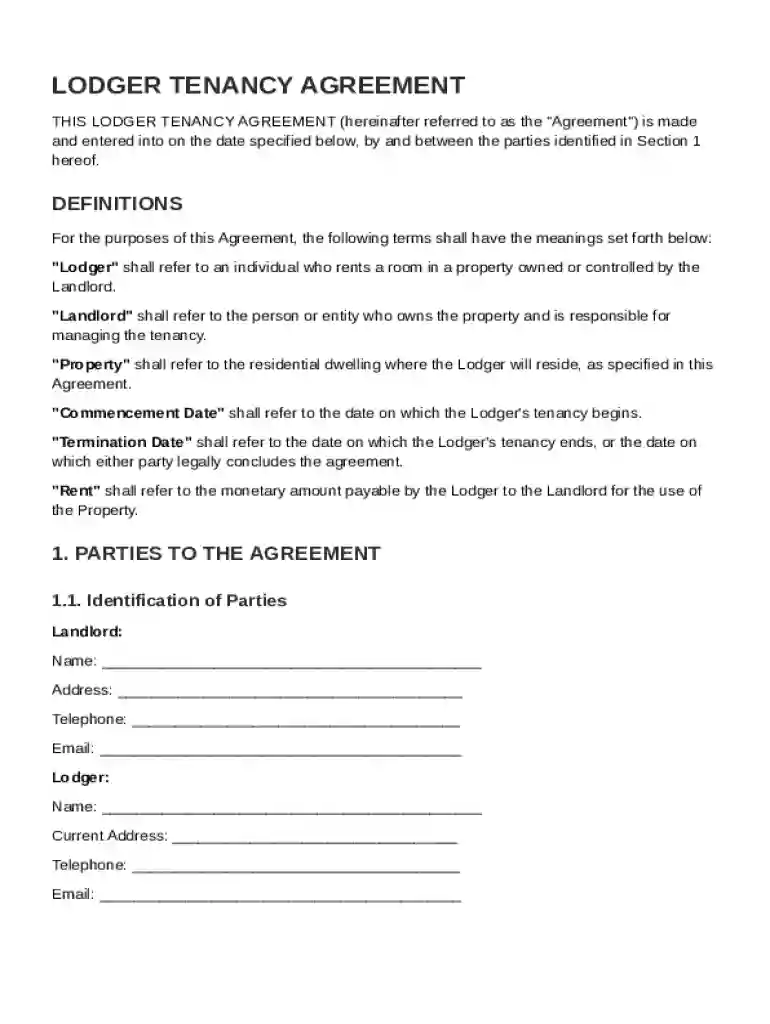
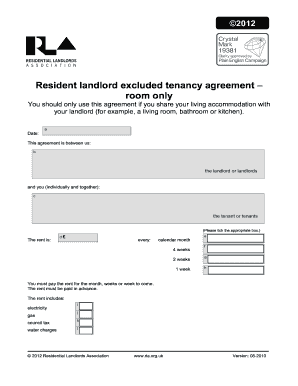
The Lodger Tenancy Agreement is a legal document that establishes the terms and conditions under which a landlord permits a lodger to occupy a room within their property. It defines the nature of the relationship between the landlord and the lodger, the rights and obligations of each party, and sets clear boundaries and expectations to prevent disputes. This agreement is vital in ensuring that both parties are protected under the law and that there is a mutual understanding of the arrangements.
A comprehensive Lodger Tenancy Agreement template includes several key sections that collectively outline the structure of the agreement:
Parties Involved: Clearly identifies the landlord and the lodger, including their legal names and contact information.
Property Description: Details the specific room or area being rented, as well as any shared facilities and areas within the property.
Duration of Tenancy: Specifies the start and end dates of the tenancy or clarifies whether it is a periodic tenancy with ongoing terms.
Rent Payment Terms: Lists the amount of rent, due dates, payment methods, and any late fees, ensuring transparent financial arrangements.
Responsibilities of Parties: Outlines duties such as property maintenance, utility payment distribution, and adherence to house rules.
House Rules: Sets behavioral expectations regarding noise, cleanliness, guest allowances, and shared space usage.
Security Deposit: Defines the security deposit amount, its intended use, and conditions under which it will be returned or withheld.
Termination Procedures: Explains how termination can be effected by either party, including required notice periods and conditions.
Governing Law: Specifies the legal jurisdiction applicable to the agreement, ensuring compliance with local regulations.
Gather Information: Collect essential details about both parties, the property, and the terms of tenancy before initiating the agreement.
Fill Out Tenant and Landlord Details: Insert the full names, addresses, and contact information for both parties.
Describe the Property: Clearly specify the room being rented and detail the communal areas to which the lodger will have access.
Define Rent and Payment Terms: Indicate the rental amount, payment frequency, acceptable payment methods, and any penalties for late payment.
Establish House Rules and Responsibilities: Include guidelines for property use and maintenance duties, respecting both shared areas and individual rooms.
Outline Deposit Arrangements: Specify the security deposit details, including how it will be managed and under what terms it may be retained.
State Termination Conditions: Provide clear procedures for ending the tenancy, emphasizing the necessity of adhering to agreed-upon notice periods.
Legal Review and Signatures: Before signing, both parties should review the document to ensure comprehension and agreement, with signatures formalizing the contract.
The Lodger Tenancy Agreement serves as a legal instrument that can be used in disputes to enforce the terms set forth in the document. It is advisable for both parties to seek legal advice to ensure that the agreement complies with state-specific laws and regulations. The template should also be used in good faith, with provisions that are clear, fair, and mutually acceptable.
Disputes can arise over rent payments, property maintenance, or violations of house rules, and having a formalized, signed agreement can be pivotal in resolving such issues through mediation or legal action.
Understanding the terminology associated with a Lodger Tenancy Agreement is essential:
Lodger: Occupies a room within a landlord’s property without exclusive possession of any part of it. The landlord may also reside on the premises.
Landlord: The property owner or person who grants the lodger the right to occupy a room.
Tenancy Duration: The length of time for which the agreement applies, which can be fixed or ongoing.
Security Deposit: A sum paid by the lodger, usually at the start of the tenancy, as insurance against damages or breaches of agreement terms.
Governing Law: Legal framework governing the tenancy, typically reflecting the state laws where the rental property exists.
Real-world applications of the Lodger Tenancy Agreement template highlight its versatility:
University Campus Housing: A landlord rents out spare rooms during the academic year to students. This agreement defines clear expectations and prevents misunderstandings regarding guest policies and shared space usage.
Urban Shared Apartments: Professionals living in larger city dwellings frequently have extra rooms. They use the agreement for short-term lets to travelers or visiting scholars, providing both landlord and lodger with mutual protection.
Retirement Income Supplementation: Elderly homeowners might rent rooms to supplement their income. Proper agreements can ensure peace of mind through clear delineation of rights and obligations.
While the basic framework of a Lodger Tenancy Agreement is generally consistent, state-specific regulations may affect certain provisions:
Security Deposit Limits: Some states limit how much landlords can charge for a security deposit and require it to be returned within a specified time frame after the tenancy ends.
Notice Requirements: State laws often dictate the minimum notice period for terminating a tenancy, which must be reflected accurately in the agreement.
Housing Codes and Health Standards: Compliance with state and local housing codes, including security, safety, and habitability standards, is vital for landlords and should be explicitly stated in agreements.
Various resources can be leveraged to obtain a Lodger Tenancy Agreement Template:
Online Legal Platforms: Numerous websites offer customizable templates that adhere to local laws, typically requiring a subscription or one-time fee.
Legal Professionals: Engaging with an attorney can provide a bespoke template, ensuring thorough compliance with relevant laws.
Local Housing Authorities: Some states provide free templates as part of their public service offerings, particularly useful for new landlords.
At DocHub, your data security is our priority. We follow HIPAA, SOC2, GDPR, and other standards, so you can work on your documents with confidence.



Fill out and sign a Notice to Vacate. Generally, the notice must give the tenant the same amount of time to move out as their rental payment period. Give the
The document outlines a boarding house tenancy agreement, detailing the responsibilities and rights of both landlords and tenants.


