






Definition and Meaning
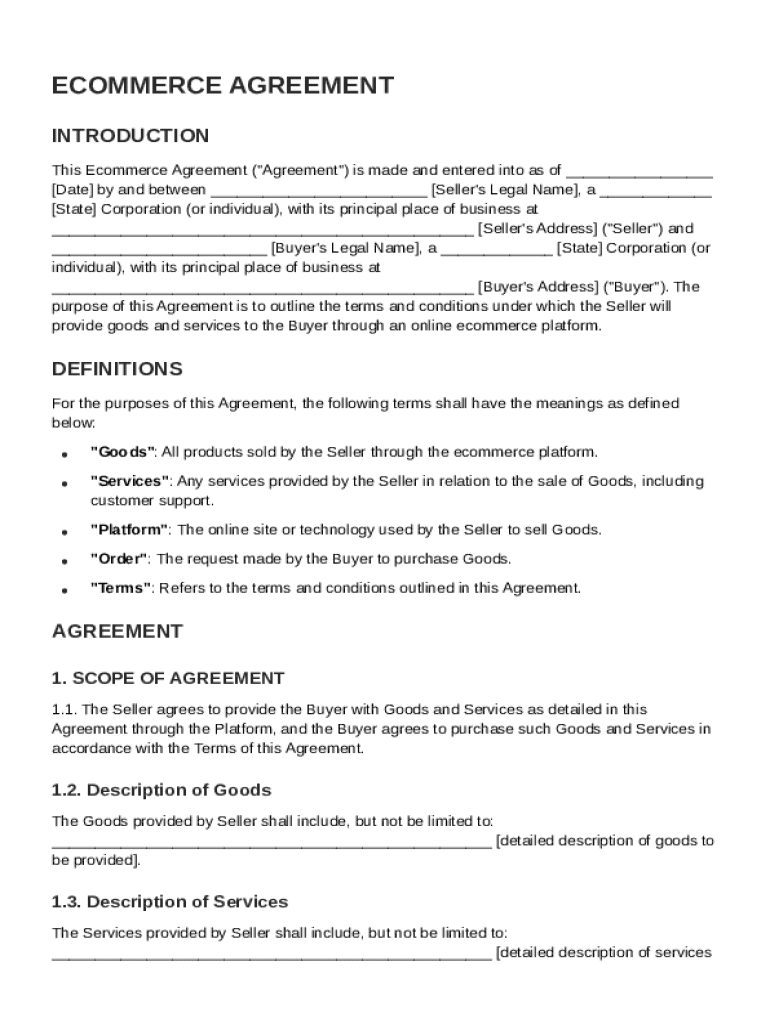
An Ecommerce Contract Template is a standardized document that establishes the terms and conditions for the sale of goods and services through an online platform. It is used by both sellers and buyers to legally bind their transaction and ensure mutual understanding about their commercial relationship. This template typically includes essential clauses related to order processing, pricing, payment terms, delivery, intellectual property rights, and confidentiality obligations. By defining these critical elements, the contract helps mitigate risks and disputes, ensuring both parties have clear guidelines about their responsibilities and rights during an ecommerce transaction.
Key Elements of the Ecommerce Contract Template
The Ecommerce Contract Template contains several vital components that create a comprehensive agreement between the seller and the buyer:
- Order Processes: Explains how orders are placed, processed, and confirmed, including any special conditions related to order changes or cancellations.
- Pricing and Payment Terms: Details the costs associated with the products or services, including payment methods, due dates, and late payment penalties.
- Delivery and Returns: Outlines the shipping methods, timelines, and conditions for returning goods if necessary.
- Warranties and Intellectual Property Rights: Specifies any product warranties and protection of creative content such as trademarks or copyrights.
- Governing Law and Dispute Resolution: Indicates the legal jurisdiction overseeing the contract and the method for resolving any disputes, usually arbitration or mediation.
How to Use the Ecommerce Contract Template
Using the Ecommerce Contract Template involves several structured steps to ensure it is tailored to the specific transaction:
- Customize the Template: Adjust the template to reflect the unique terms of your transaction, such as buyer and seller details, currency, and applicable legal jurisdiction.
- Insert Product Details: Clearly define each product or service, including descriptions, quantities, and pricing.
- Set Payment and Delivery](Terms: Establish how and when payment should be made and outline delivery timeframes and methods.
- Review and Amend: Both parties should review the agreement for accuracy and agree on any amendments before finalization.
- Sign and Date: Electronically sign the document using a trusted platform like DocHub to make it legally binding.
Legal Use of the Ecommerce Contract Template
The use of an Ecommerce Contract Template is governed by various laws that ensure its legality and enforceability:
- Electronic Signatures in Global and National Commerce Act (ESIGN): Allows for the use of electronic signatures in contracts, making the ecommerce contract legally binding.
- Uniform Electronic Transactions Act (UETA): Provides legal guidelines for electronic records and signatures, ensuring the template meets necessary legal standards.
- State-Specific Laws: Depending on the jurisdiction, additional state laws may apply, which should be considered when drafting and reviewing the contract.
Steps to Complete the Ecommerce Contract Template
To complete the Ecommerce Contract Template efficiently, you should follow these step-by-step instructions:
- Download and Access: Obtain the template from a reliable source or document management platform.
- Complete Seller and Buyer Information: Accurately enter the details of both parties, including full names, addresses, and contact information.
- Detail Products and Services: Provide comprehensive descriptions of the products or services being exchanged, including any applicable SKU numbers.
- Outline Payment and Delivery Conditions: Clearly define the prices, payment methods, delivery schedules, and any additional shipping instructions.
- Include Necessary Clauses: Ensure that all relevant terms, such as warranties, liability limits, and confidentiality obligations, are addressed.
- Electronic Review and Signature: Use an online platform to electronically review and sign the agreement, ensuring legal compliance and mutual agreement.
Important Terms Related to Ecommerce Contract Template
Several important legal and commercial terms are frequently used within an Ecommerce Contract Template:
- Indemnity Clauses: Agreements to protect one party from legal responsibility for specific damages or losses.
- Force Majeure: Provisions that free parties from liability or obligations when events beyond their control occur, like natural disasters.
- Jurisdictional Clauses: Decide the governing laws and location for any legal proceedings should a dispute arise.
- Confidentiality Agreements: Ensure that business-sensitive information is not disclosed to unauthorized parties.
Examples of Using the Ecommerce Contract Template
Real-world scenarios demonstrate the practical application of an ecommerce contract:
- Small Retail Business: A small online boutique uses the template to protect its interests when selling handmade items to customers, specifying return policies and delivery terms.
- Digital Products: An ecommerce company providing software services drafts an agreement to cover the use, distribution, and intellectual property rights of its digital products.
- B2B Transactions: A company selling bulk office supplies to another business utilizes the template to establish pricing, bulk discounts, and delivery schedules.
Who Typically Uses the Ecommerce Contract Template
The template is versatile and utilized by various entities engaged in online commerce:
- Independent Sellers: Individuals or small businesses without a dedicated legal team use the template to ensure their online transactions are protected.
- Ecommerce Platforms: Online marketplaces employ the template as a framework for transactions conducted between sellers and buyers using their platform.
- Corporations: Large companies manufacturing or distributing goods use these contracts to manage B2B and B2C transactions, ensuring standardized legal compliance.